I’m going to start with photos I took when I was a volunteer on the U.S. Forest Service’s Picketwire Canyon Auto Tour on Comanche National Grassland May 3. One of the highlights of the tours is the dinosaur tracks, the largest trackway in North America, with more than 1,900 separate tracks in 130 separate trackways!
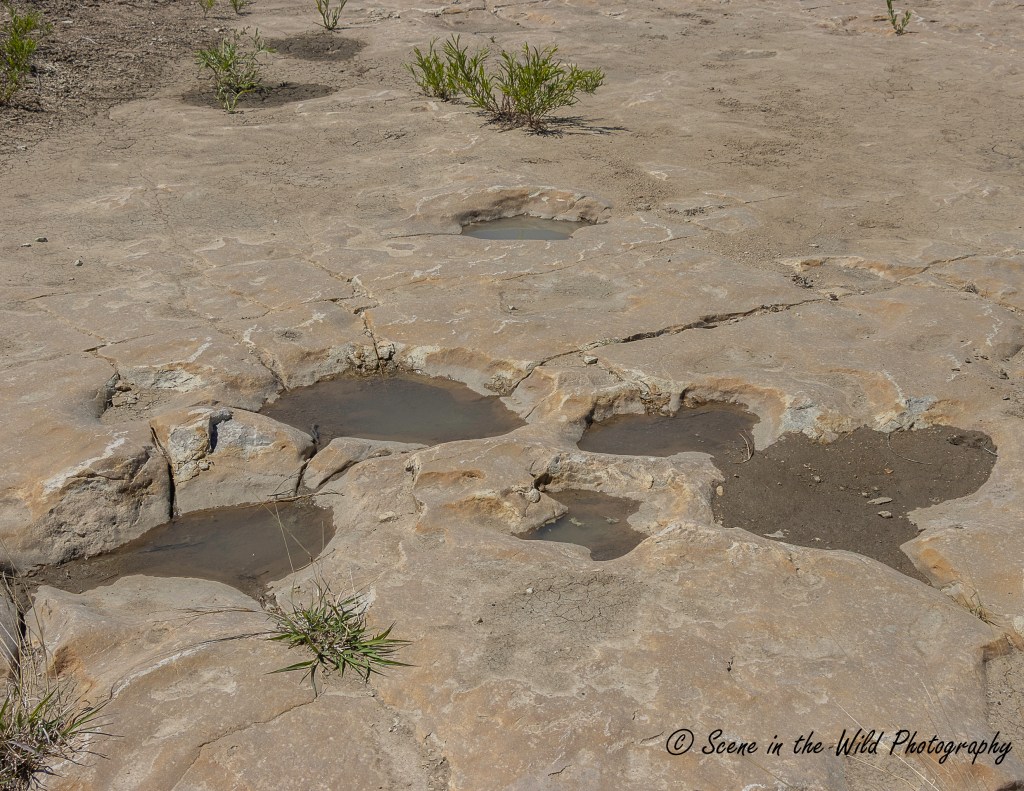
A few sauropod tracks (the long-necked dinosaurs with legs and feet that resemble those of elephants) from the Jurassic Period. Some of the tracks are smaller and close to the larger tracks–probably young ones.
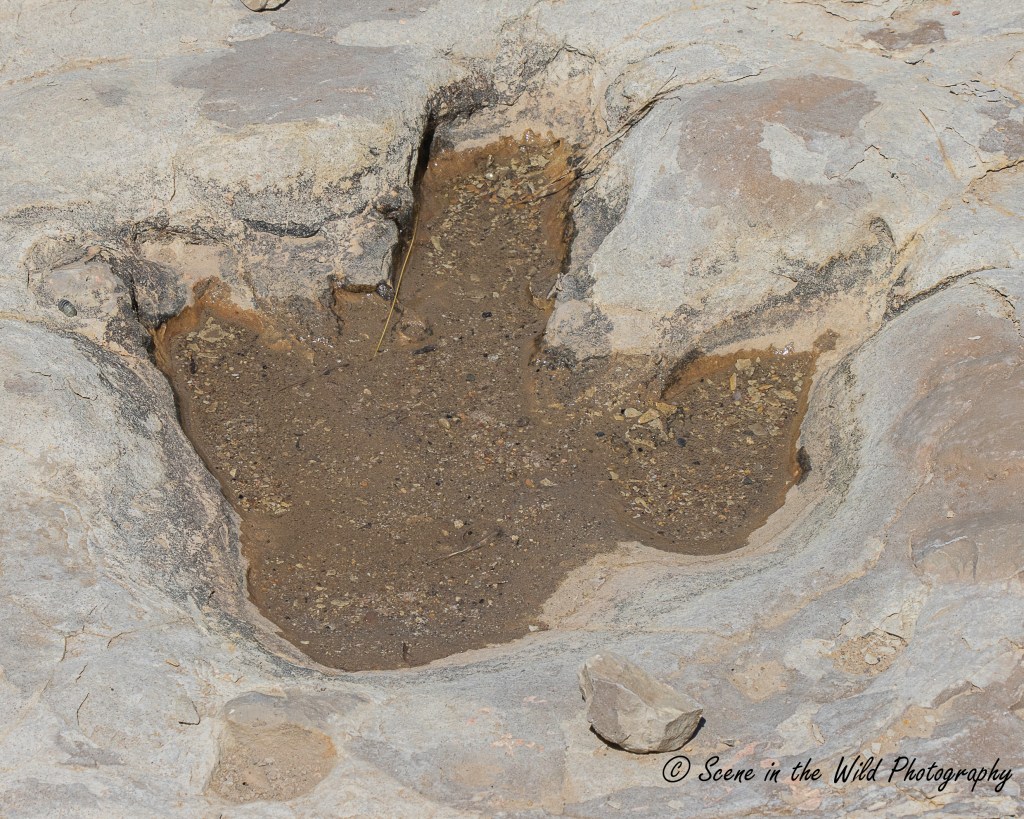
A theropod track. Nope, not T-Rex. They came later, during the end of the Cretaceous Period. What’s interesting about the theropod tracks is that some are right in the same area as the sauropod tracks. Perhaps they were looking for dinner?

To continue that theme, here’s a modern-day predator track (a bobcat) found in close proximity to the dinosaur tracks.
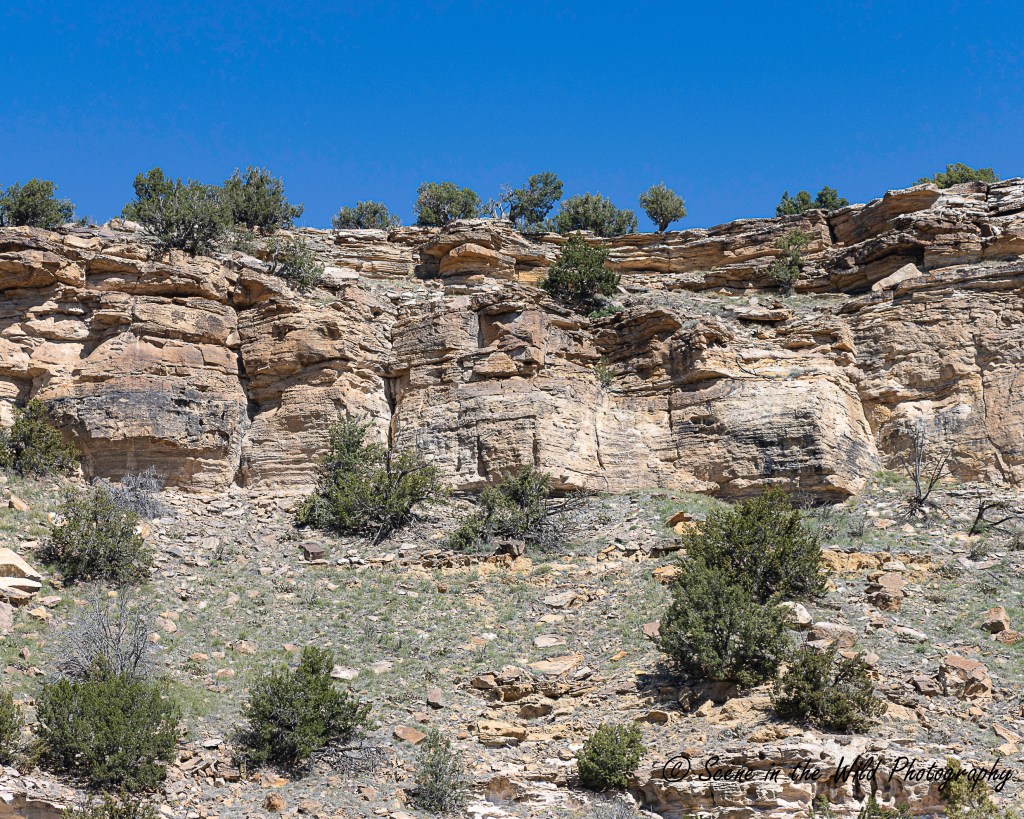
Above the tracks you can see cliffs of Dakota Sandstone.
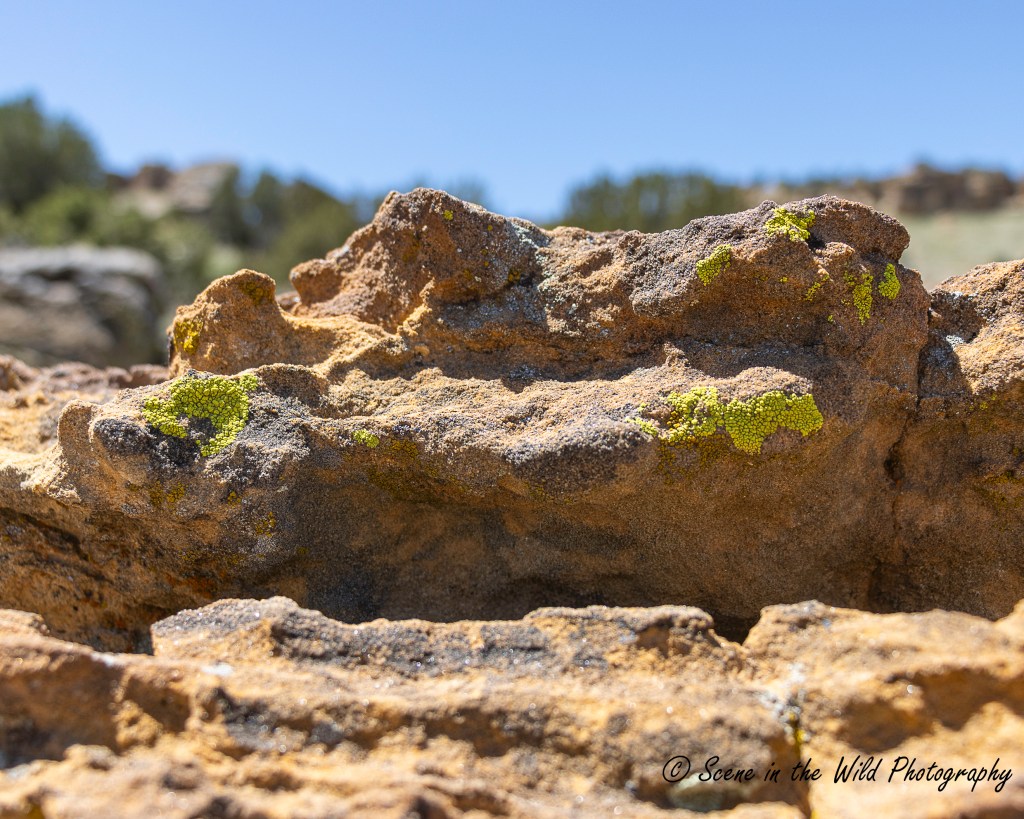
Lichen on sandstone.
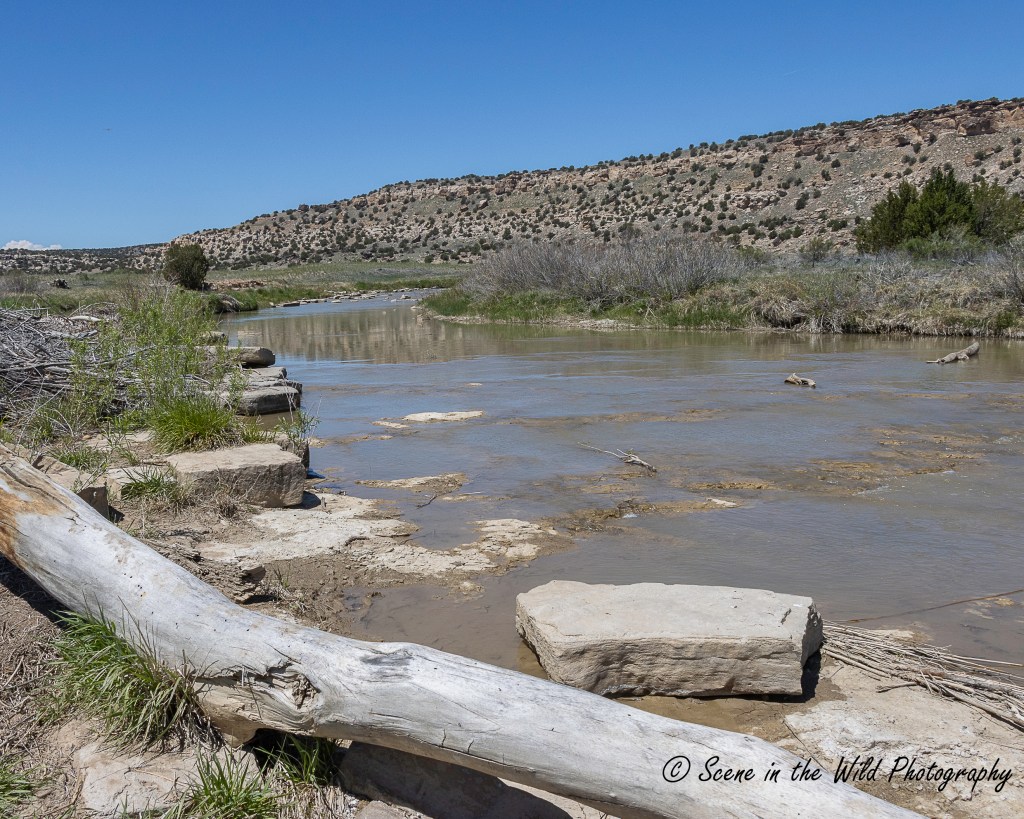
The Purgatorie River. There are dinosaur tracks on either side, as well as under water. You might ask why the canyon is called “Picketwire” and the river is called “Purgatorie.” Originally, the river was named by Spaniards: “El Rio de las animas perdidas in el purgatorio.” In English: “The River of Lost Souls.” There are several legends regarding the name. One is that early Spanish explorers drowned in the river, but since there were no priests available, they didn’t receive last rites, and they were lost in Purgatory. Later, French trappers came through and called the river “Purgatorie,” which was pronounced “Purga-twa.” Early settlers couldn’t quite say that correctly, so they referred to it as “Picketwire.”
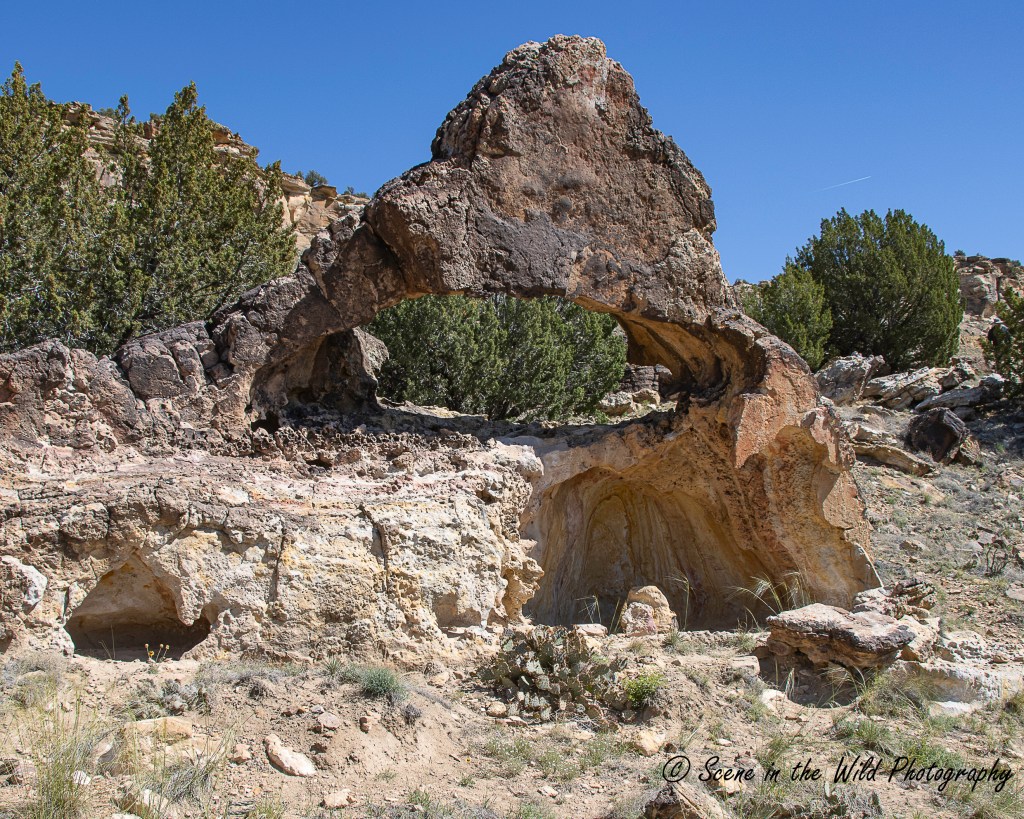
Window Rock, along the road to the dinosaur tracks., always a favorite photo spot. The tour also features petrogylphs, and old mission and cemetery, and Rourke Ranch. For more information (remember, the La Junta Forest Service office is currently closed): https://www.fs.usda.gov/r02/psicc/recreation/picket-wire-canyonlands
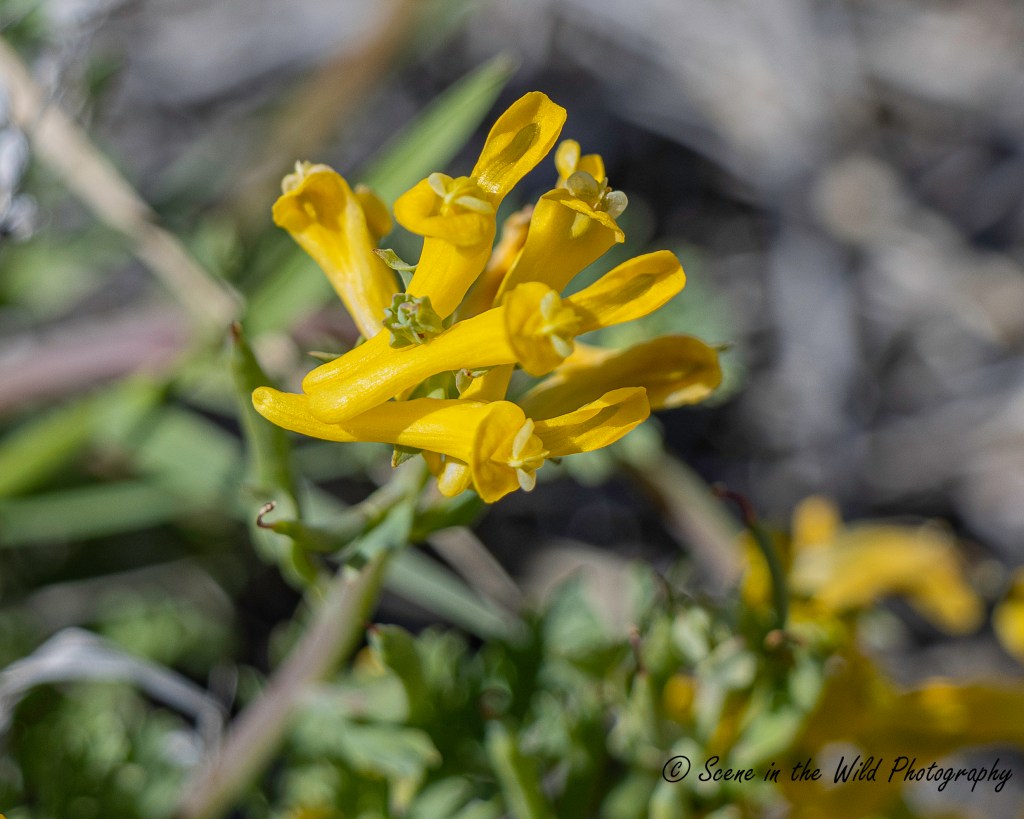
One of the few flowers blooming down in the canyon on May 3: Golden Corydalis (Coyrydalis aurea), sometimes called “scrambled eggs.”
In my last post, I featured flowers I found on the Comanche on May 17. I’d gone there for training on how to count and photograph bumble bees through Mountain States Bumble Bee Atlas. Did you know that there are nearly 50 species of bumble bees in North America? Unfortunately, one-fourth are at risk of extinction. I learned how to capture bumble bees, learned how to chill them (just temporarily!) so they can be easily photographed, and found out how to submit the data to Bumble Bee Watch. As we didn’t find any bumble bees, we practiced on other insects, some of which I’ll show below. (After the training, the leader and I did find a bumble bee on one of the Prince’s Plume plants–photo later).
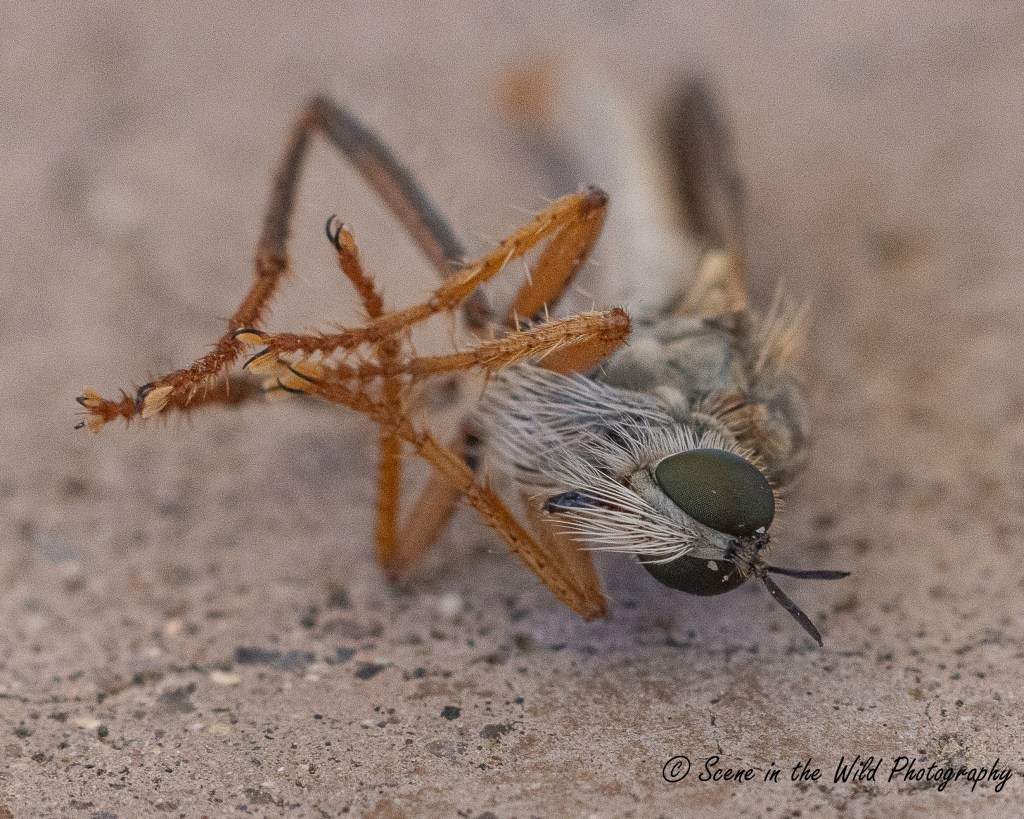
One of my favorites! This is a robber fly. Note his huge eyes and beard! Robber flies prey on other insects. They’ll often sit still and wait for something to fly by–sometimes they even cock their heads like a dog!
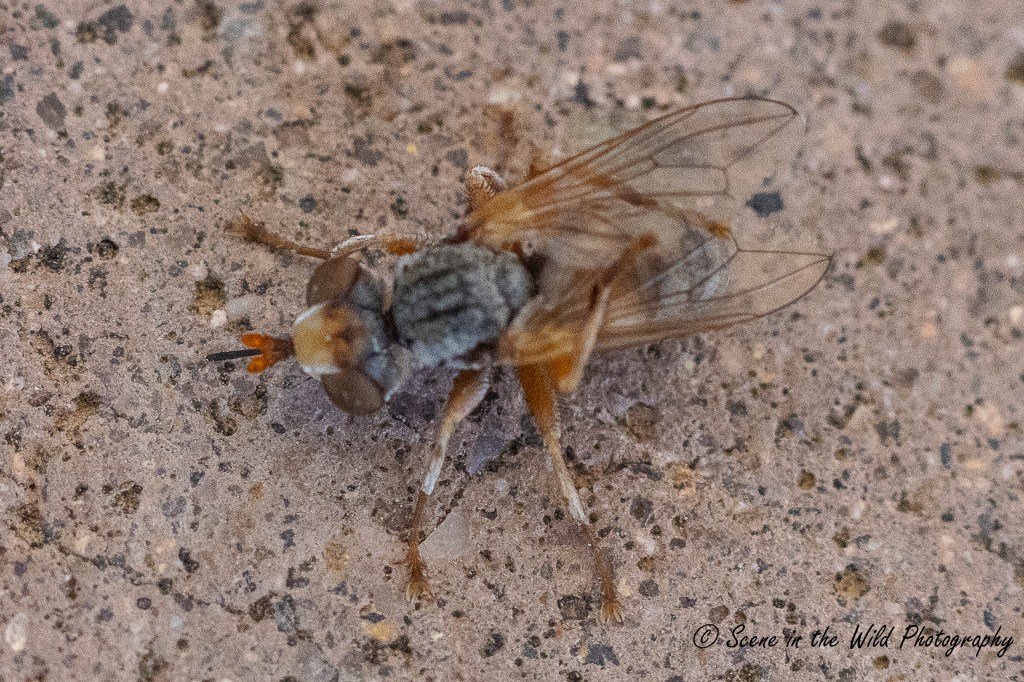
This is another fly, but much smaller than the guy above–more like the size of a house fly, if not a bit smaller. Note the red eyes, orange antennae, and black proboscis. I’ve posted this on iNaturalist, so I hope to get a better ID.
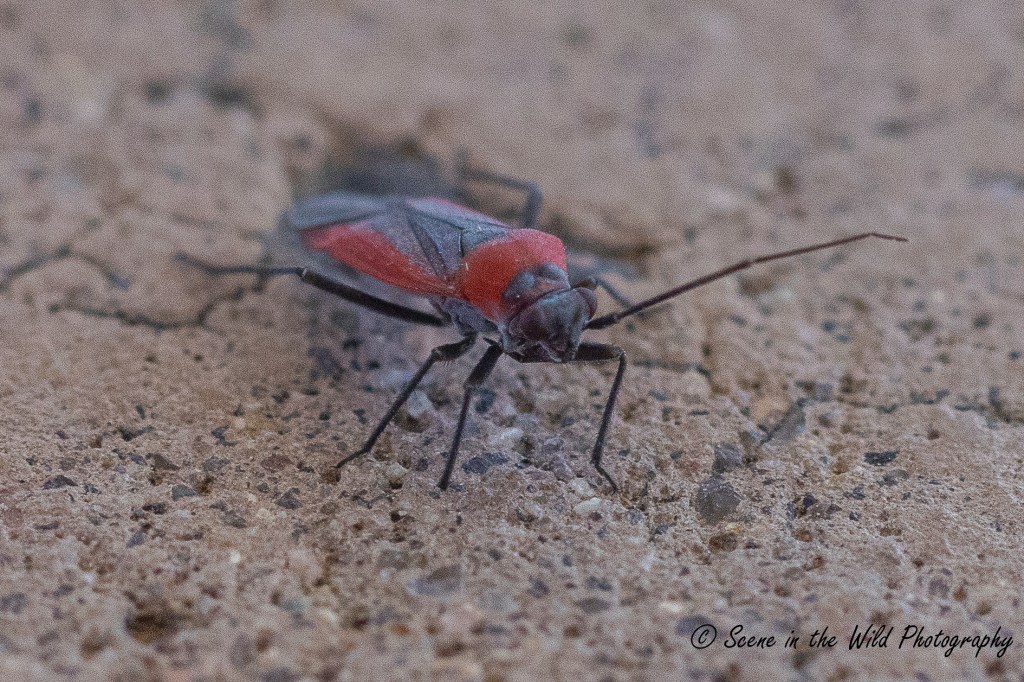
This red and black beetle isn’t one of the insects that was captured, it just showed up to perhaps join the “party” when we were looking at the ones we did catch.
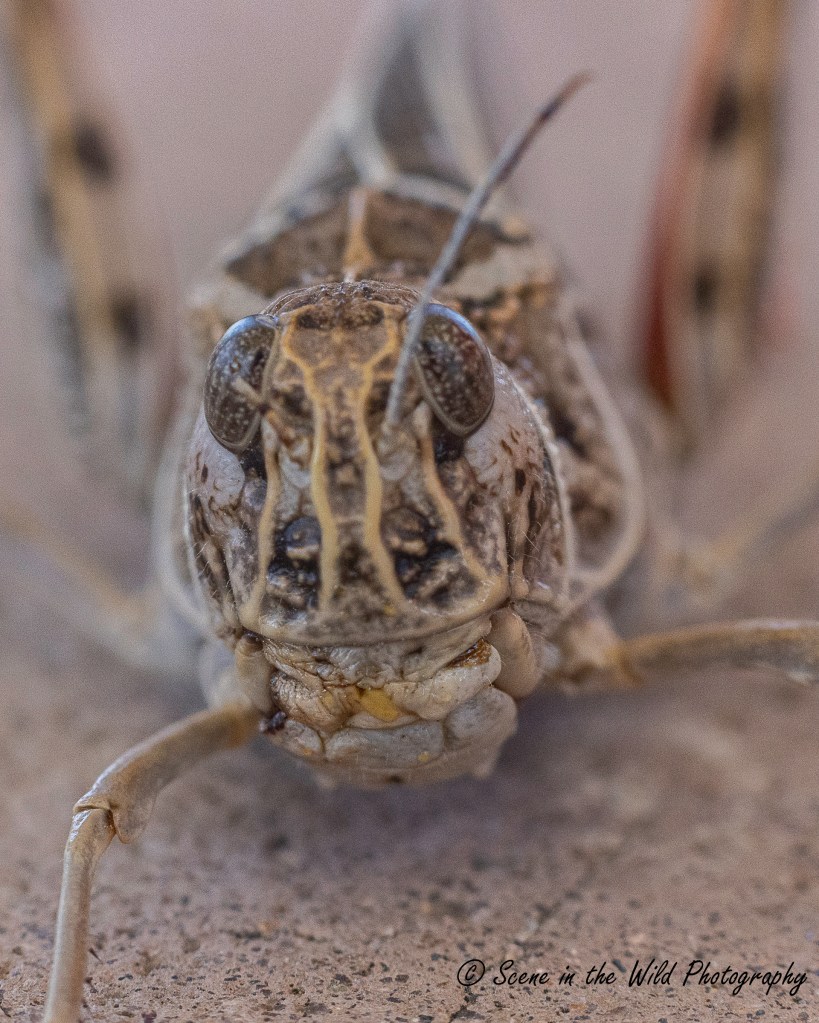
A face only a mother could love? I’m fairly certain this is a red-shanked grasshopper; if you look closely, you can see a bit of red on one of its hind legs.
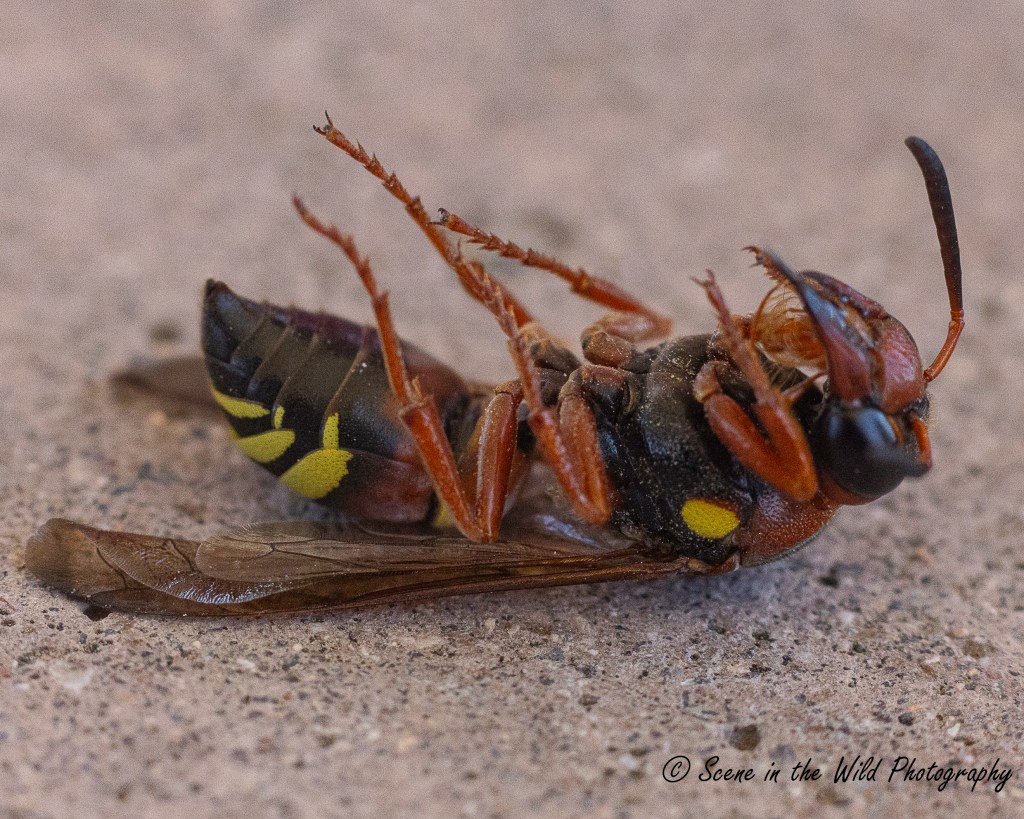
This is a potter or mason wasp, according to iNaturalist. In case you’re worried, all of the captured insects woke up and went off to do their jobs.
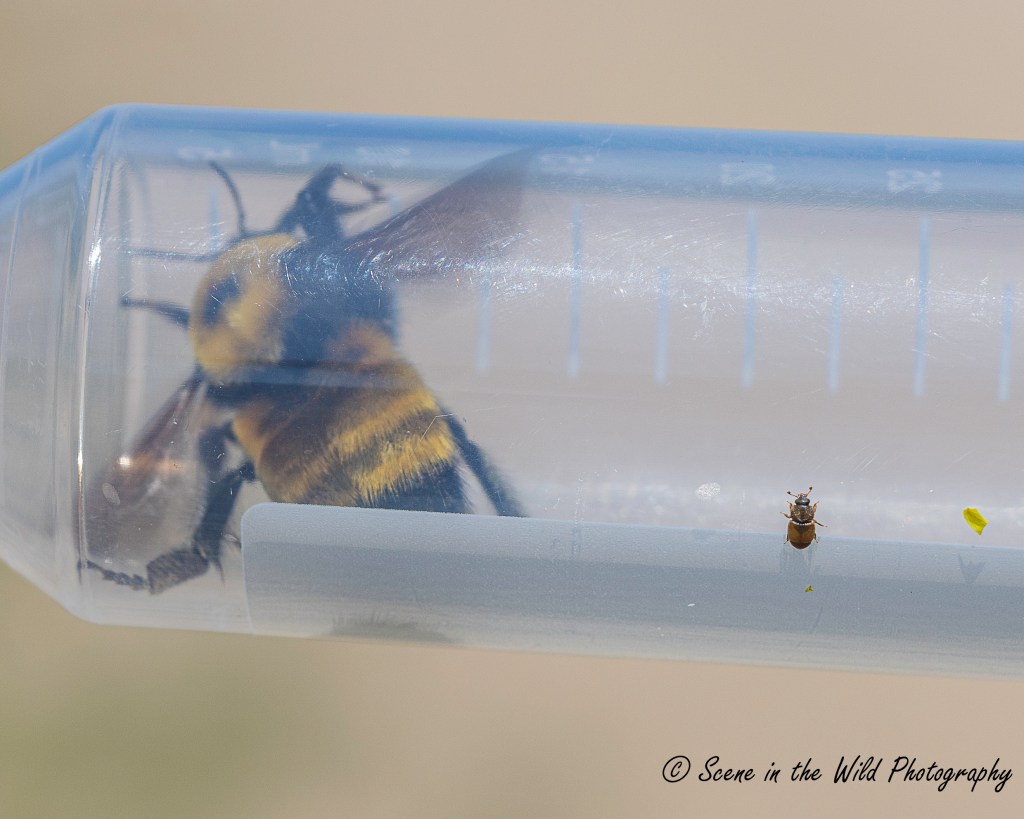
The bumble bee we found on a Prince’s Plume. She’s a Bombus Nevadensis, as ID’d by our Bumble Bee Atlas trainer. Only the queens are out this time of year, searching for food so they can start providing for the eggs they’ll be laying soon. Plus, notice we had a little hitch hiker! Close-up below:
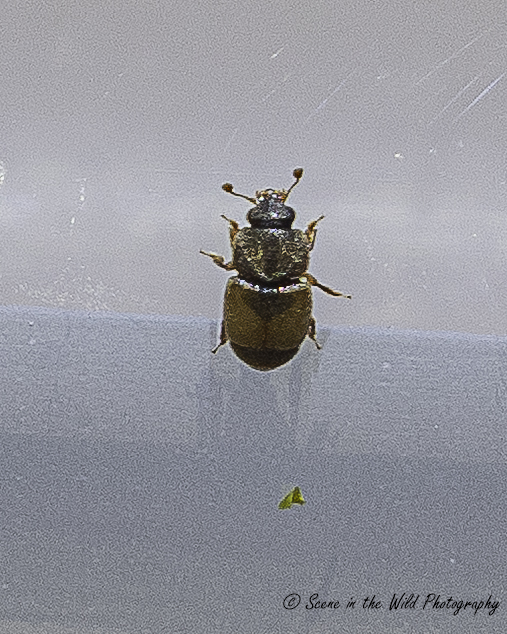
One of the iNaturalist experts identified this as a Cactus Sap Beetle (Nitops pallipennis). That makes sense, as there are certainly many cacti on the Comanche!
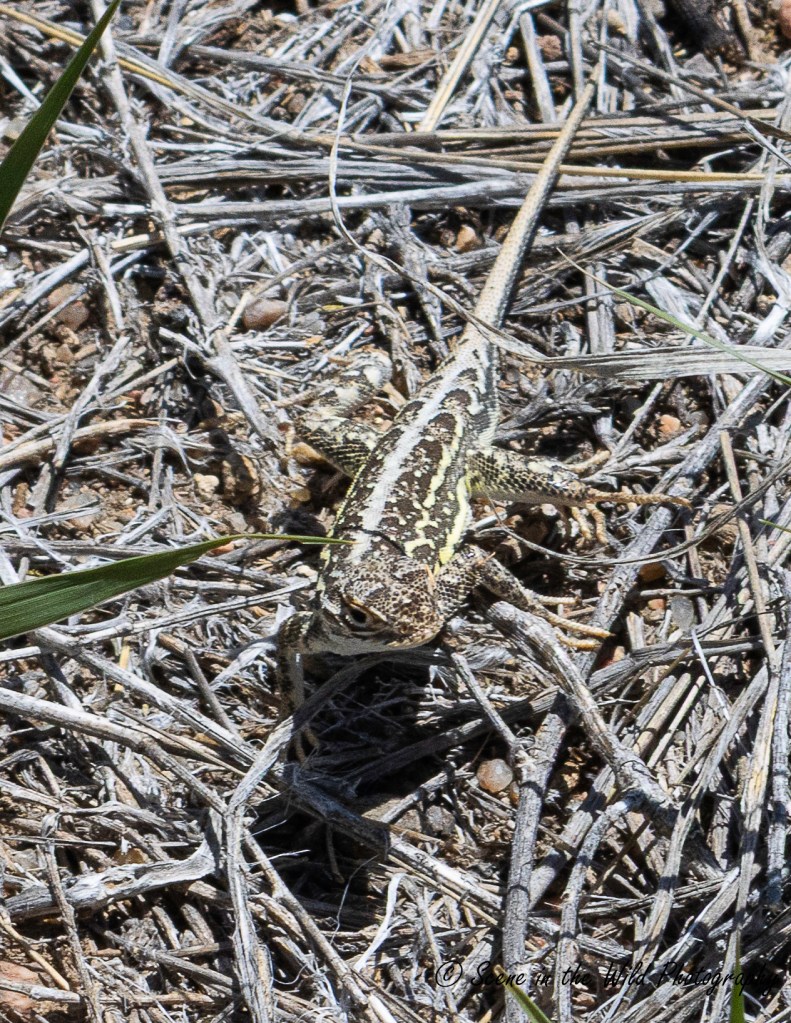
The training was held at the Vogel Canyon Picnic Area. We spread out from there, looking for insects, but also saw quite a few of these lizards–Eastern Fence Lizards. This one seemed to be posing for me!
If you’re interested in more information about the Bumble Bee Atlas (whether or not you want to participate), go here: https://www.bumblebeeatlas.org/pages/mountain-states The data goes to Bumble Bee Watch: https://www.bumblebeewatch.org/about/ If you go there, you can see where bumble bees have been sighted, and what species have been sighted.
For more information about Comanche National Grassland: https://www.fs.usda.gov/r02/psicc/about-area/comanche-national-grassland
Sign up here if you’d like to subscribe to my blog:


 Scene in the Wild Photography
Leave a comment