Category: wildlife

  • Visiting Custer County

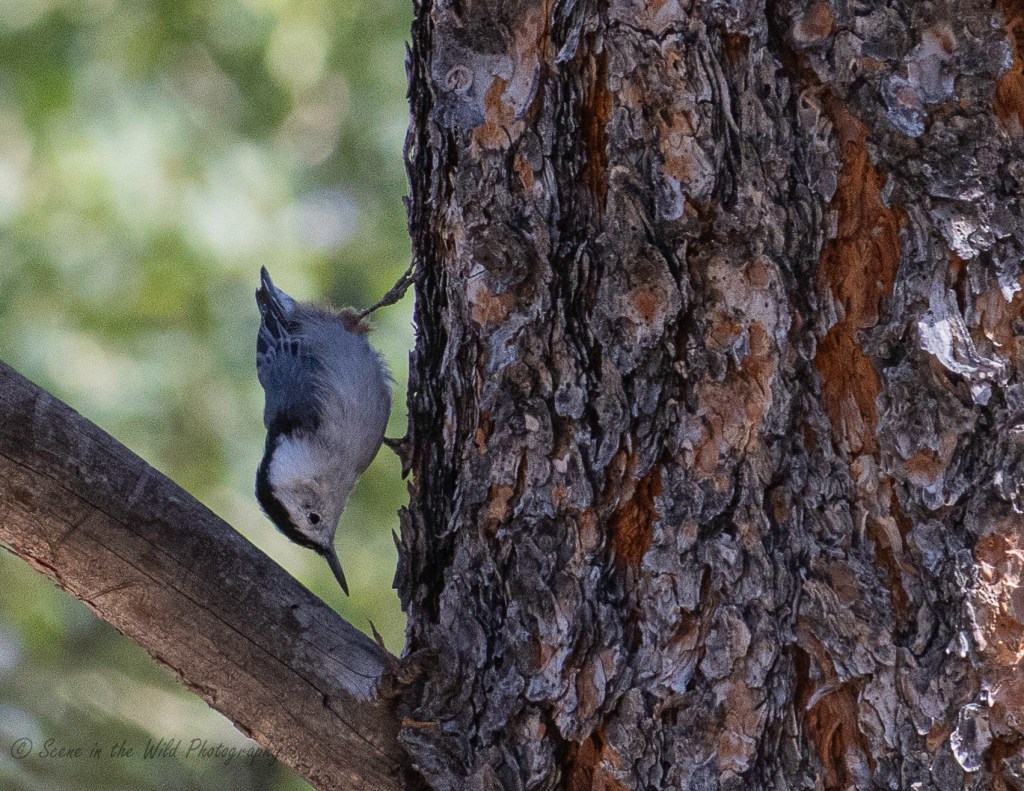
    White-breasted nuthatch Aug. 31, 2025

    There’s a place only about two and a half hours from here that I call my happy spot, but unfortunatley, I never spend as much time there as I’d like.

    Steve’s parents have a cabin up in the mountains in a community called Tanglewood Acres outside of Westclife, which is nestled in a gorgeous valley between the Wet Mountains and the Sangre de Cristo mountain range.
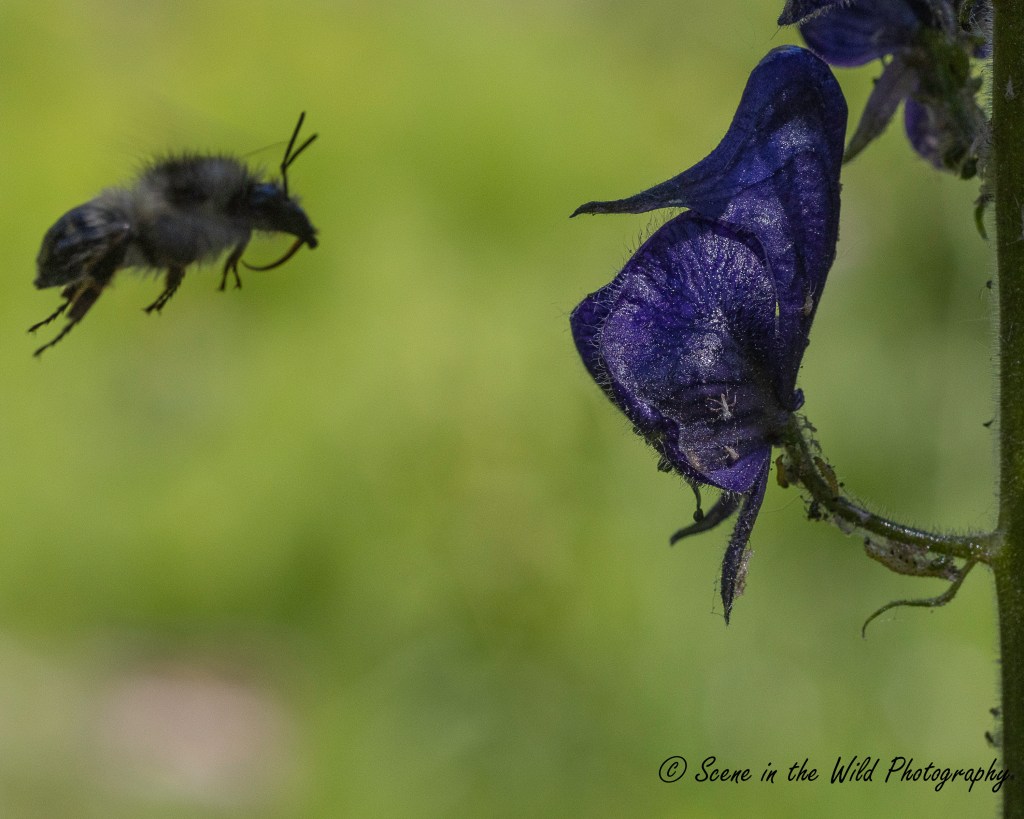
    Bumblebee visiting Monkshood flower July 5, 2025

    I have learned to like many aspects about where I currently live, but I have to say, since I first viewed the Rocky Mountains when I was 9 years old, the mountains have always held an enchantment for me.

    This year we visited over the Fourth of July, and a couple of days over Labor Day weekend. I was not satisfied. For one thing, I always make a calendar of Custer County scenes for family members, and I didn’t think I had enough photos to chose from. To be honest, I’d spent quite a bit of time photographing macro insects and spiders and not much time on anything else. (I’ve found that many people don’t get as excited about these critters as much as I do, but I’m sharing a couple anyway).
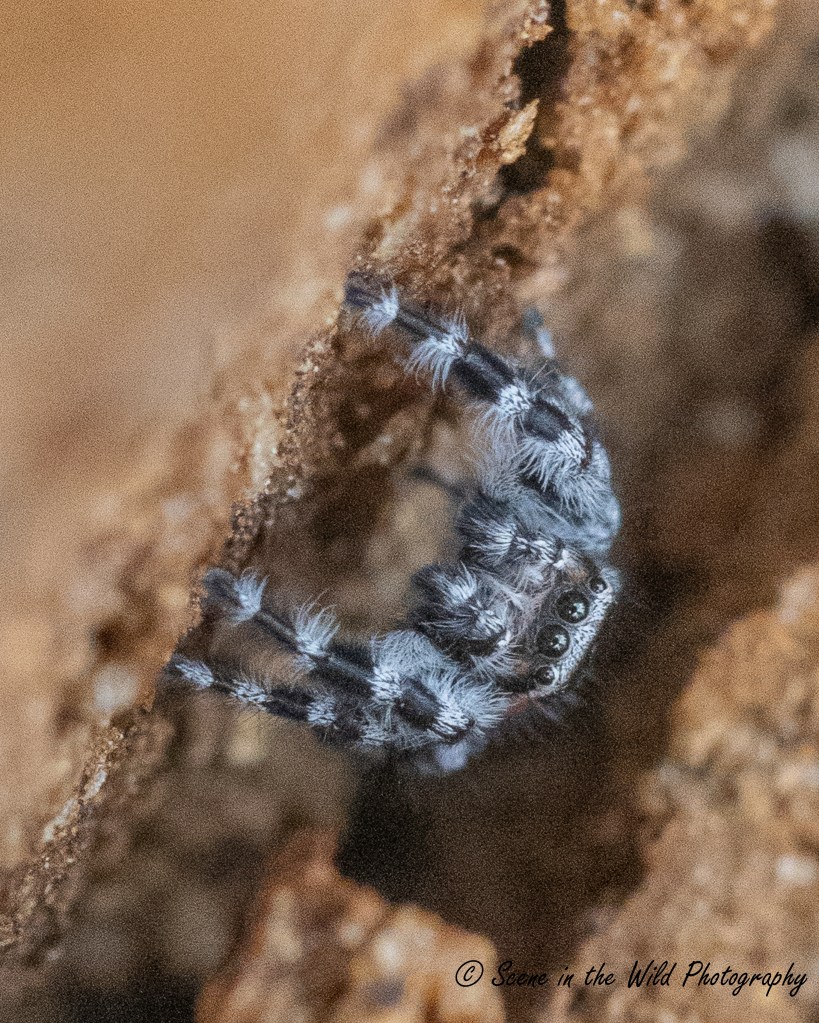
    A tiny little spider: Tyrell’s tufted jumping spider, July 6, 2025

    Plus, it had been a long time since I had experienced the color change in the fall. The first Friday in October, I decided to drive up there because it sounded as though weather was going to be coming in and most of the colors would be lost to the rain and wind. Steve wasn’t able to go with me due to something called hunting, so I put my corgi in the car and off we went.

    We’d discovered a particularly beautiful place to see the colors a few years back, so instead of taking the highway all of the way into Westcliffe, I veered off onto a county road. I can’t tell you how many times I stopped to take photos. The colors were truly splendid. Once I got into the valley, the awe continued.
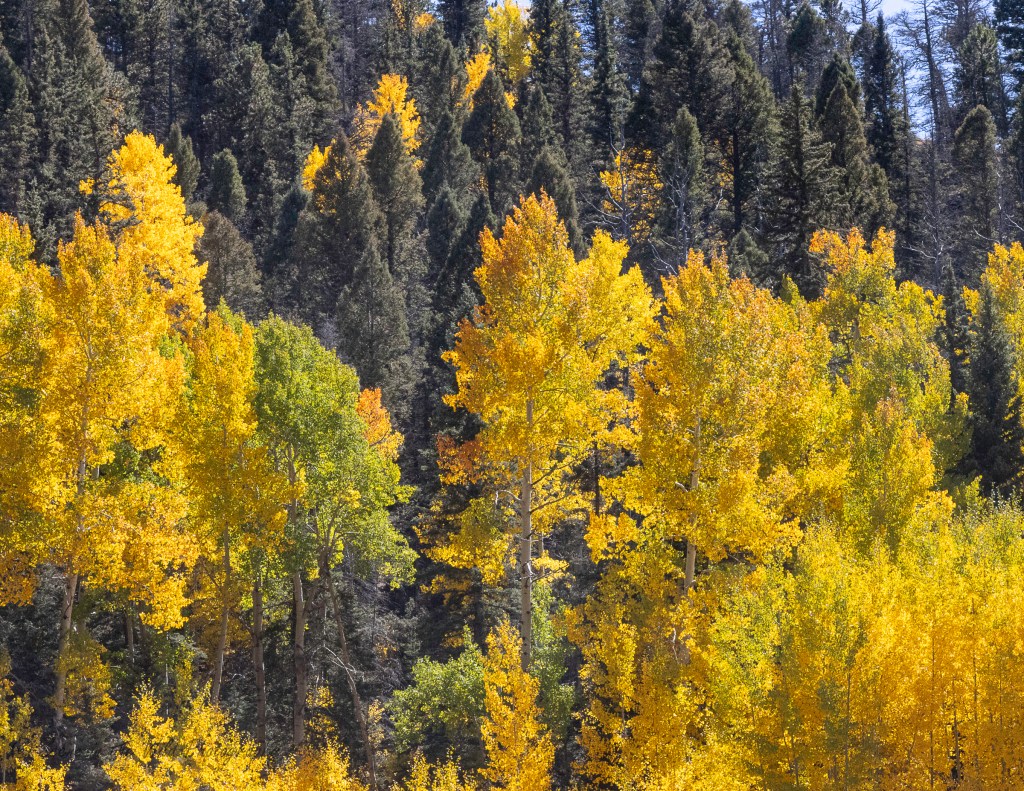
    Aspen Canyon Road, Oct. 3, 2025
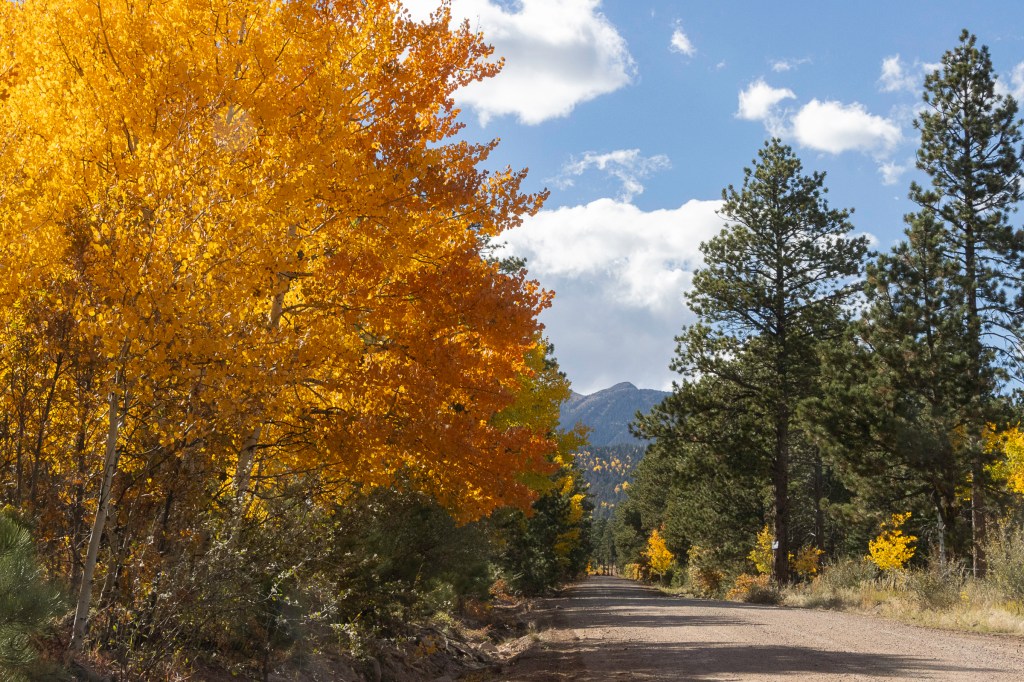
    Road to Tanglewood Acres, Oct. 3, 2025
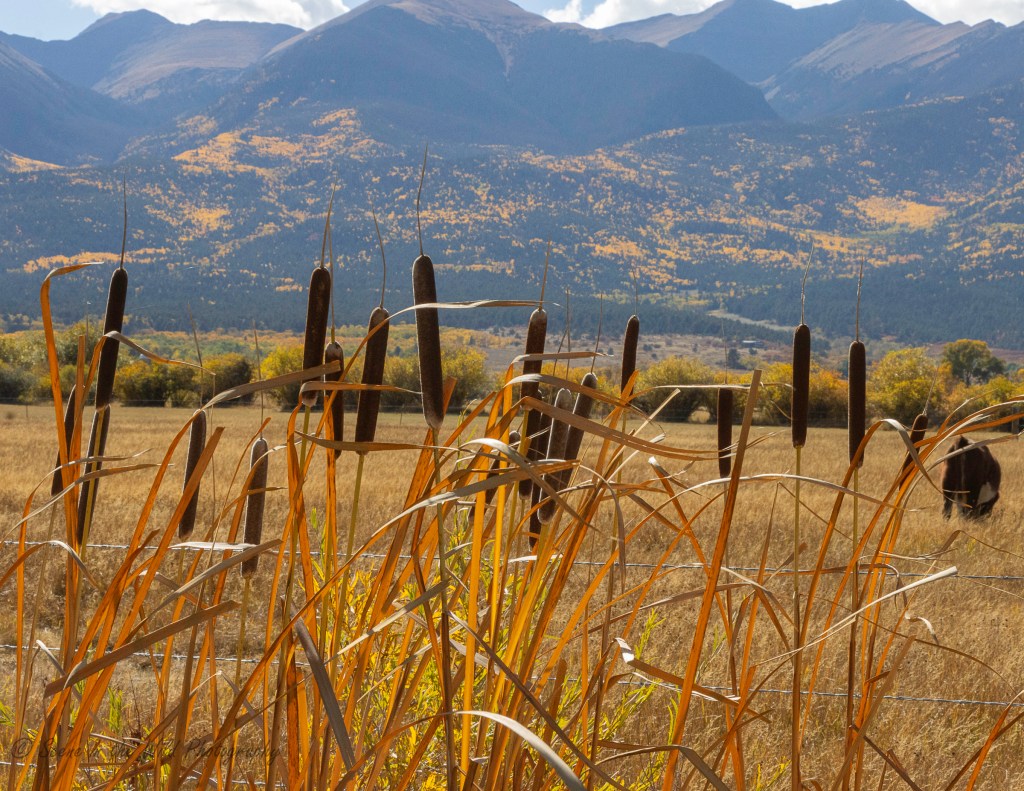
    Cattails with Sangre de Cristos in background Oct. 3, 2025

    After I settled into my inlaws’ house, I drove back into town to watch the sunset and have dinner. On the way, I noticed that I was being watched:
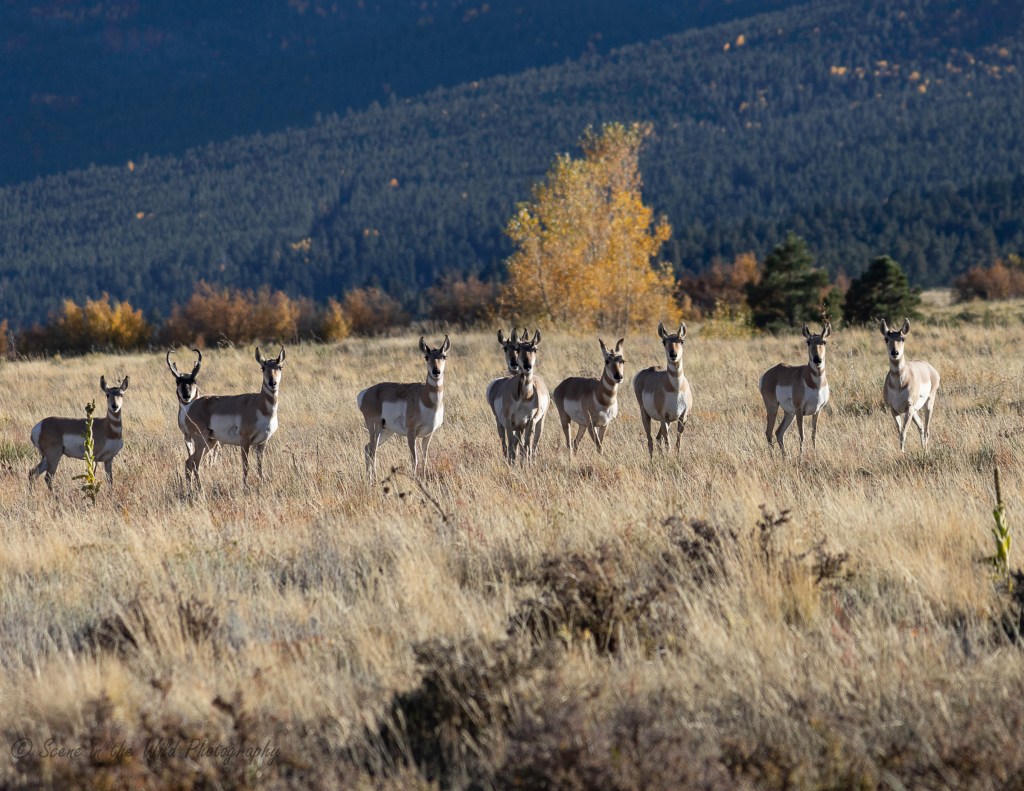
    Pronghorn herd, Schoolfield Road, Oct. 3, 2025

    After that, I had another surprise! I had no idea that I would be treated to a very special sunset! I am sure there is a name for this phenomenon of clouds and light, but I had certainly never seen anything like it before:
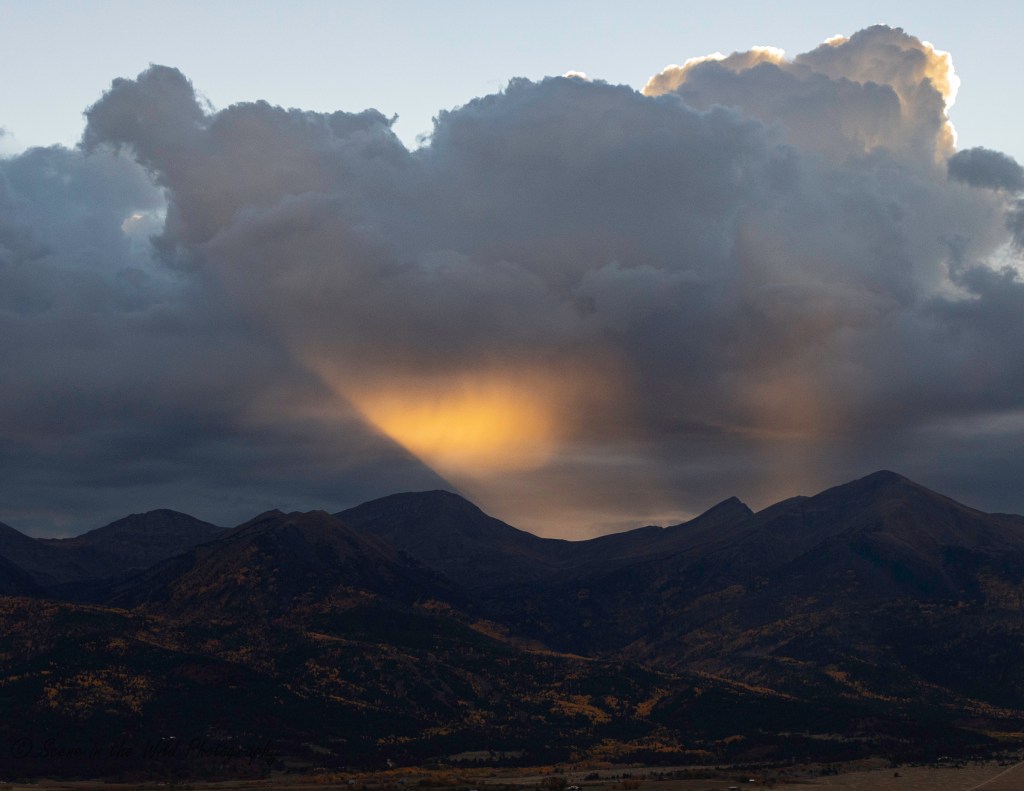
    Sunset over Sangres, Oct. 3, 2025

    The clouds were definitely a warning of what was to come. The next morning as I left, more were rolling in, and by the time I left town, the wind was blowing and rain had started. On my drive through the canyon I noted that many of the leaves I’d seen the day before had already been blown off the trees.
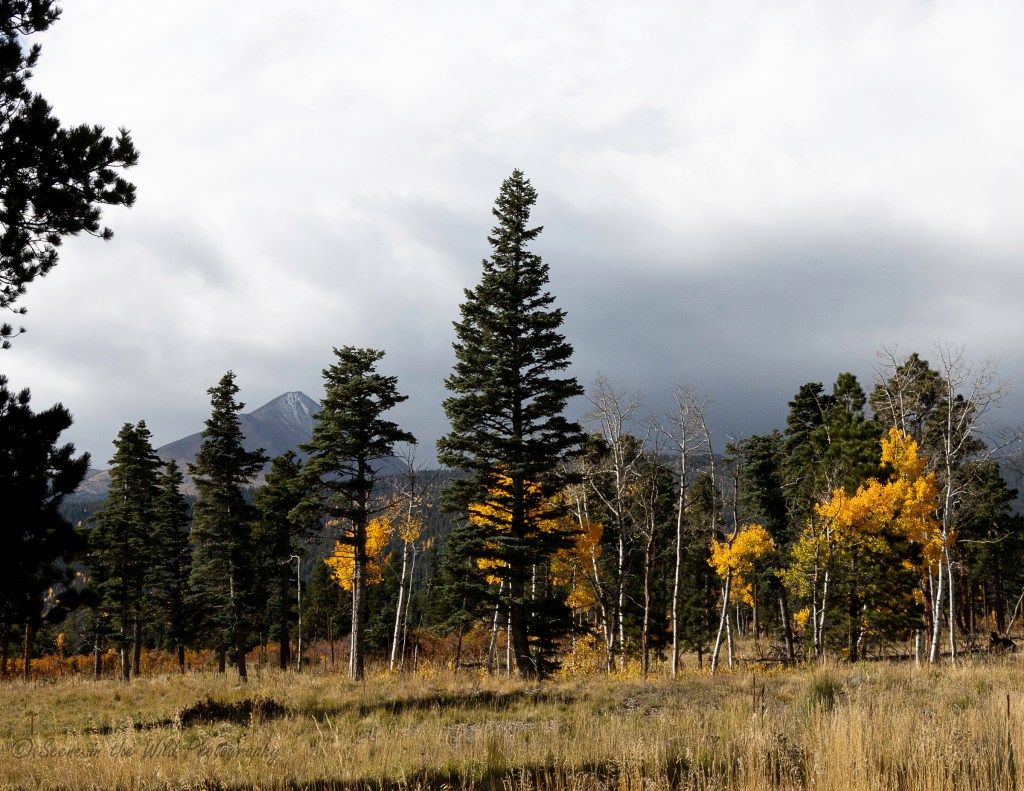
    Storm rolling in, Oct. 4, 2025

    Two weeks later, Steve and I drove up to close the cabin for the winter. Although there was still beauty to be seen, I was very pleased that I’d made the earlier trip, as most of the aspen colors were gone.
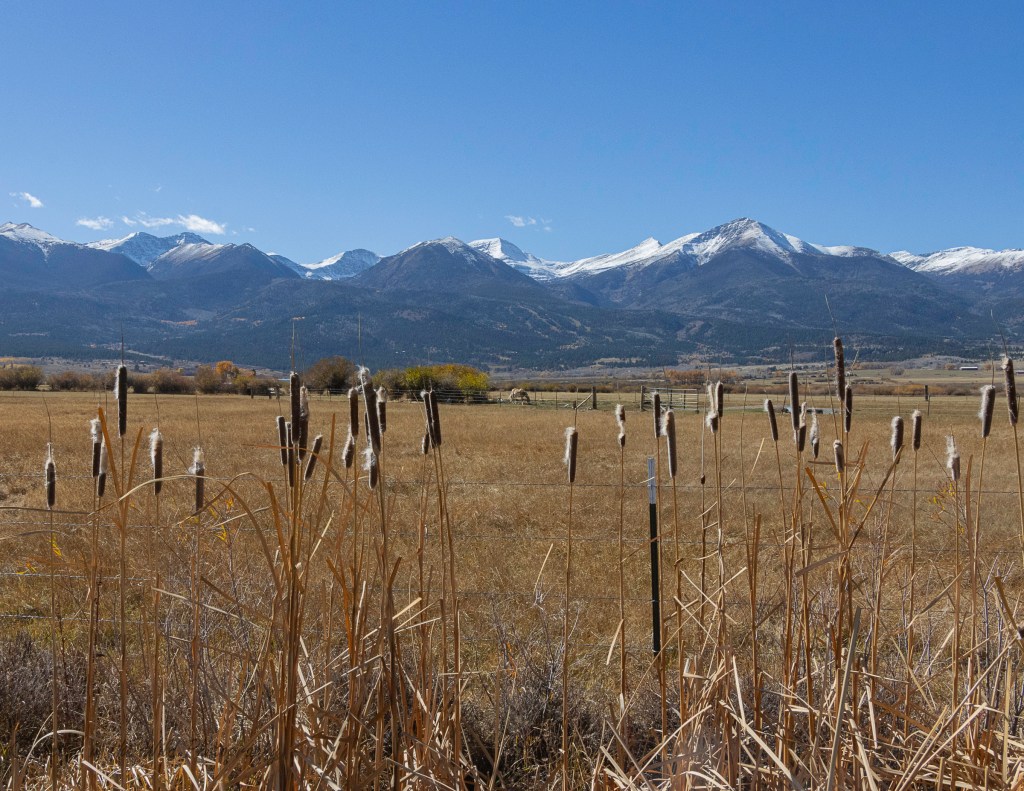
    Cattails, two weeks later, with snow on the peaks. Oct. 18, 2025

    There was still plenty of wildlife about:
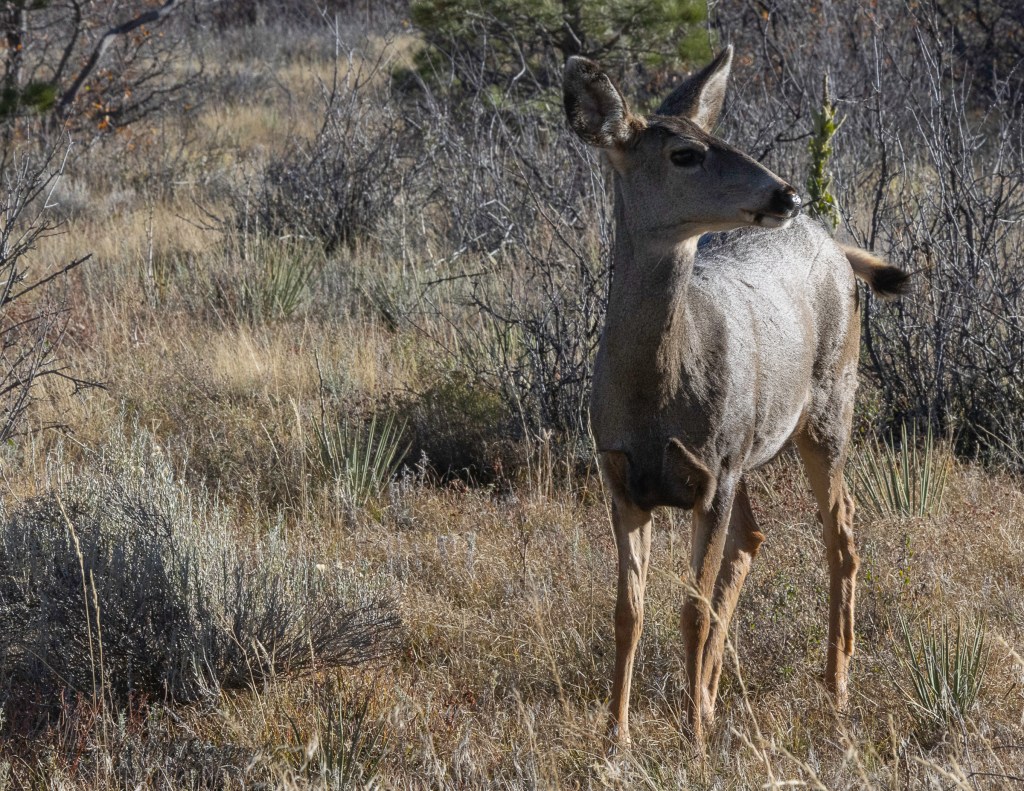
    Mule deer doe near Tanglewood, Oct. 18, 2025
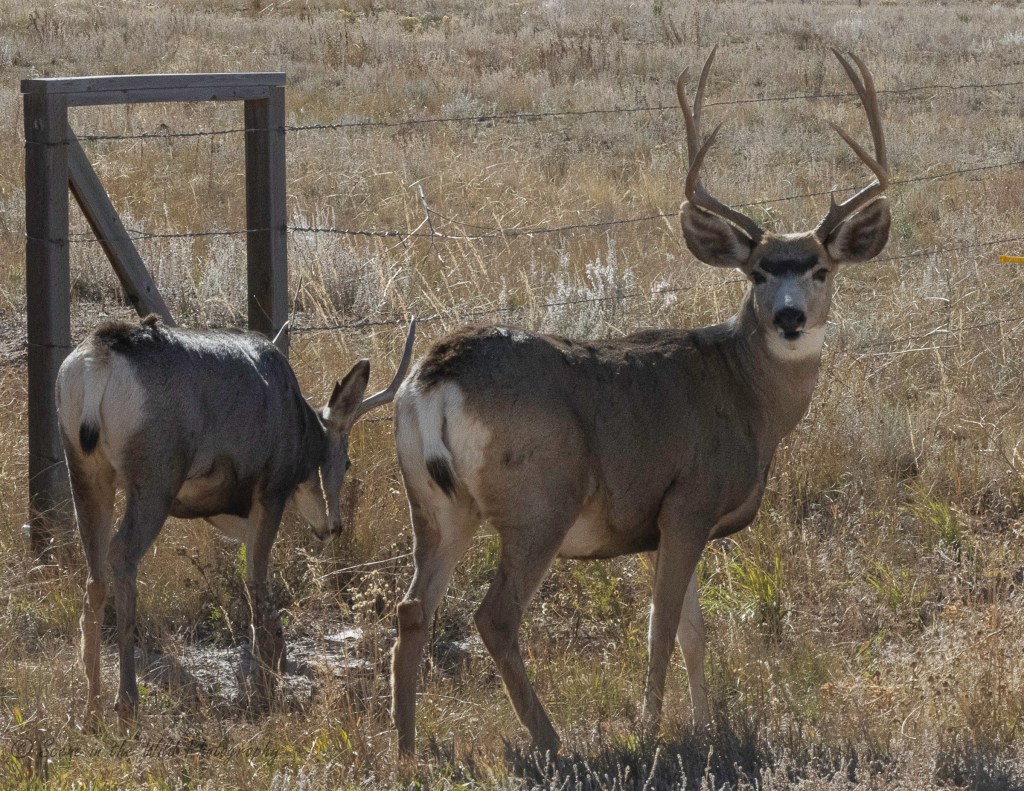
    Mule deer bucks by road to Lake DeWeese, Oct. 20,2025
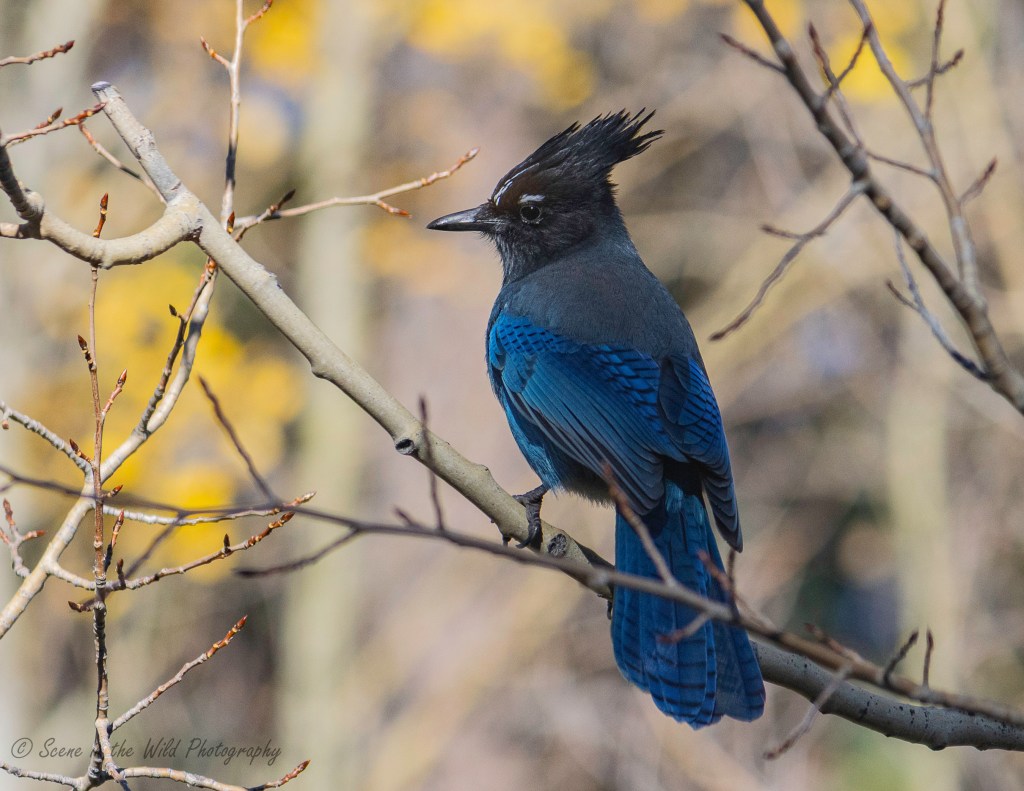
    Steller’s Jay, Oct. 21, 2025

    Of course there was still awe-inspiring scenery:
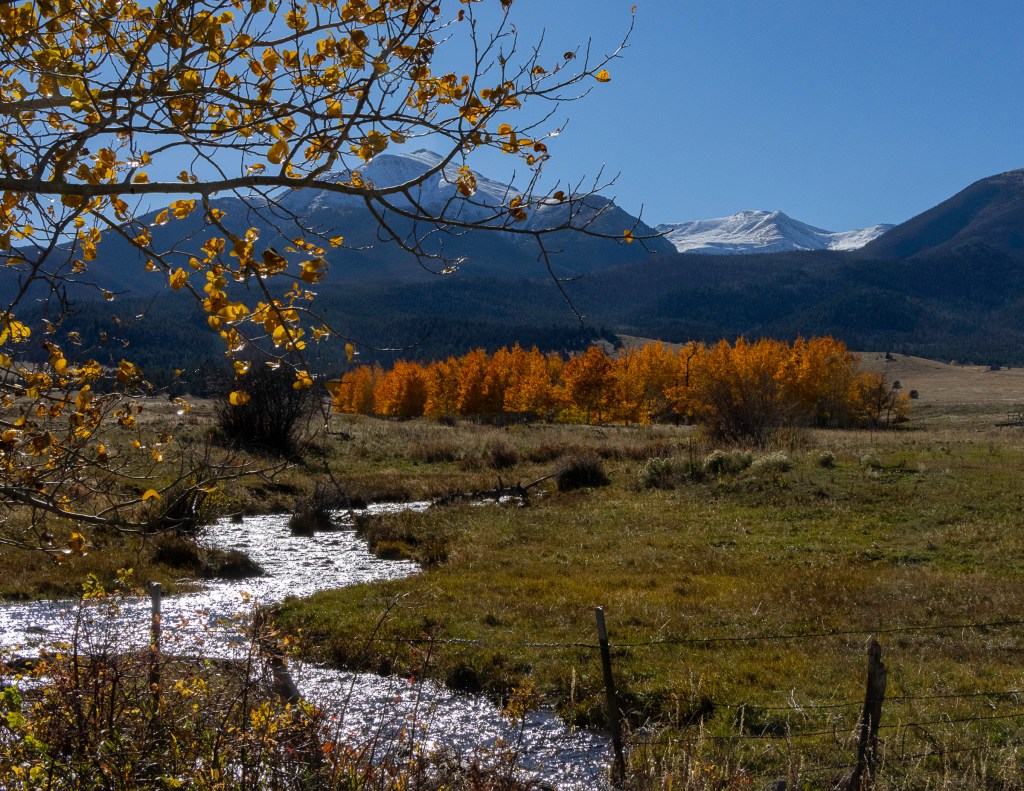
    Autumn splendor, Oct. 20, 2025
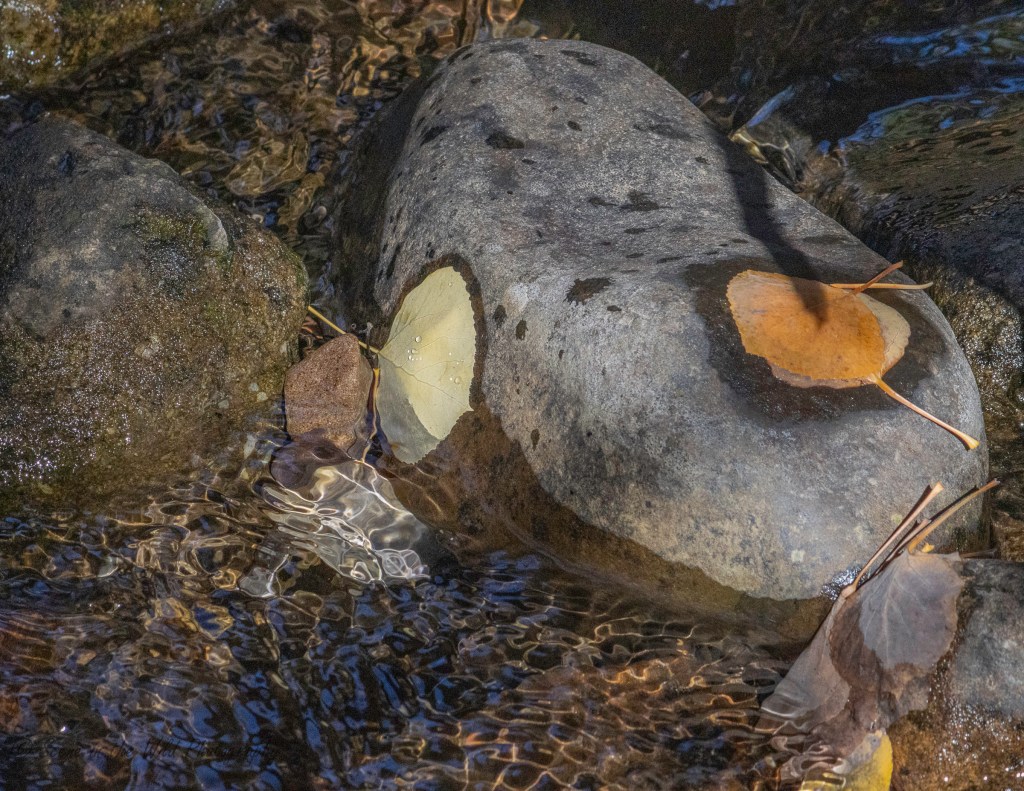
    Aspen leaves in stream, Oct. 21, 2025

    I’m astounded that it’s been more than three months since I wrote a new blog! It’s certainly not because I haven’t taken any photos during that time, because I definitely have. I would imagine you’ll see some of those during the winter. I hope to write blogs more frequently. Until then, Happy Thanksgiving to all! (If you like my blog, be sure to add your email address so they will automatically be sent to you when I post a new one. No cost, no ads!)
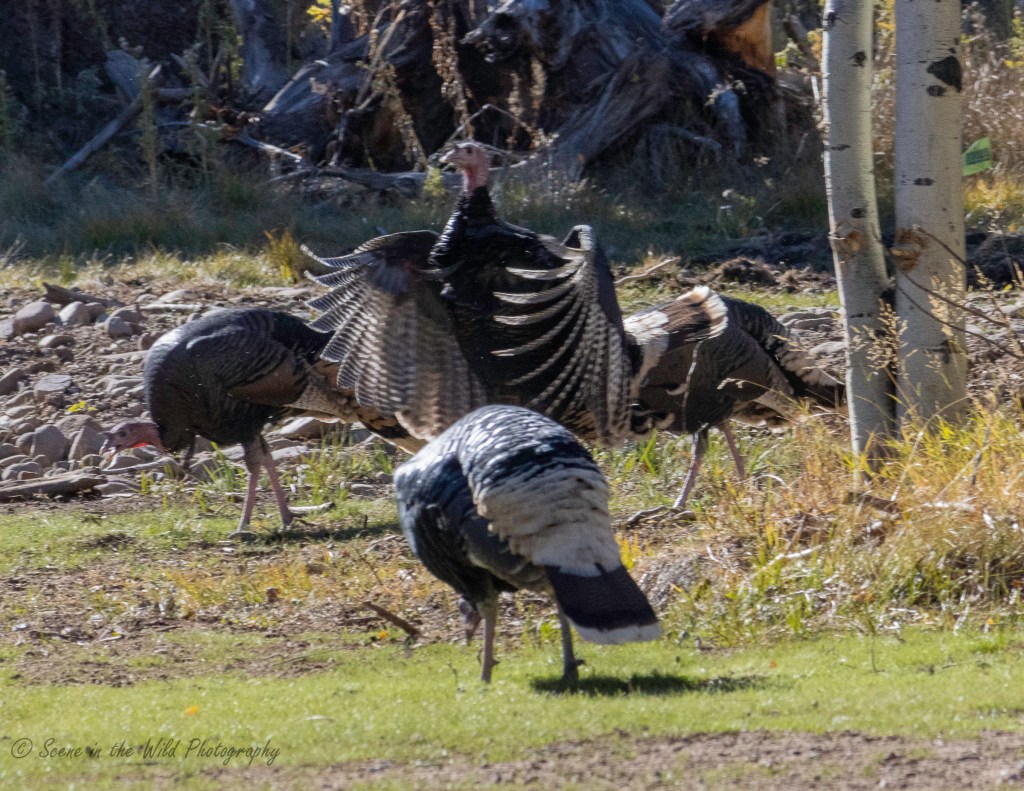
    Wild turkeys near cabin, Oct. 21, 2025
  • Comanche, Part 2

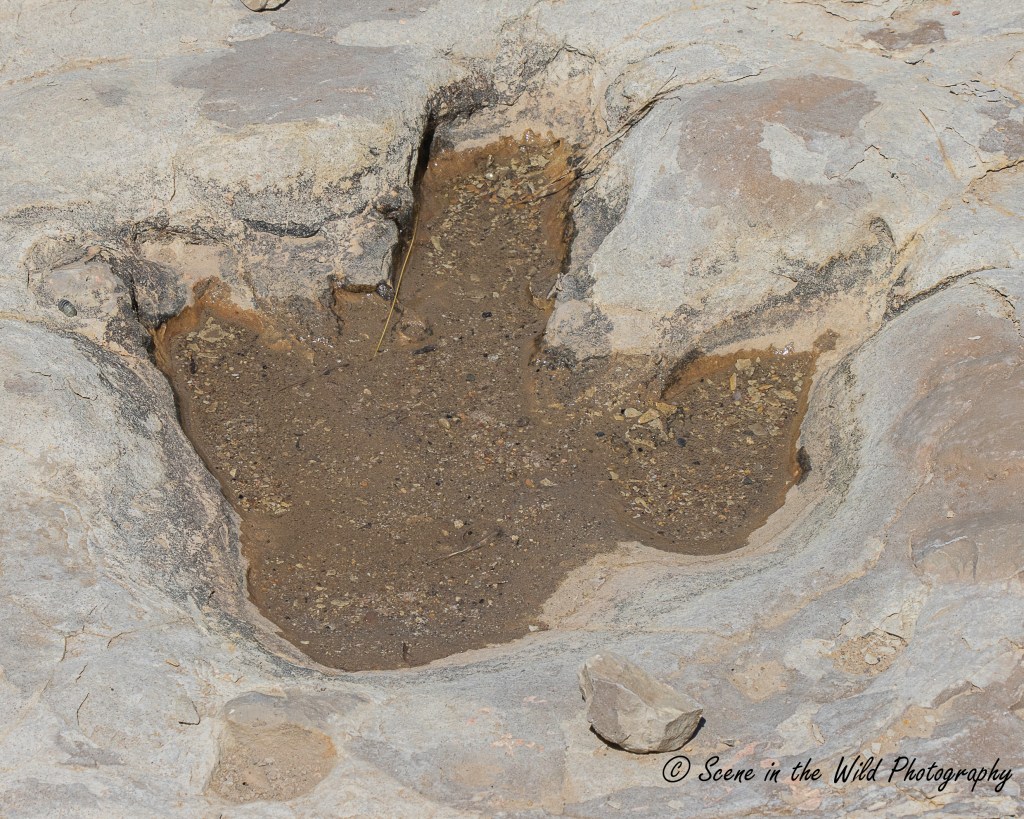
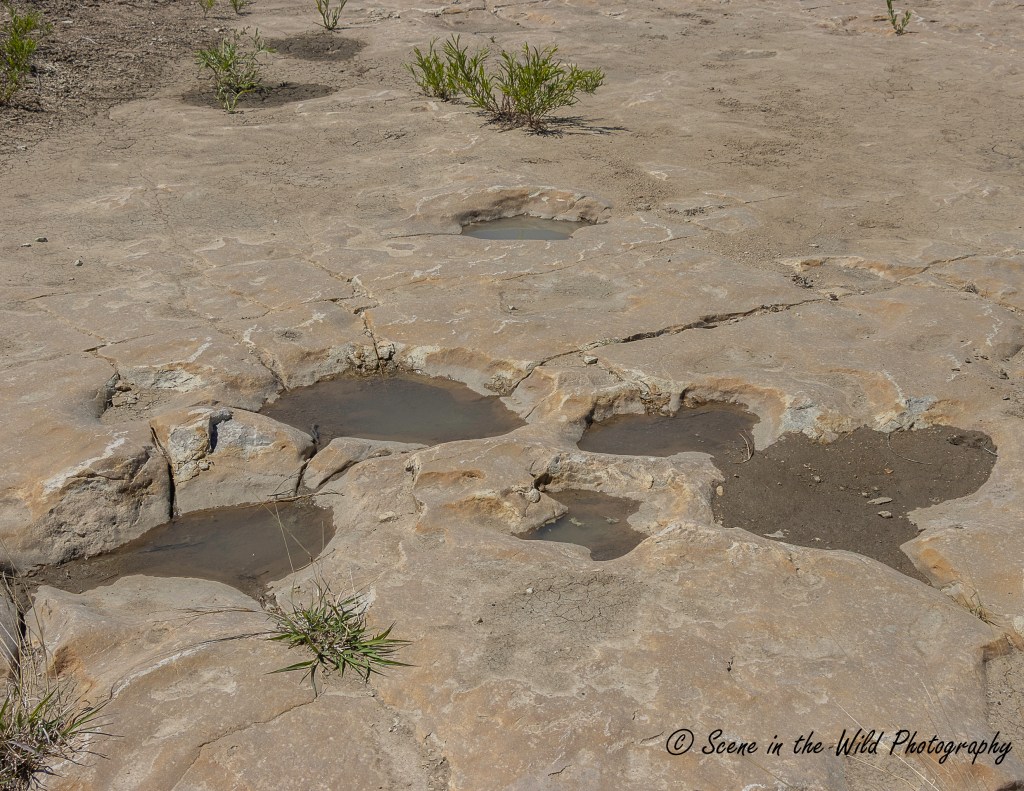
    I’m going to start with photos I took when I was a volunteer on the U.S. Forest Service’s Picketwire Canyon Auto Tour on Comanche National Grassland May 3. One of the highlights of the tours is the dinosaur tracks, the largest trackway in North America, with more than 1,900 separate tracks in 130 separate trackways!

    A few sauropod tracks (the long-necked dinosaurs with legs and feet that resemble those of elephants) from the Jurassic Period. Some of the tracks are smaller and close to the larger tracks–probably young ones.

    A theropod track. Nope, not T-Rex. They came later, during the end of the Cretaceous Period. What’s interesting about the theropod tracks is that some are right in the same area as the sauropod tracks. Perhaps they were looking for dinner?

    To continue that theme, here’s a modern-day predator track (a bobcat) found in close proximity to the dinosaur tracks.

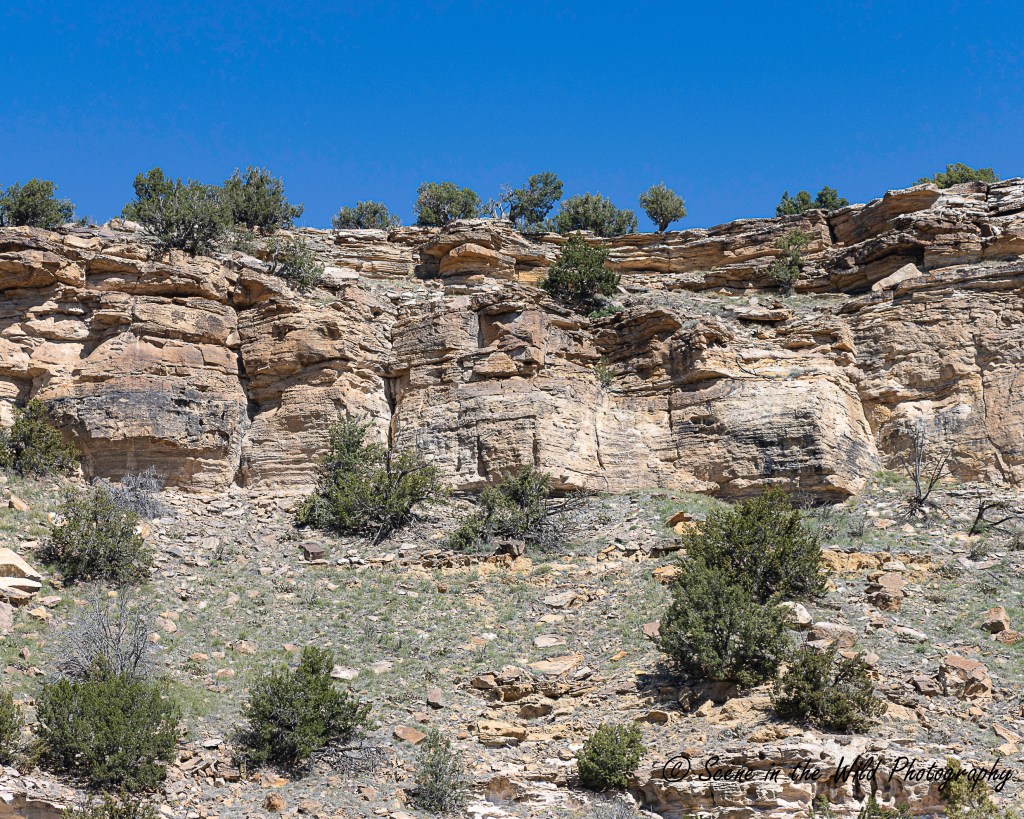
    Above the tracks you can see cliffs of Dakota Sandstone.

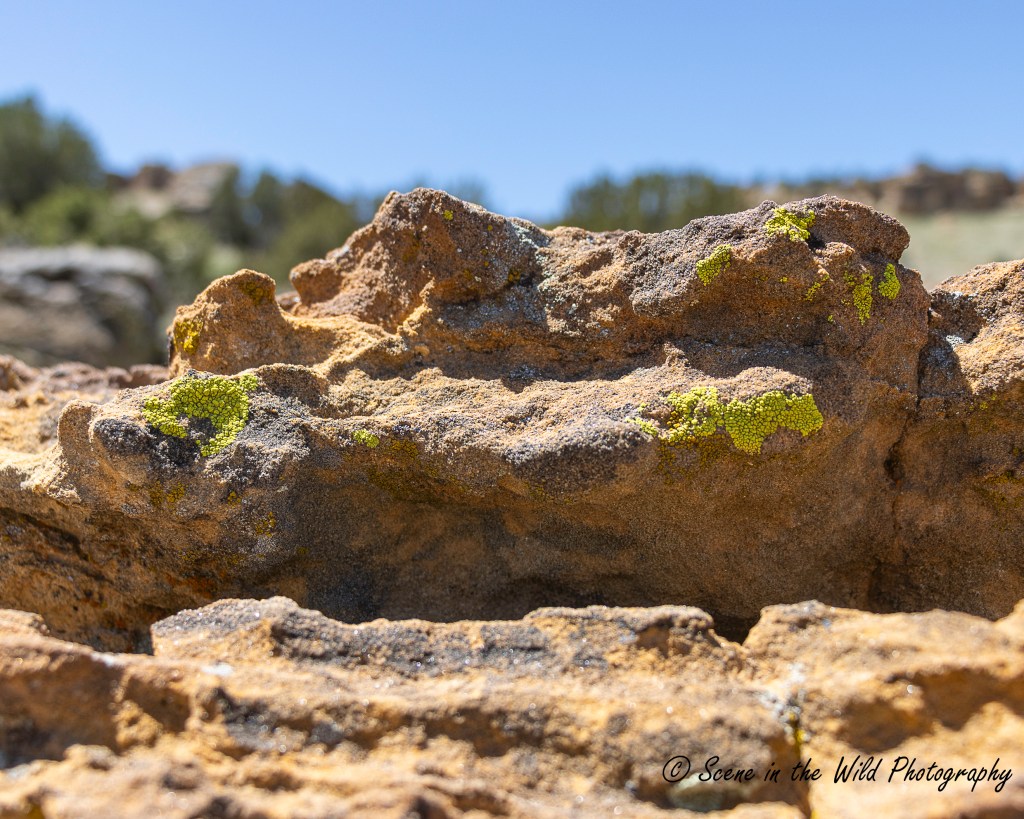
    Lichen on sandstone.

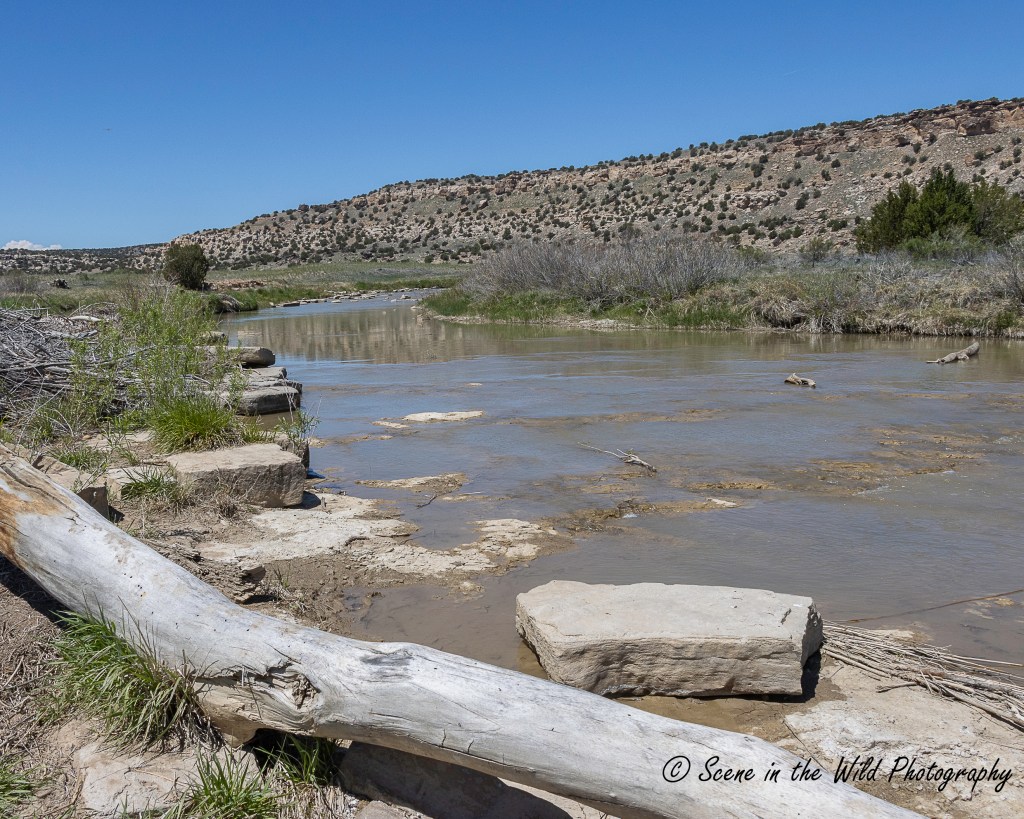
    The Purgatorie River. There are dinosaur tracks on either side, as well as under water. You might ask why the canyon is called “Picketwire” and the river is called “Purgatorie.” Originally, the river was named by Spaniards: “El Rio de las animas perdidas in el purgatorio.” In English: “The River of Lost Souls.” There are several legends regarding the name. One is that early Spanish explorers drowned in the river, but since there were no priests available, they didn’t receive last rites, and they were lost in Purgatory. Later, French trappers came through and called the river “Purgatorie,” which was pronounced “Purga-twa.” Early settlers couldn’t quite say that correctly, so they referred to it as “Picketwire.”

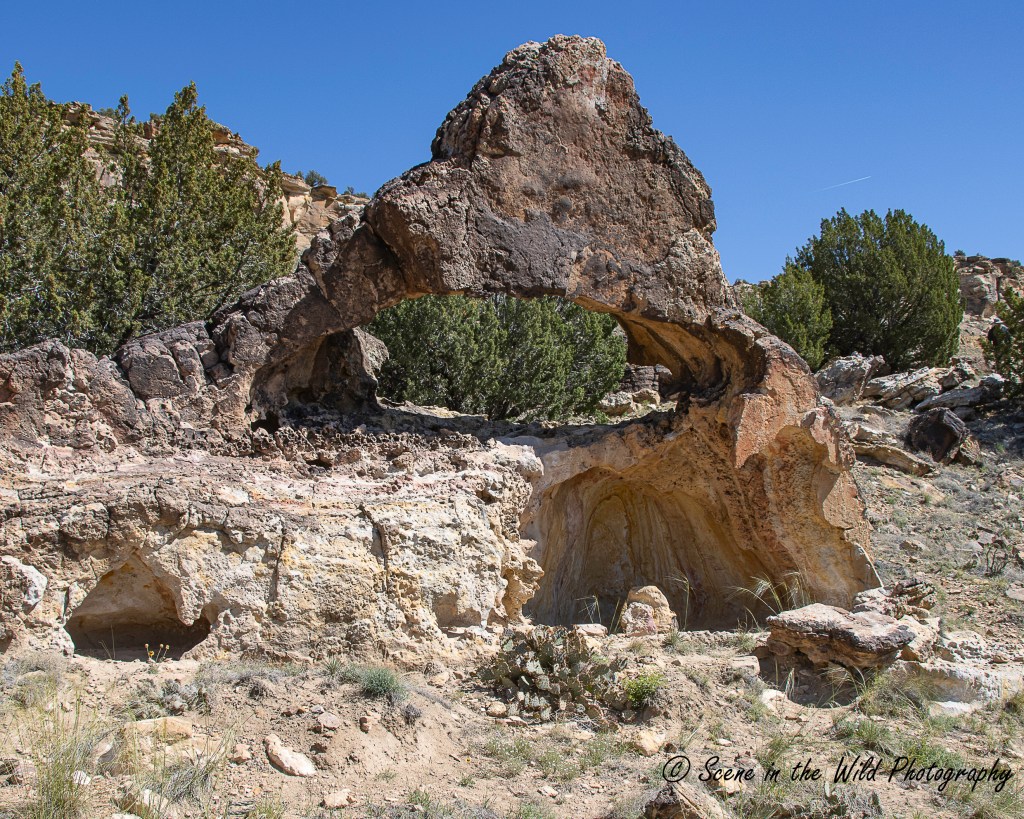
    Window Rock, along the road to the dinosaur tracks., always a favorite photo spot. The tour also features petrogylphs, and old mission and cemetery, and Rourke Ranch. For more information (remember, the La Junta Forest Service office is currently closed): https://www.fs.usda.gov/r02/psicc/recreation/picket-wire-canyonlands

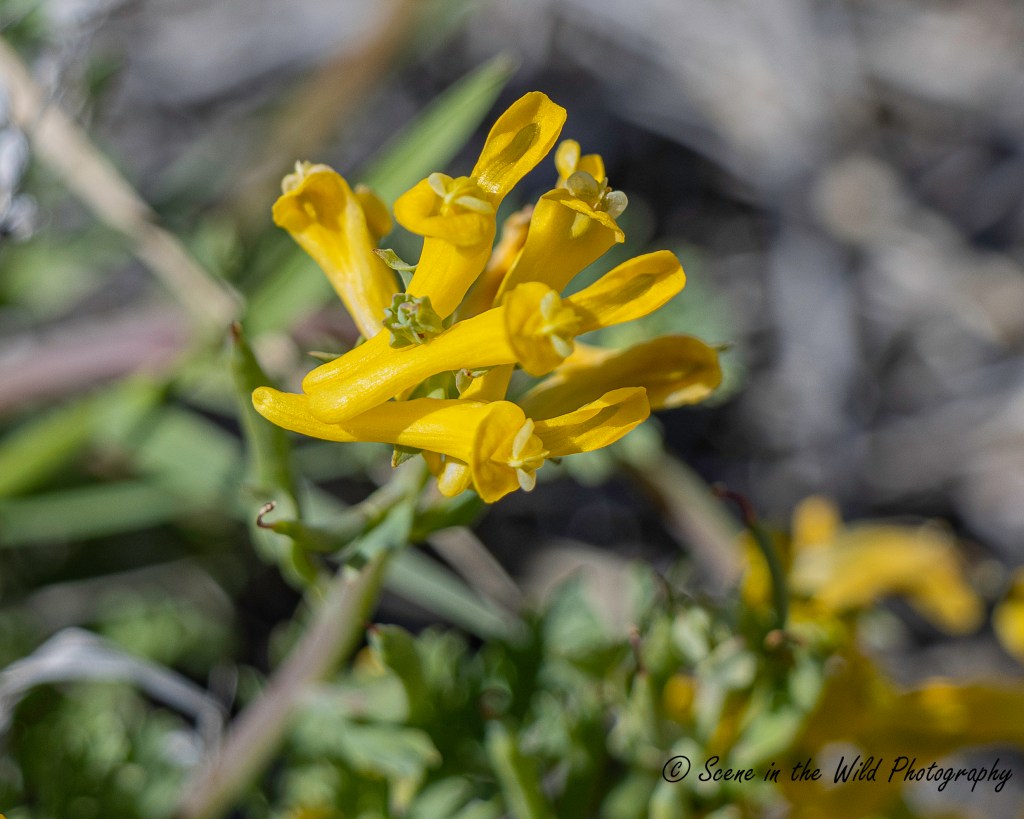
    One of the few flowers blooming down in the canyon on May 3: Golden Corydalis (Coyrydalis aurea), sometimes called “scrambled eggs.”

    In my last post, I featured flowers I found on the Comanche on May 17. I’d gone there for training on how to count and photograph bumble bees through Mountain States Bumble Bee Atlas. Did you know that there are nearly 50 species of bumble bees in North America? Unfortunately, one-fourth are at risk of extinction. I learned how to capture bumble bees, learned how to chill them (just temporarily!) so they can be easily photographed, and found out how to submit the data to Bumble Bee Watch. As we didn’t find any bumble bees, we practiced on other insects, some of which I’ll show below. (After the training, the leader and I did find a bumble bee on one of the Prince’s Plume plants–photo later).

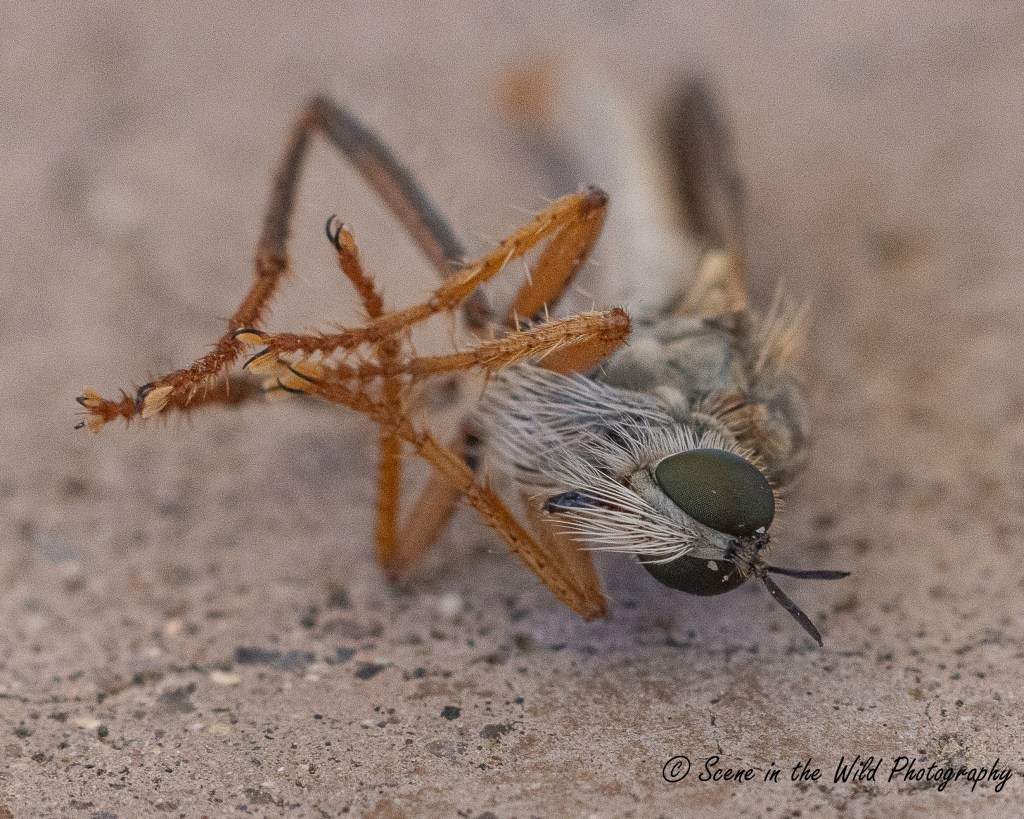
    One of my favorites! This is a robber fly. Note his huge eyes and beard! Robber flies prey on other insects. They’ll often sit still and wait for something to fly by–sometimes they even cock their heads like a dog!

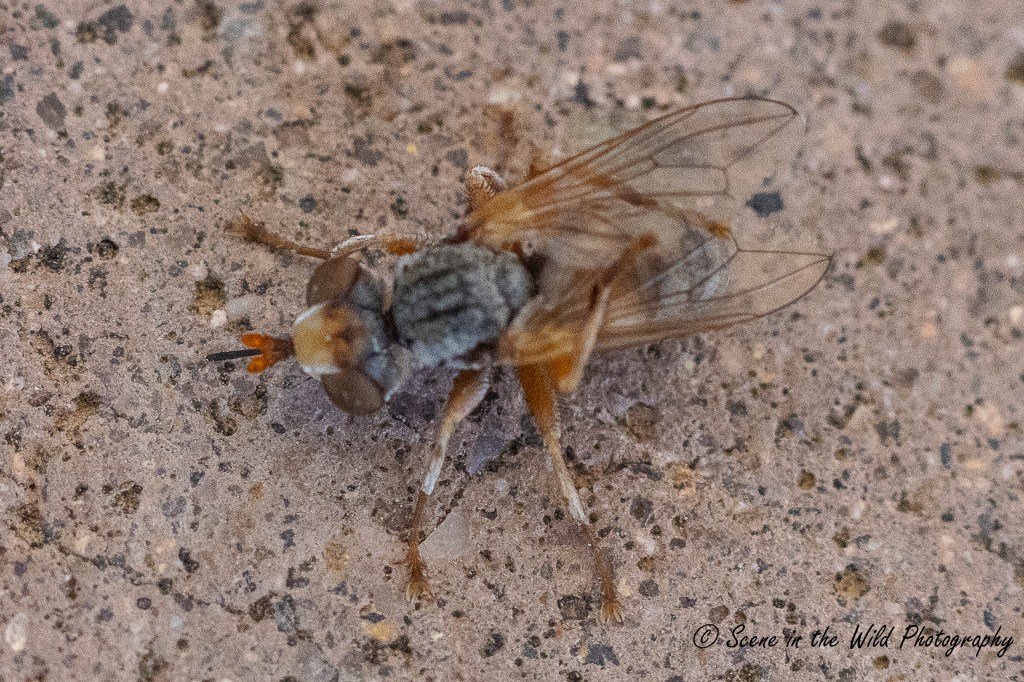
    This is another fly, but much smaller than the guy above–more like the size of a house fly, if not a bit smaller. Note the red eyes, orange antennae, and black proboscis. I’ve posted this on iNaturalist, so I hope to get a better ID.

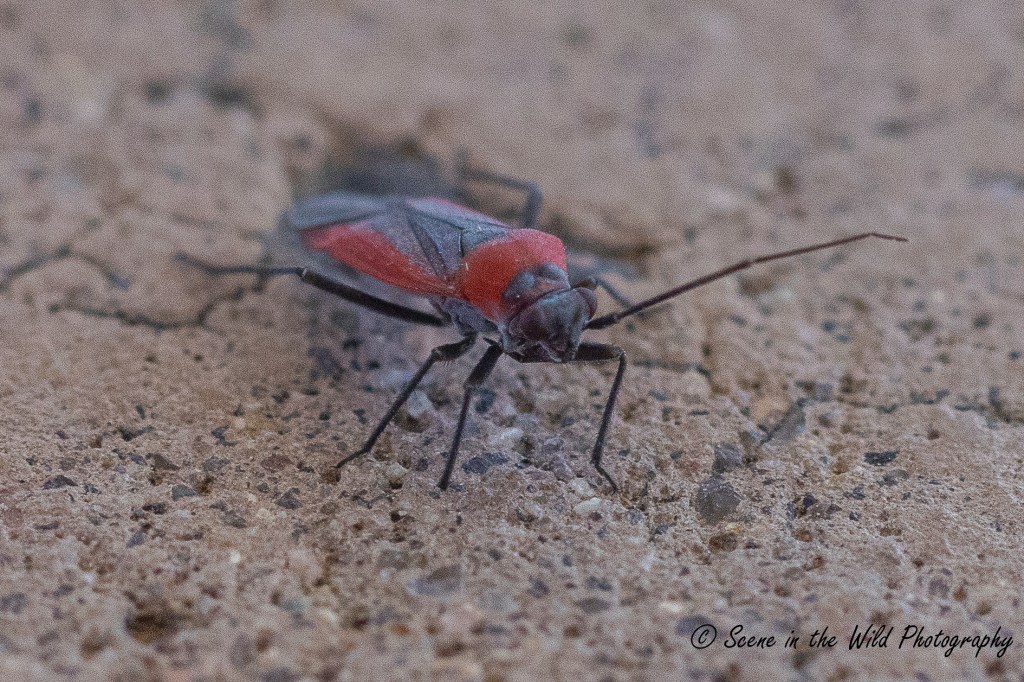
    This red and black beetle isn’t one of the insects that was captured, it just showed up to perhaps join the “party” when we were looking at the ones we did catch.

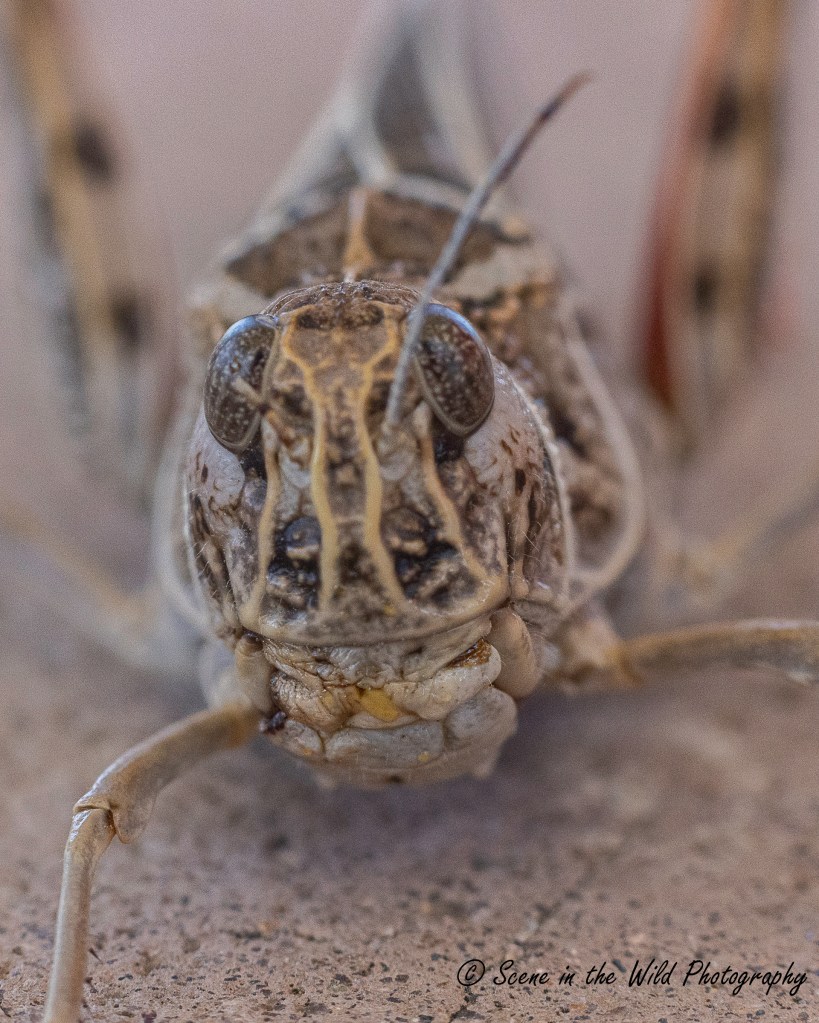
    A face only a mother could love? I’m fairly certain this is a red-shanked grasshopper; if you look closely, you can see a bit of red on one of its hind legs.

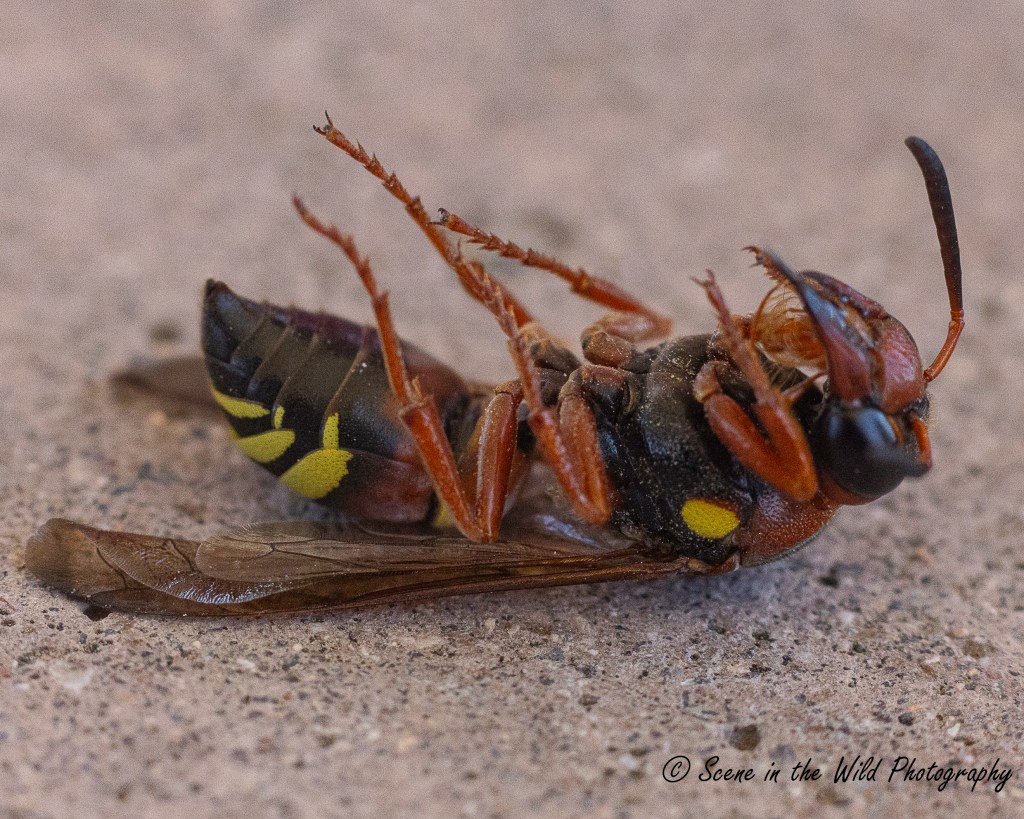
    This is a potter or mason wasp, according to iNaturalist. In case you’re worried, all of the captured insects woke up and went off to do their jobs.

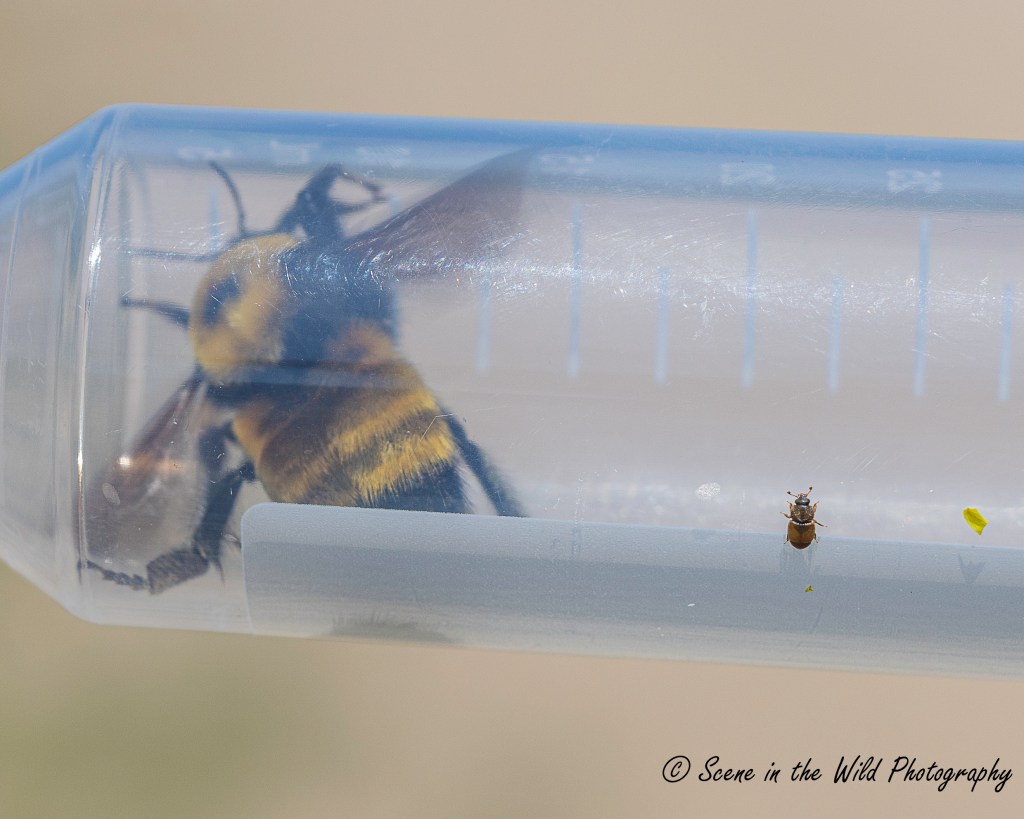
    The bumble bee we found on a Prince’s Plume. She’s a Bombus Nevadensis, as ID’d by our Bumble Bee Atlas trainer. Only the queens are out this time of year, searching for food so they can start providing for the eggs they’ll be laying soon. Plus, notice we had a little hitch hiker! Close-up below:

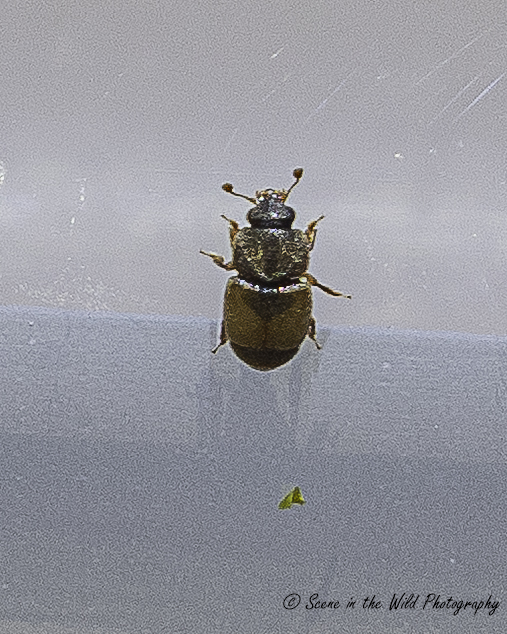
    One of the iNaturalist experts identified this as a Cactus Sap Beetle (Nitops pallipennis). That makes sense, as there are certainly many cacti on the Comanche!

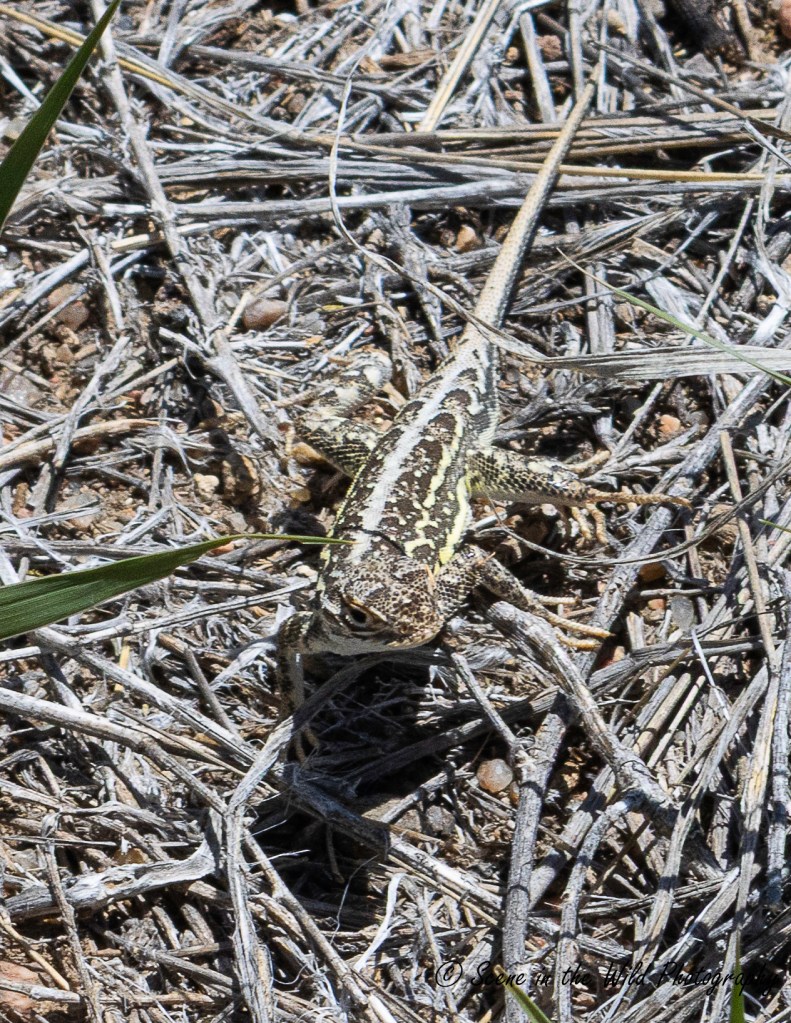
    The training was held at the Vogel Canyon Picnic Area. We spread out from there, looking for insects, but also saw quite a few of these lizards–Eastern Fence Lizards. This one seemed to be posing for me!

    If you’re interested in more information about the Bumble Bee Atlas (whether or not you want to participate), go here: https://www.bumblebeeatlas.org/pages/mountain-states The data goes to Bumble Bee Watch: https://www.bumblebeewatch.org/about/ If you go there, you can see where bumble bees have been sighted, and what species have been sighted.

    For more information about Comanche National Grassland: https://www.fs.usda.gov/r02/psicc/about-area/comanche-national-grassland

    Sign up here if you’d like to subscribe to my blog:

    ← Back

    Thank you for your response. ✨

    Warning

    Leave a comment

  • Comanche Blooms

    One of my favorite stomping grounds: Comanche National Grassland! Note that there are two parts to the Comanche: the La Junta Unit and the Springfield Unit. This post is about the La Junta Unit, which is the closest one to me.

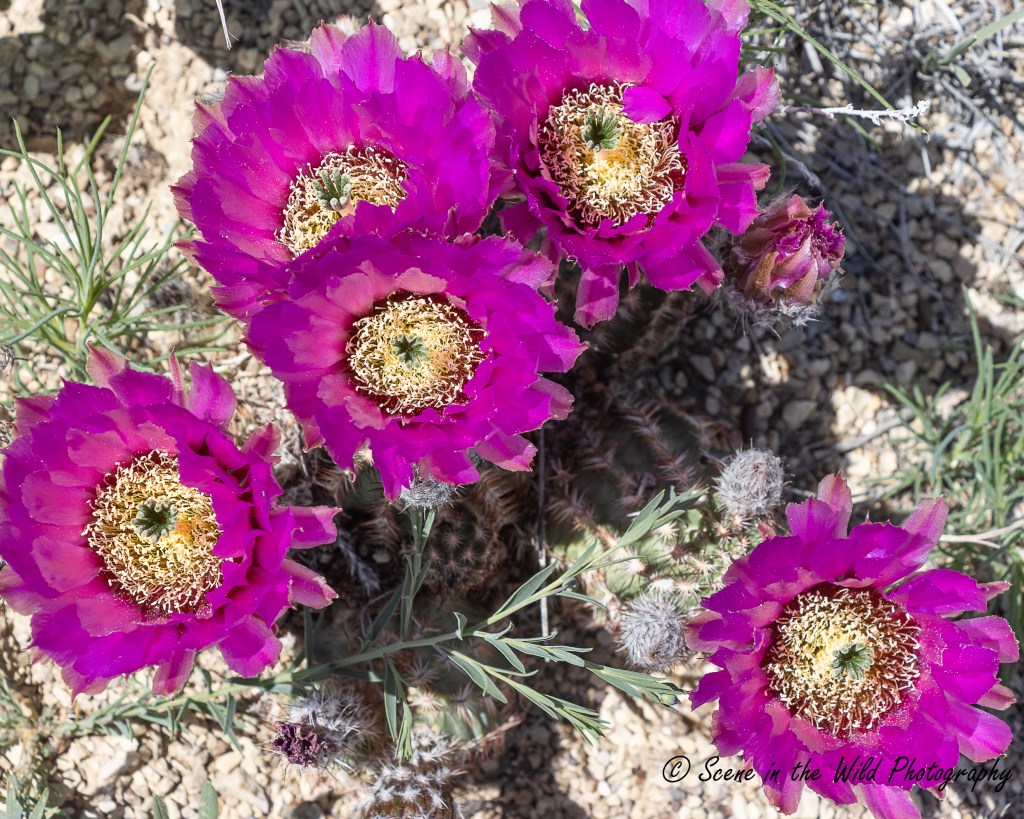
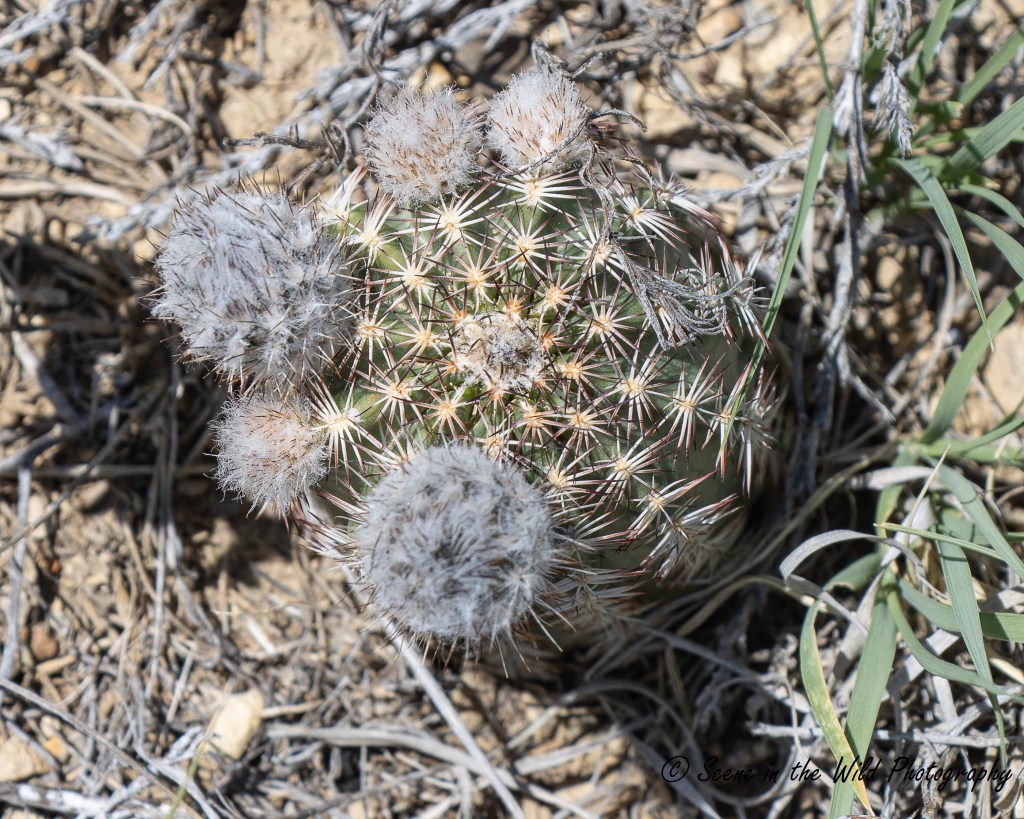
    It amazes me how much the landscape changes in just a few days. These are flowering Lace Hedgehog cacti (Echinocereus reichenbachii) near David Canyon Road. They weren’t blooming the last time I was out there, on May 3. The flowers don’t stay long, so I was thrilled to be able to see them. (I took all of the photos in this post May 17). Note: All identifications are to the best of my knowledge! This is the cactus as it looks before it blooms:

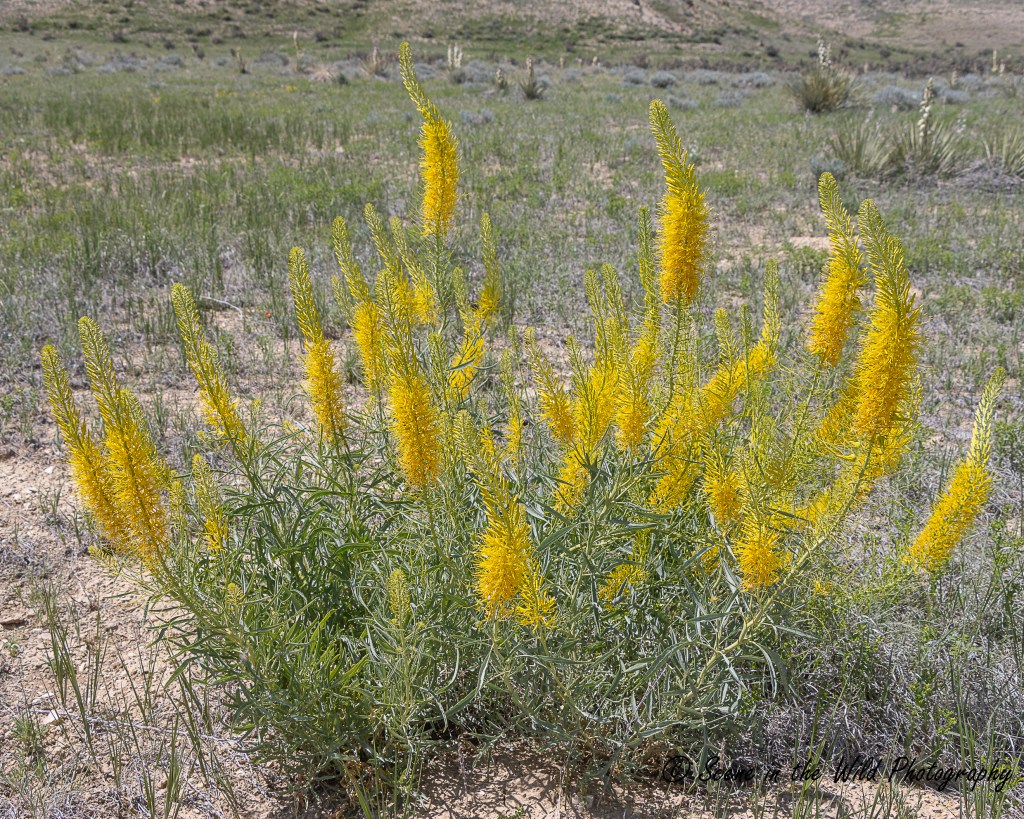
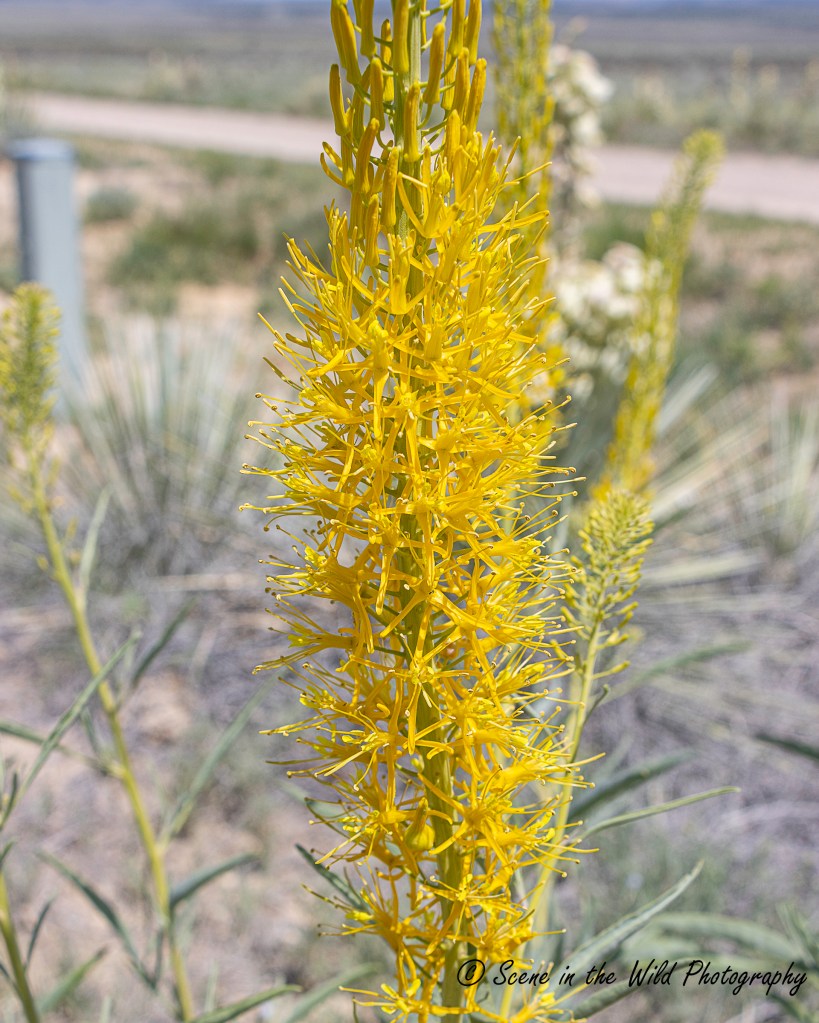
    Another one of my favorite grassland plants: Prince’s Plume (Stanleya pinnata), also along David Canyon Road. Some years it doesn’t come up at all, but I think the rain we received about a week and a half ago encouraged the growth. I love to see it waving in the wind!

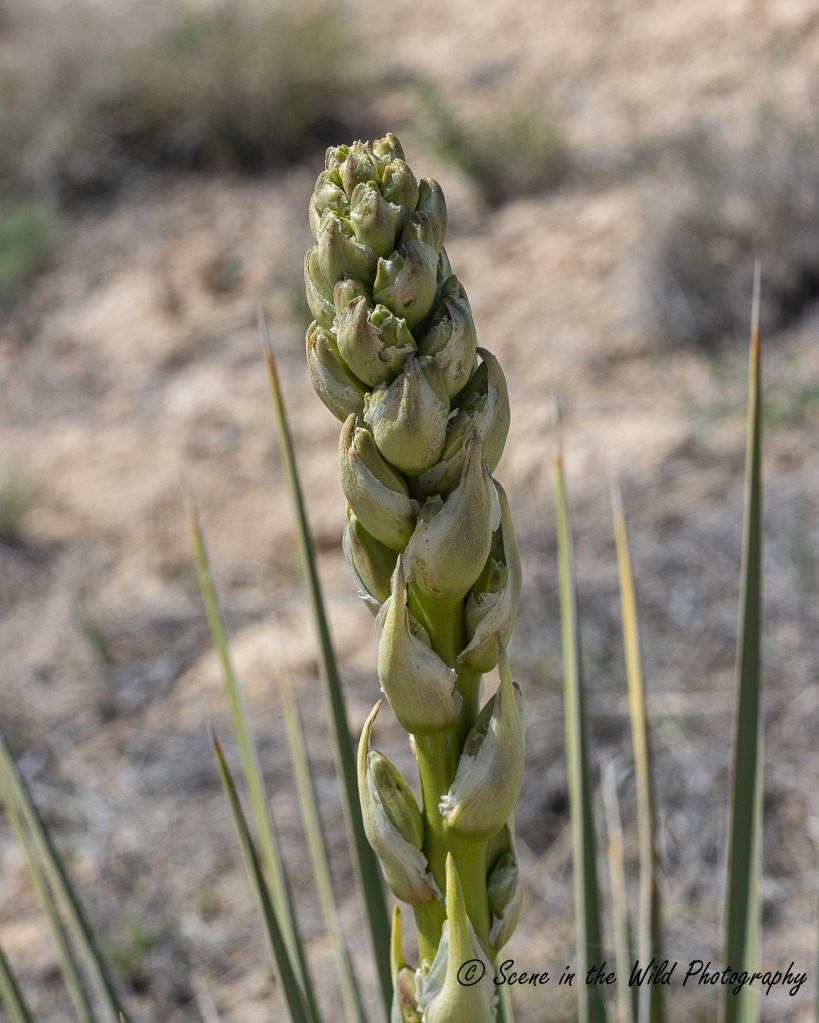
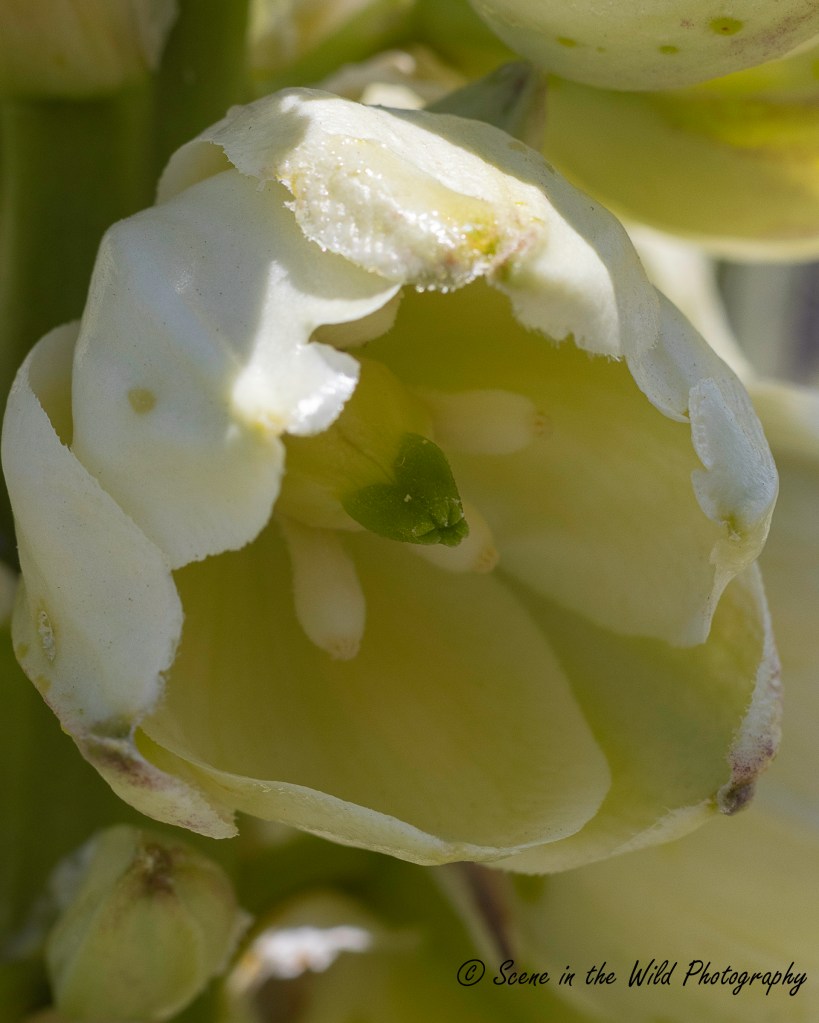
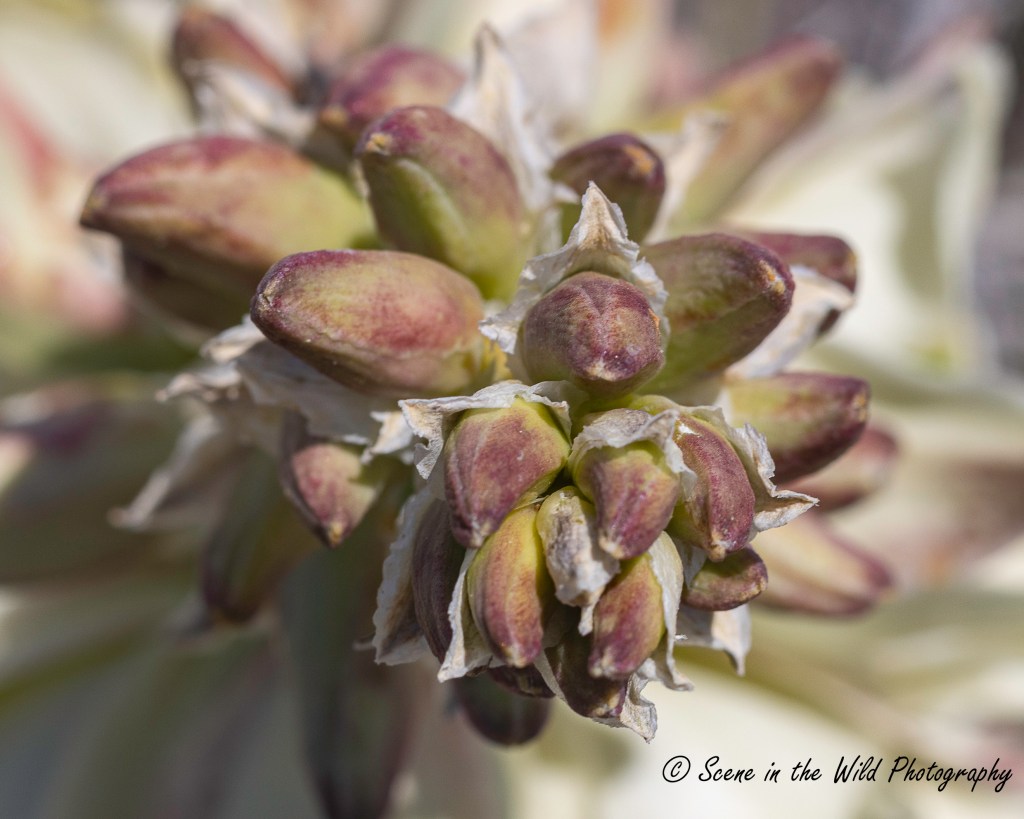
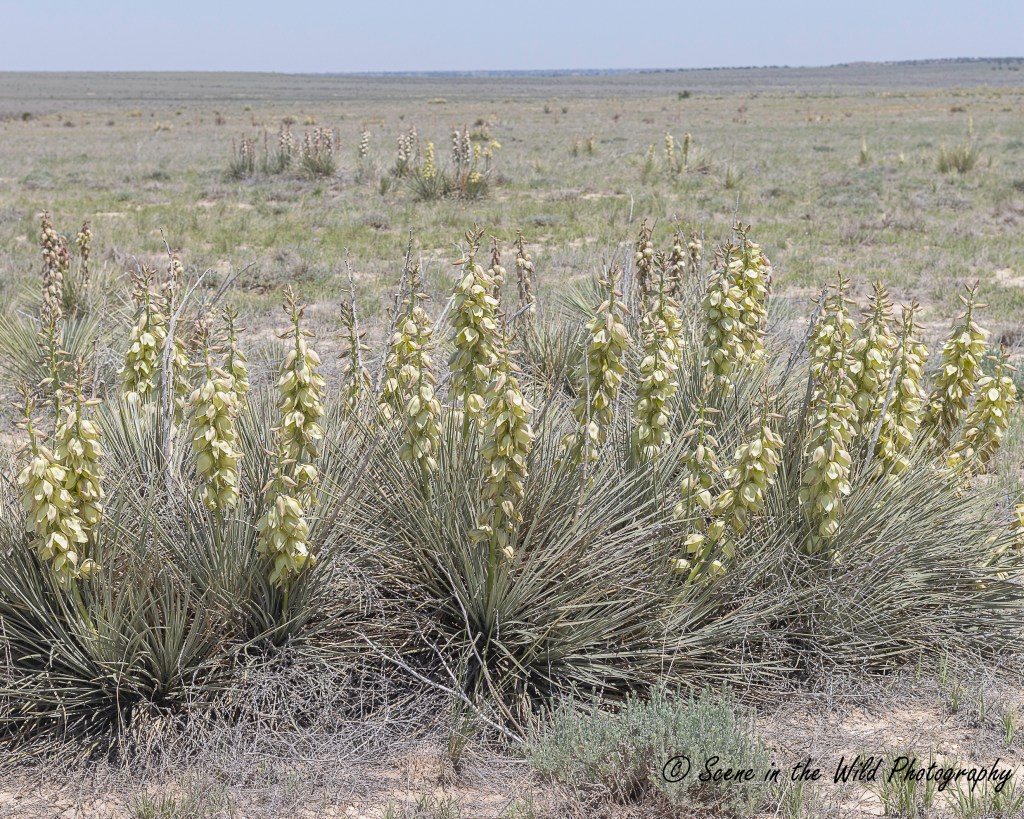
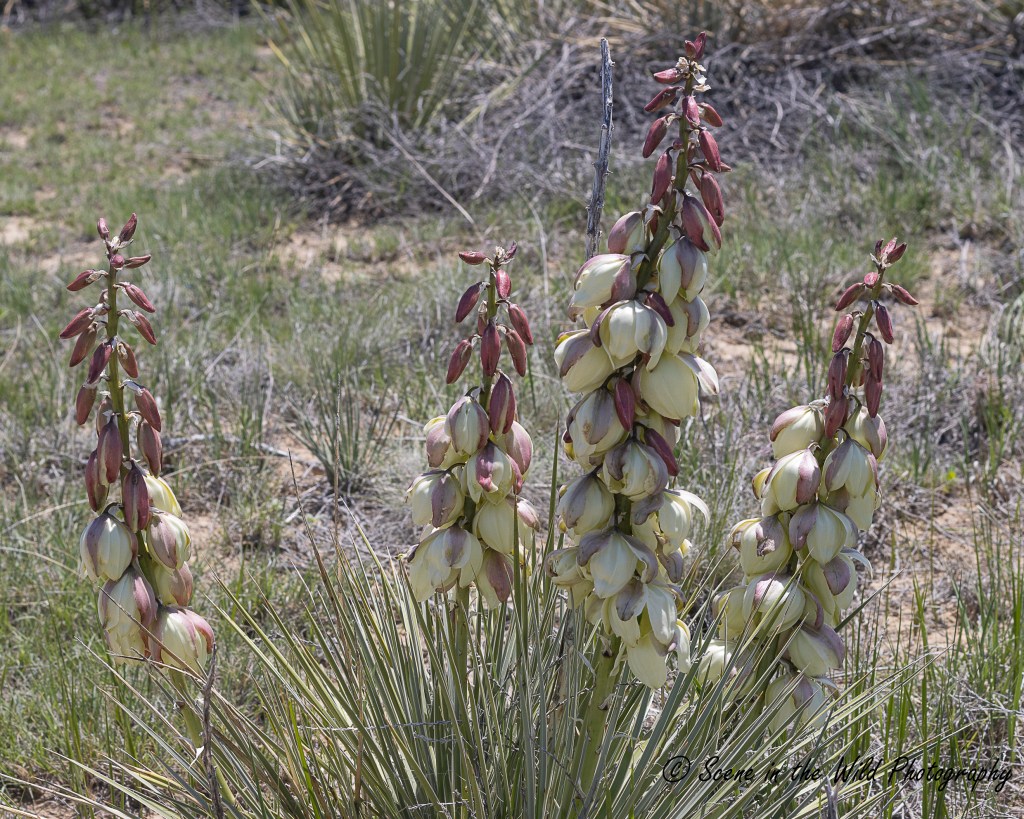
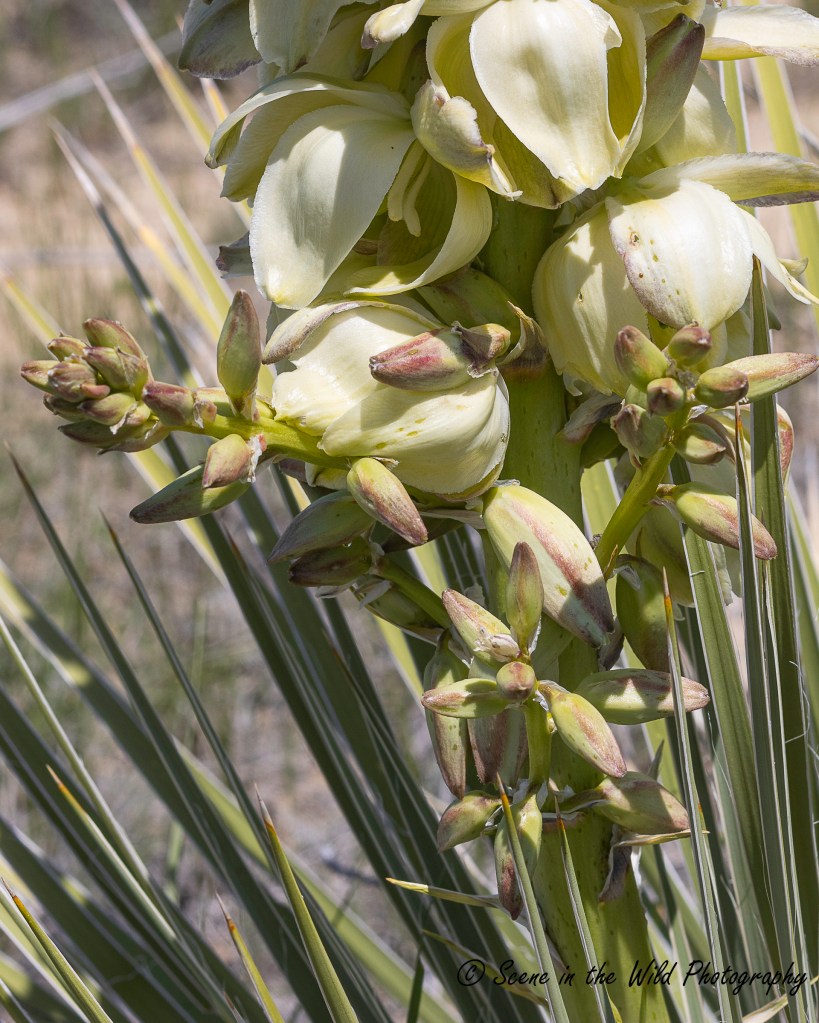
    Okay, what does this remind you of? This is the early stage of the flowering of a yucca (Yucca glauca). But doesn’t it look like asparagus? That’s because it’s in the same family, Asparagaceae! We’ve been picking wild asparagus that grows on our property, and when I saw this, it sure reminded me of the vegetable. Here are a few more photos of yucca in various stages of growth:

    Note that on this plant, there are some horizontal branches. I saw several plants like this. Most plants just have one spear growing straight up. I don’t know what causes the branching.

    Yucca are blooming all over the plains right now. These photos were taken along the road to Vogel Canyon and along David Canyon Road.

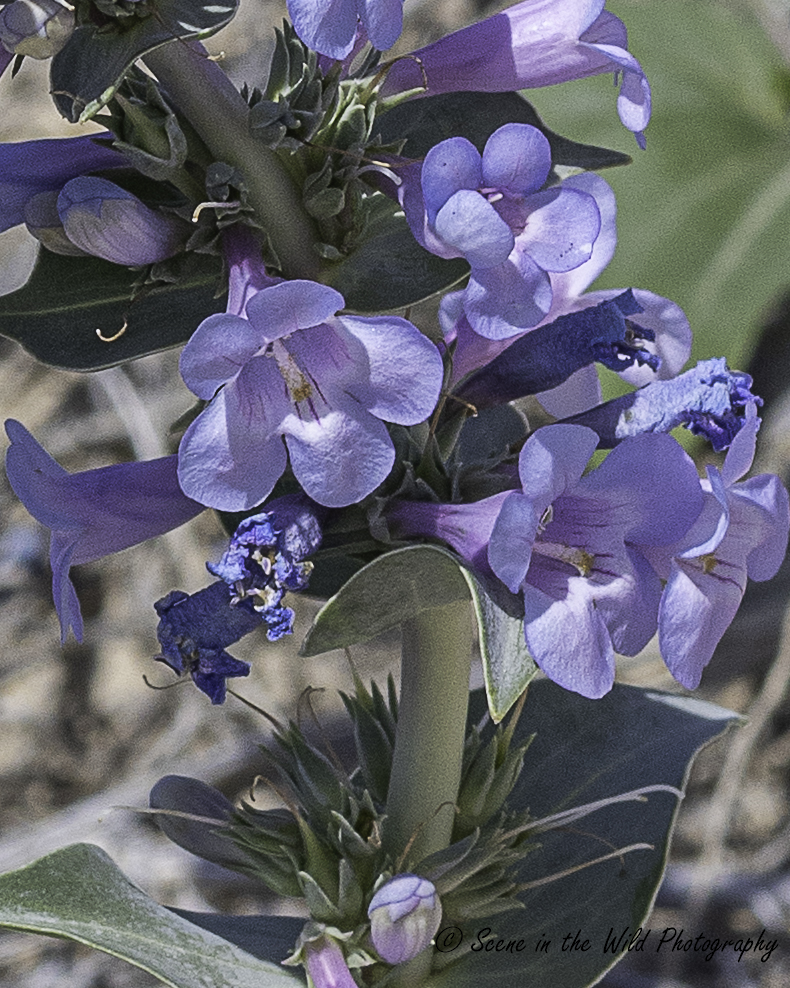
    Broadbeard beardtongue (Penstemon angustifolius) is one of several variaties of Penstemon found in Colorado. Bees love it. So do I!

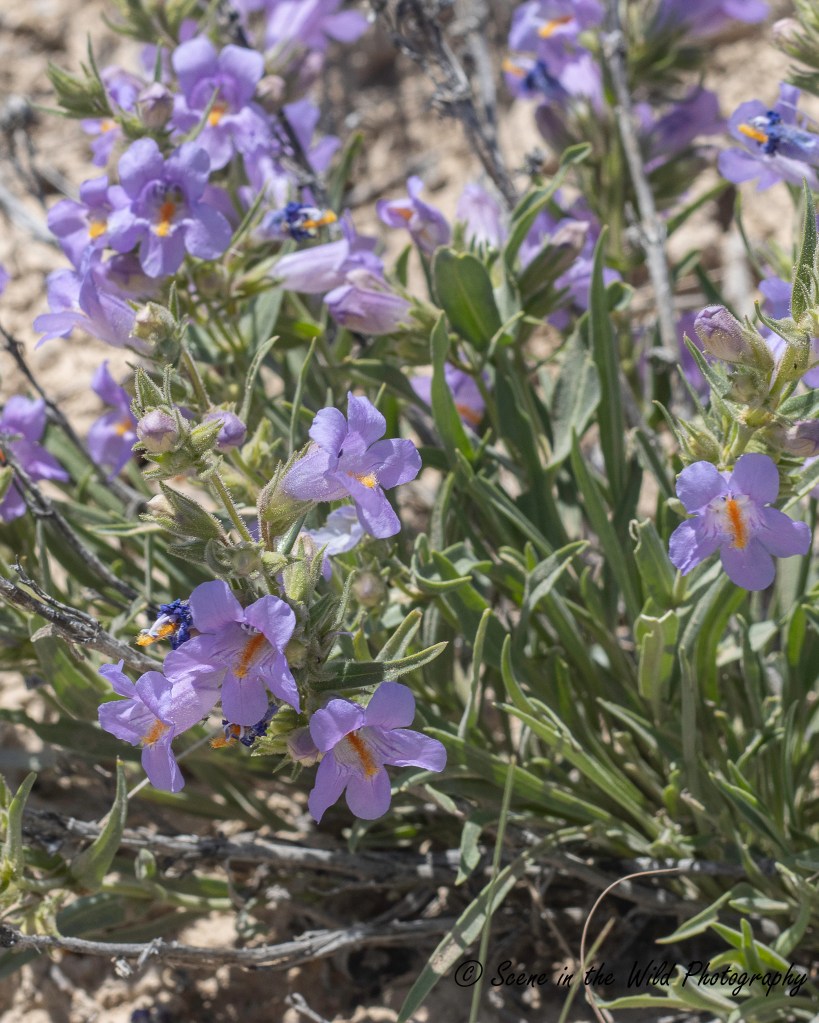
    Colorado Beardtongue (Penstemon auriberbis). Note the orange “tongue” on these!

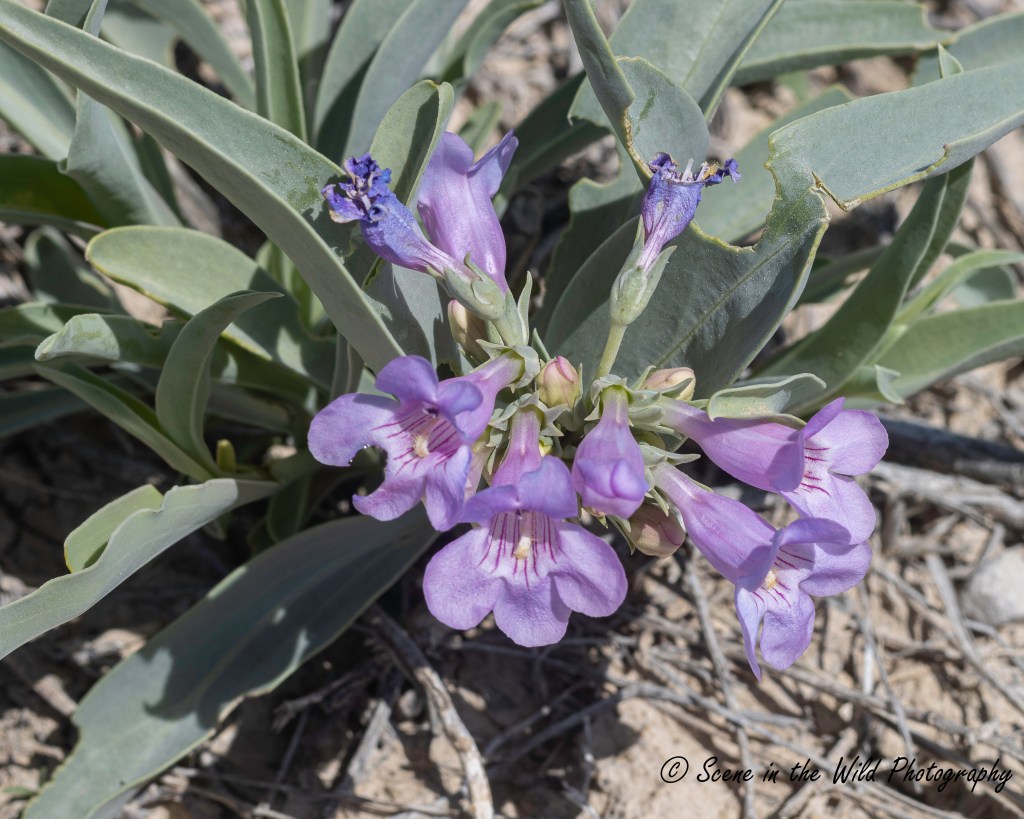
    This is a low-growing penstemon. I’m not confident enough to give a better ID. But note that all three of these plants were growing in the same area–in this case, along David Canyon Road.

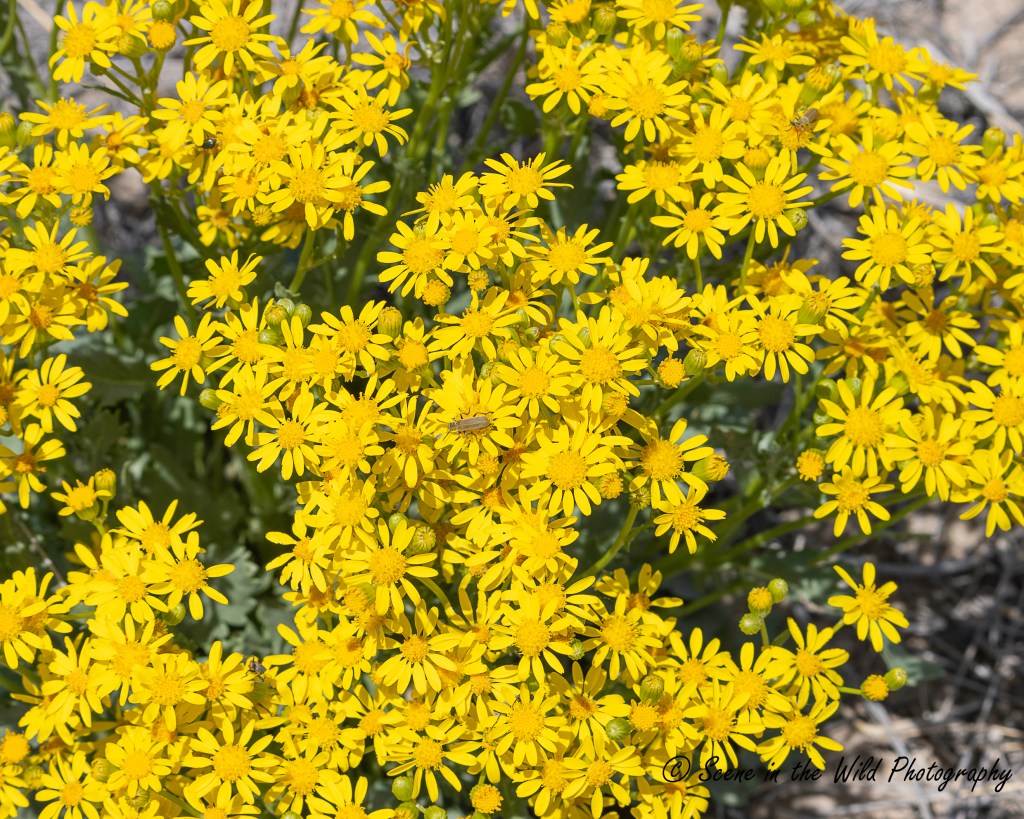
    Prairie groundsel (Packera plattensis). See the blister beetle in the middle of the photo? Found along the road to Vogel Canyon.

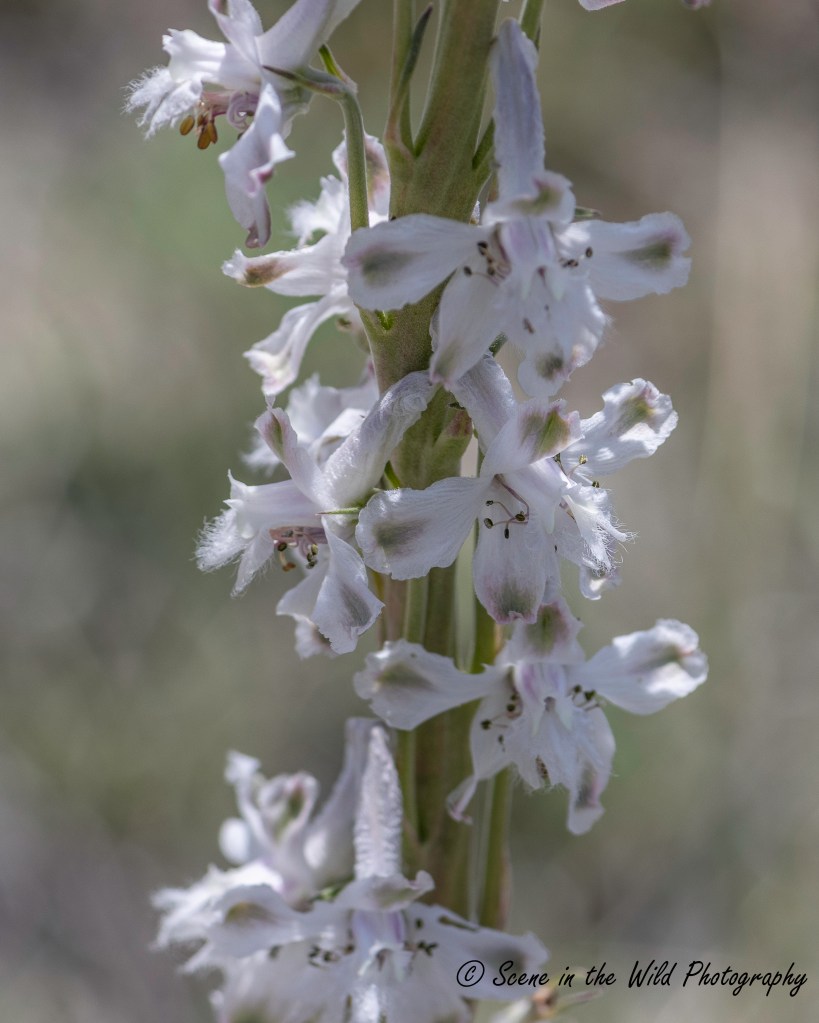
    Plains larkspur (Delphinium virescens). Near Vogel Canyon Picnic Area.

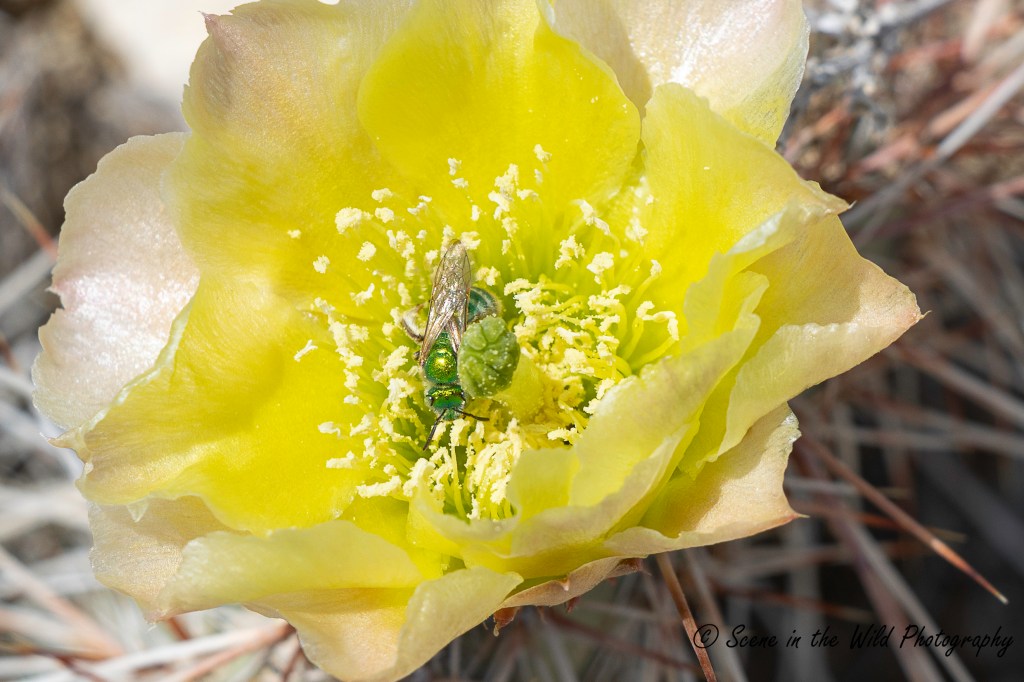
    Prickly pear (Opuntia sp.), with a pollinator (a green metallic sweat bee). Prickly pear are quite numerous; some have orange flowers; some are even peach-colored. Apparently the plants like to interbreed, so it’s hard to get a more specific ID than Opuntia.

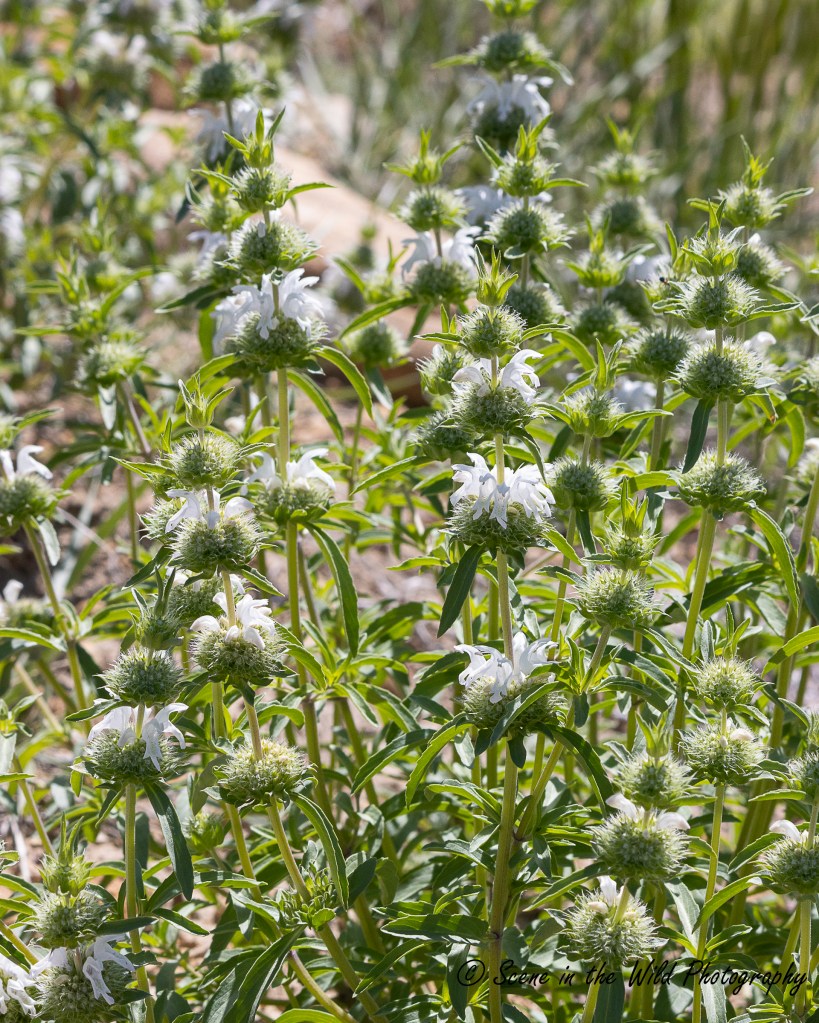
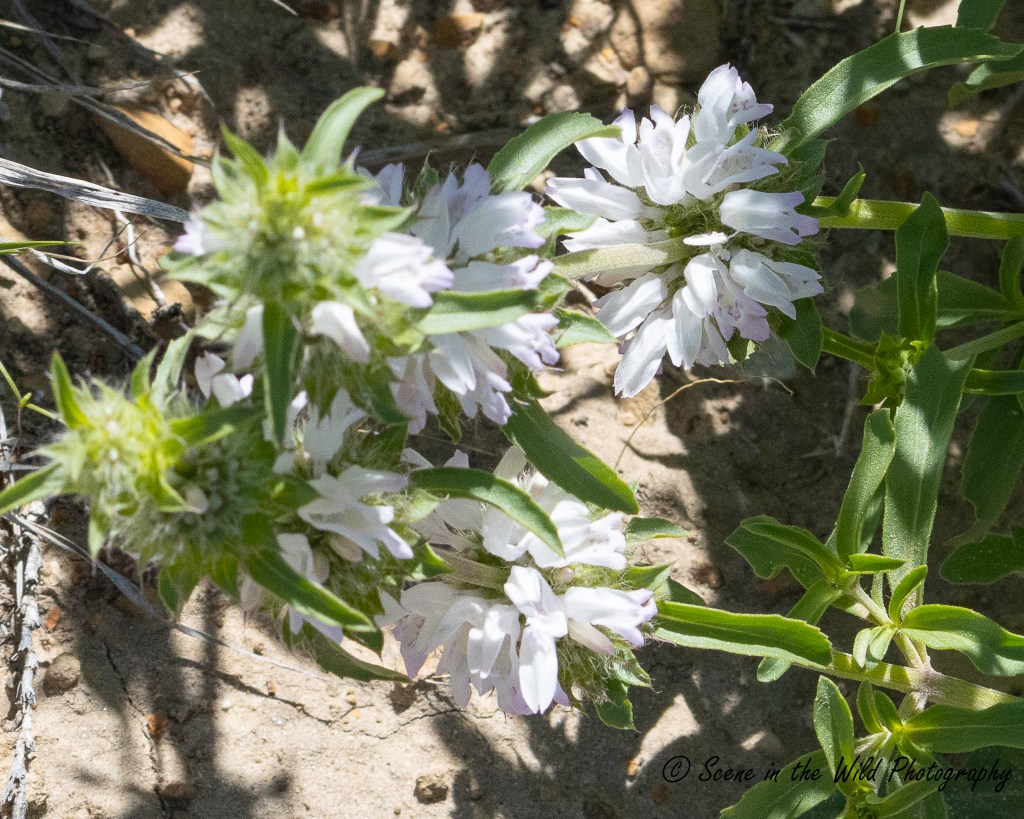
    Plains bee balm (Monarda pectinata). These were also near the Vogel Canyon Picnic Area. Here’s a closer view:

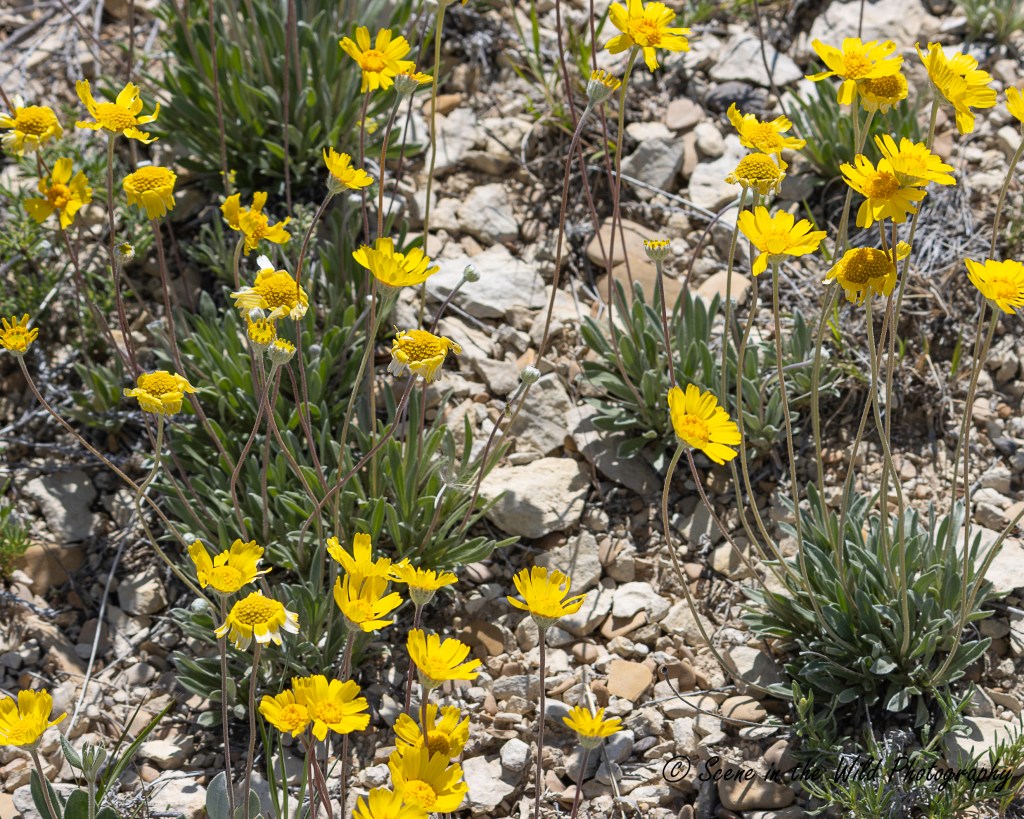
    Stemmy Four-nerve daisy (Tetraneuris scaposa). Note that the leaves are on the ground instead of along the stems. Again, this is my best guess. I feel that if I’m going to display nature photos, I should at least take a stab as to the species. These were on County Road 25, near the bluffs just north of the intersection with David Canyon Road.

    My original intention was to include more pictures from this date, when I’d gone out to the Comanche to take Bumble Bee Atlas training, as well as photos from May 3, when I was a volunteer for the Picketwire Canyon Auto Tours. But then I realized how many flower photos I had just from May 17, I decided to limit this post to just showcase the flowers. That means there will be another post from the Grassland–mostly insects, and landscapes, including dinosaur tracks, not to mention a lizard! I’ll talk more about the Bumble Bee Atlas, too.

    Note that the U.S. Forest Service office in La Junta is not currently open due to the federal government’s downsizing initiative. You can still sign up for Picketwire Auto Tours, which run through June 14 and should start up again in September. To check to see if there are any openings (make sure to read the rules; you’ll need a four-wheel drive, high clearance vehicle), you can go to this website: https://www.recreation.gov/ticket/facility/234166

    If you’d like to subscribe to my blog, just type in your email below and click on “Subscribe.” You’ll get an email every time I publish a new post (no charge to you).

  • Scene in the Wild Photography

    Welcome to my new blog!

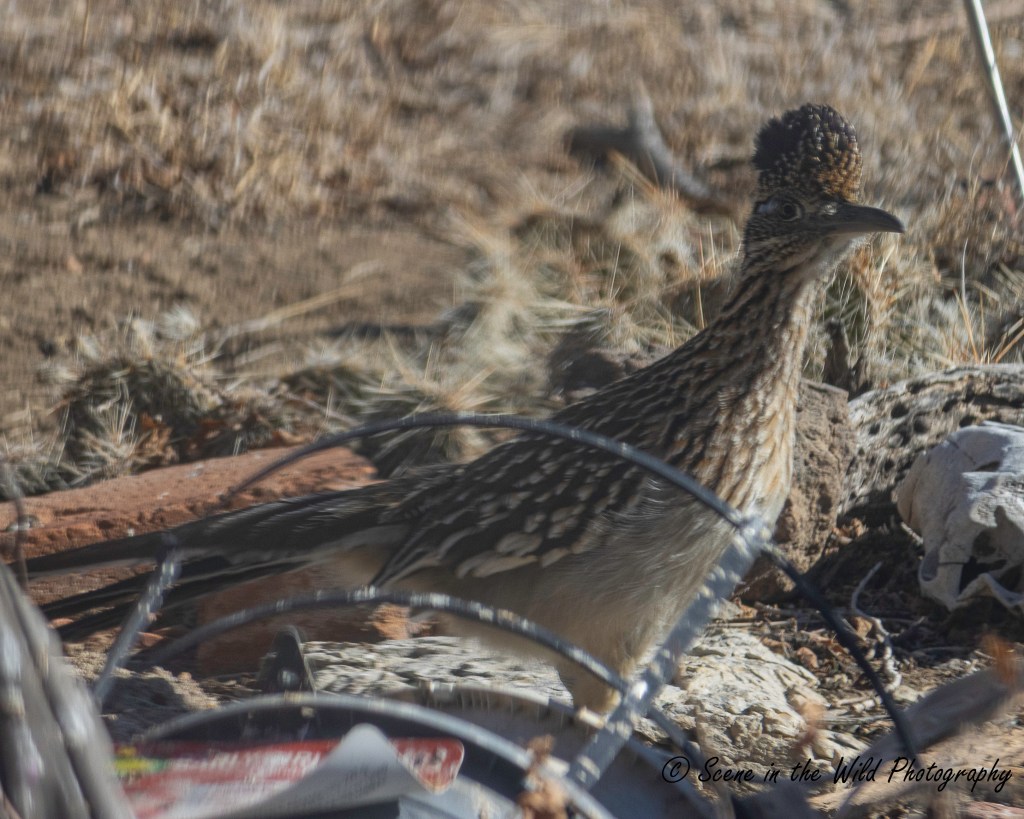
    We had an unexpected visitor at our house recently! One of my cats was going crazy looking out a window, and this was why. This roadrunner was just a few feet away from our kitchen window, near our well house. I’d never seen one here before. It ran around the yard for a while, but I lost sight of it, and never saw it again. Although they’re common in this part of Colorado, and I’ve seen them on Comanche National Grassland and near Lake Hasty at John Martin Reservoir State Park, this was a real surprise.

    A new venture for me!

    I decided that I wanted to try a different venue for my photography than Facebook. It was becoming too difficult to post more than a couple of photos at a time; I was limited to the amount of information; and I wanted to attract more people, including those who aren’t on Facebook.

    Two of my passions are nature and photography. I hope that by combining the two, I can stress how the importance of our outside world.

    I haven’t posted on my Scene in the Wild Facebook page for a while, so in this space, along with being fairly current with the photos I post, I’ll also try to attempt to catch up on some of the photos you have missed.

    I am still learning how to blog, and I am sure I will be changing the appearance of my blog as I find better ways of working with it.

    There’s no cost to you to view these blogs; you can subscribe to them and then receive them as they’re posted.

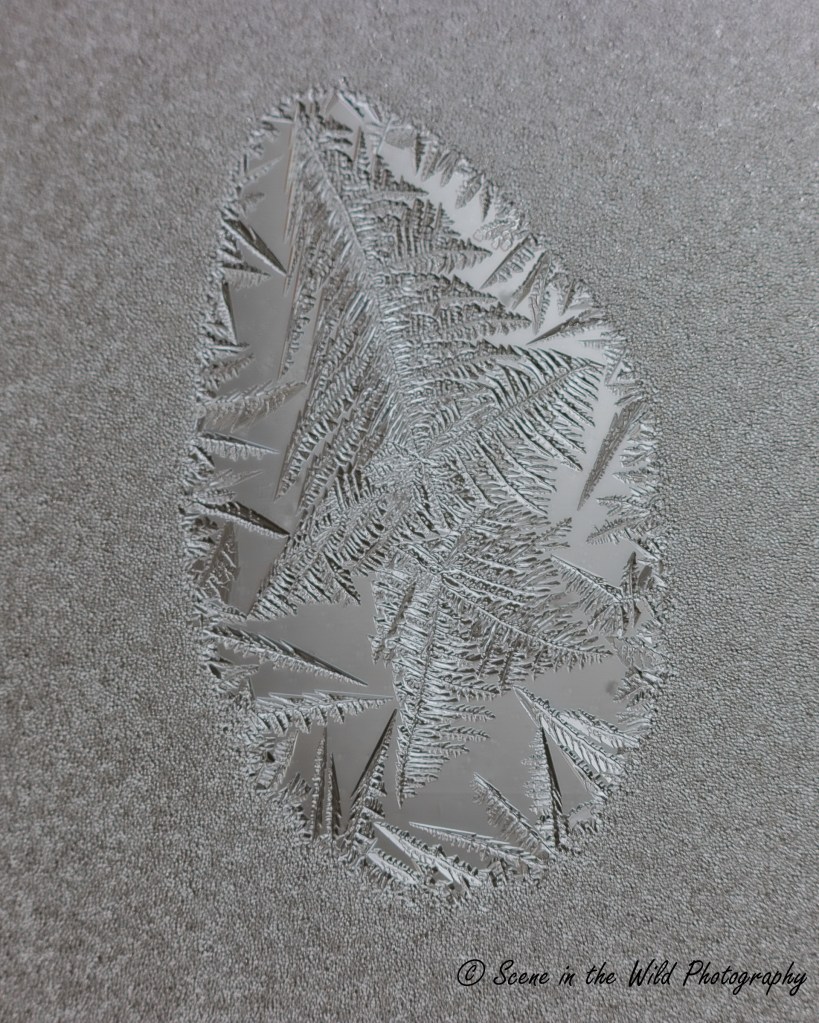
    Considering that the high temperature yesterday was 94 degrees, it seems hard to believe that this photo was taken not quite two months ago! I always enjoy looking at the patterns that frost makes on our windows; I’m not sure why this one was in a teardrop shape, but it certainly is beautiful.

    I had never seen white-winged doves until several years ago at the High Plains Snow Goose Festival in Lamar. I was on a hike through Willow Creek Park behind Lamar Community College, and our leader pointed out several. I was used to Mourning Doves and European Collared Doves (not well loved; they’re an invasive species!). A couple of years after that, I saw a couple of white-winged doves in our yard one winter day. But late last spring, several appeared here, and stayed all summer. We’re fairly certain they nested, as by fall, we had many more individuals! I particpate in Project Feeder Watch, which runs from November to April each year. Looking at my stats, I noted we had as many as 25, with 10 to 15 being fairly normal. The last few weeks, though, we’ve seen only a few–from one to five. I’m assuming most of them left to establish their own areas. My Sibley Birds West field guide (c. 2016) shows that their range is “rare” in Colorado, but this is nine years later, and they’re most definitely not, at least in our little part of the state!
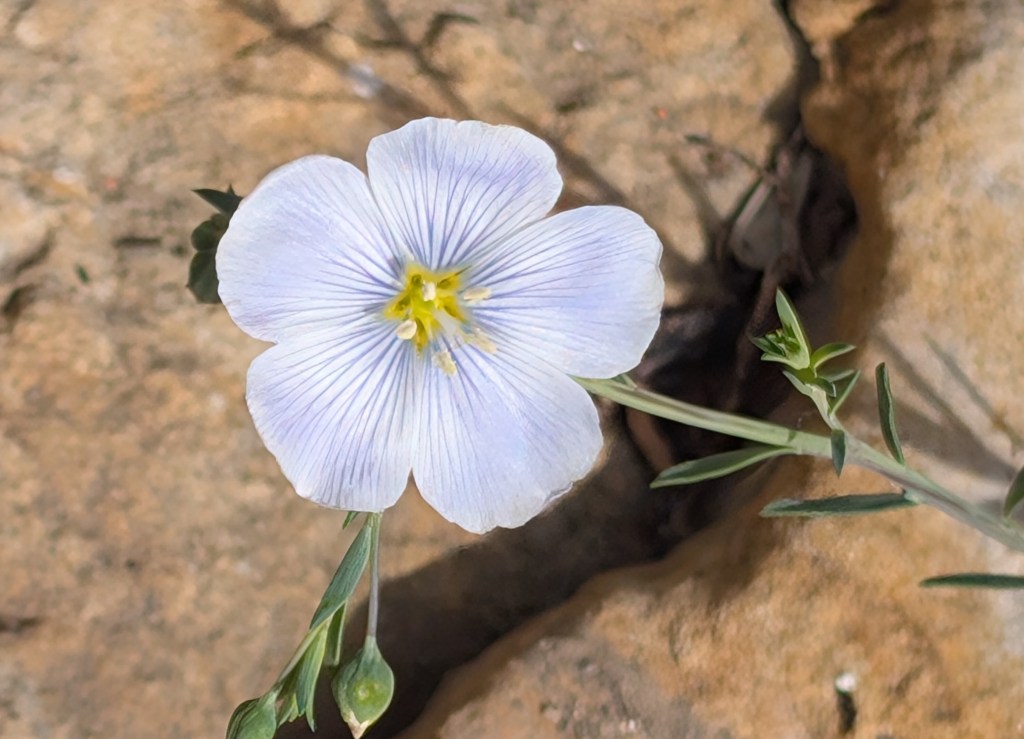
    Even though I took this photo with my phone, I’m excited to share it, because it is the first bloom from two blue flax plants that I planted last year. I’ve been tryng to establish more native plants, because native plants not only attract native insects and other wildlife, some native wildlife are dependent on native plants, and vice-versa. Some wildlife and plants are actually co-dependent–they need each other to survive. Also, native plants have adapted to the climate; most in this part of Colorado don’t need much water and can thrive in hot conditions. Water is a scarce resource in areas like ours, so it’s better to encourage plants that don’t need as much–even though our local nurseries stock mostly plants that, although pretty, aren’t from here, and usually take a lot more water.

    As I said above, this is a new venture for me. I’m going to try to post fairly regularly. I would love to get comments from all of you as to what you like and what you don’t–and what you might like to see. Just type in your email below, and my posts will automatically come to you when I publish them.