In this blog, I’m not highlighting any particular area; instead I’m focusing on the critters we can see if we look just a bit closer. This past year, I’ve really been working on macro photography–mostly flowers, insects, and arachnids. You’ll definitely see some of them here, but there’s also a mammal that’s playing hide and seek.
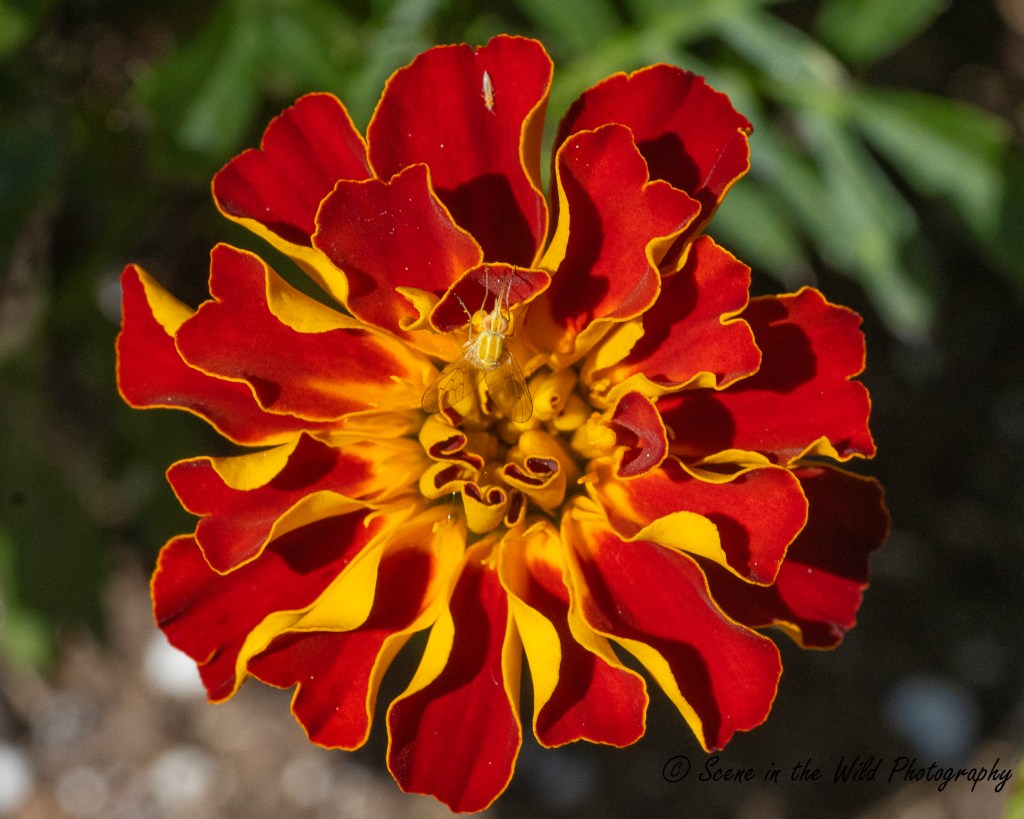
This is a marigold from my garden, taken June 8. Do you see anything that looks out of place?
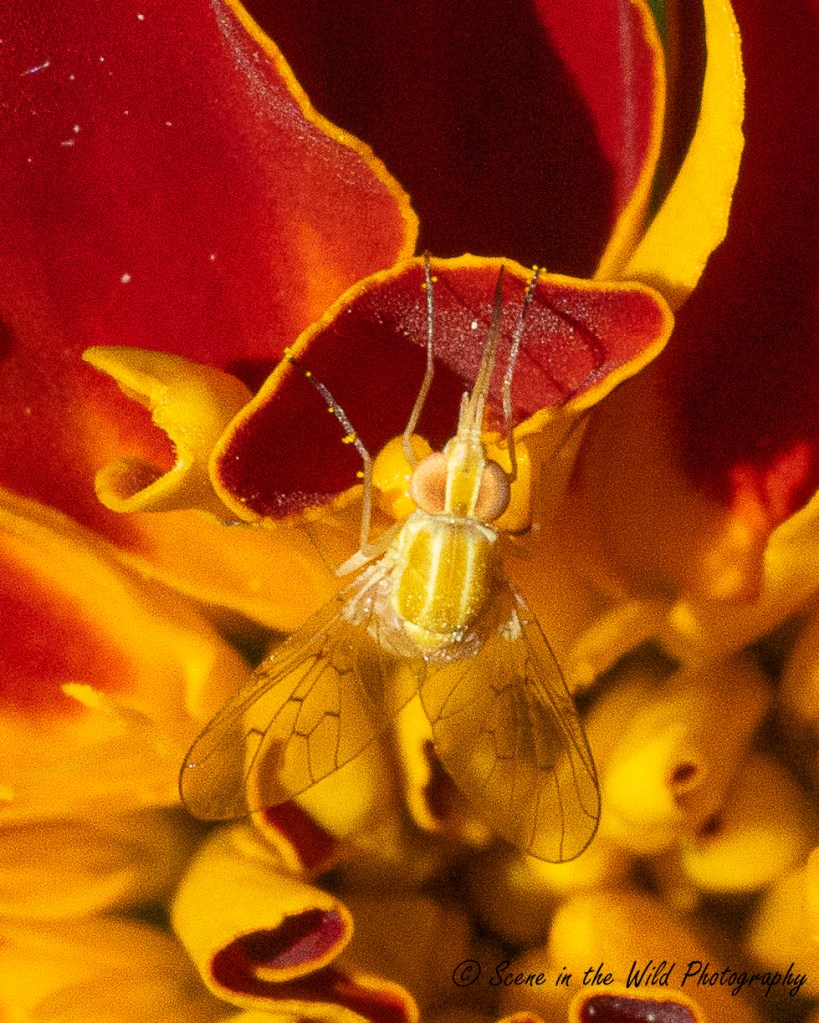
If you saw it, did you realize what it was? It’s a fly; probably a flower fly of some sort. Look how well it blends into the flower. Did you realize that flies can be pollinators, too?
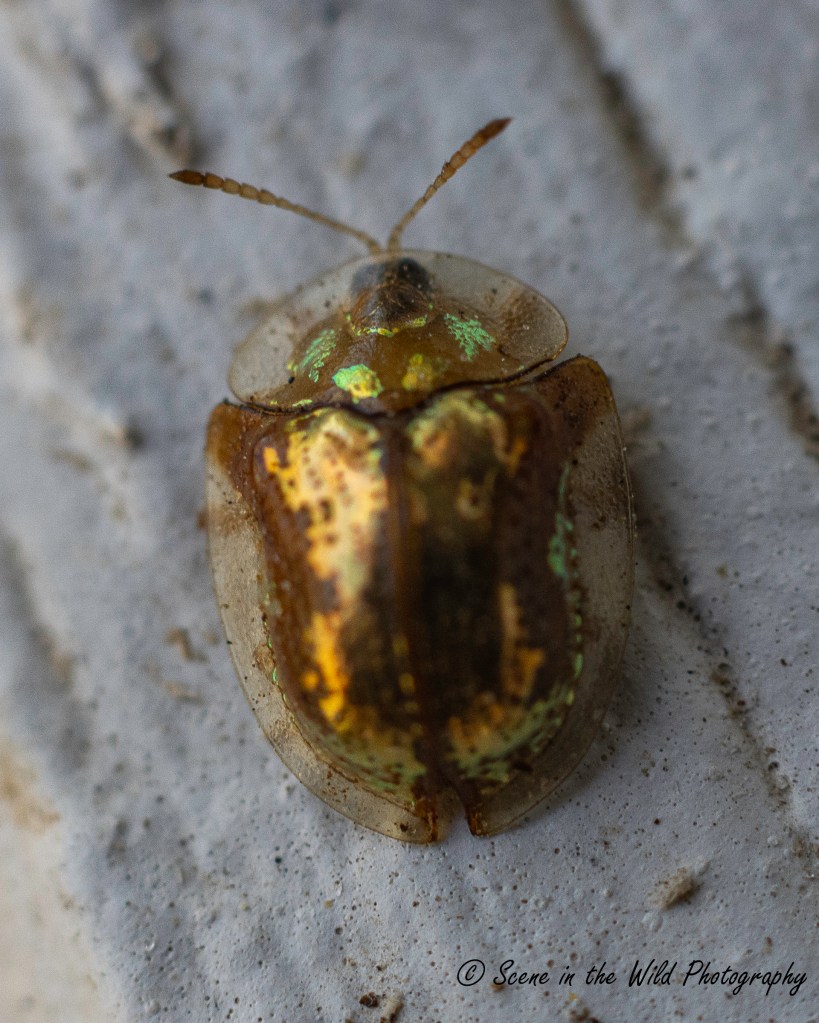
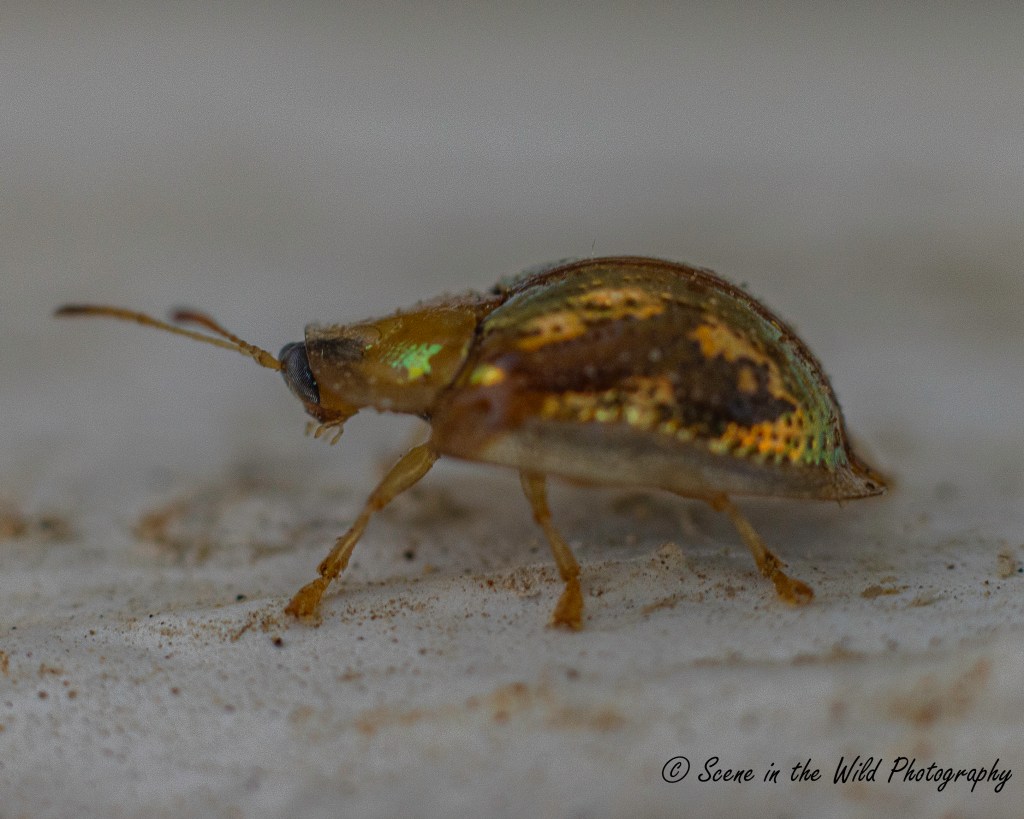
I would have missed this mottled tortoise beetle that was crawling on the siding of our house April 15 if I hadn’t noticed a glint of gold. On a closer look, I was amazed at the colors of this beetle. Of course I ran inside to get my camera!
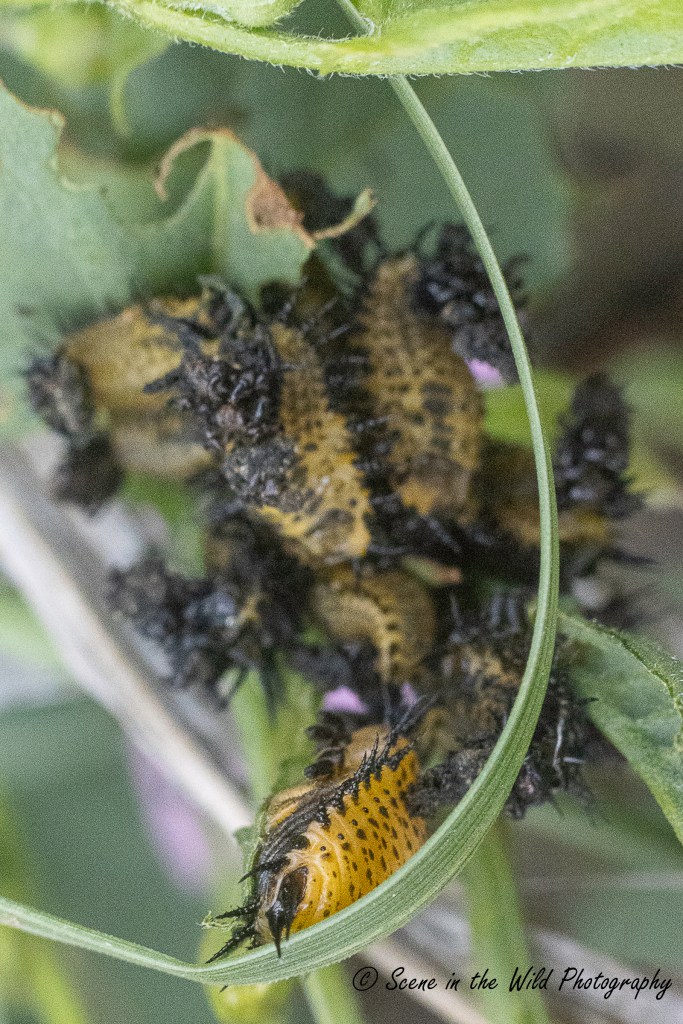
Don’t these things look like they should be in a horror movie? I was walking in our field June 4 when I spotted a small black blob of “stuff.” Then I realized it was moving. These are Argus beetle larvae. They are welcome here, because they eat bindweed!! I’d seen an adult previously, but until I could get an ID, I didn’t know that these were the same insect, just an earlier form. Below is the adult. There’s not a lot of similarity, is there?
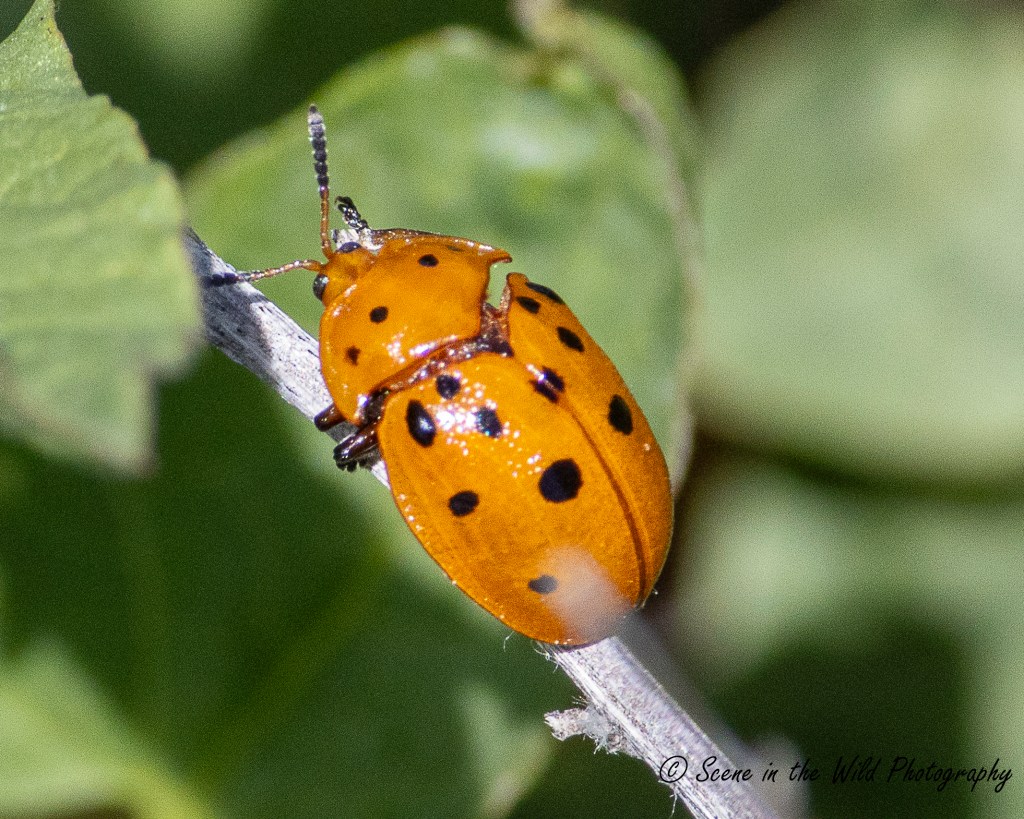
Argus tortoise beetle adult, May 18, our field. Notice that the shape is similar to the mottled tortoise beetle above, but the colors are totally different. Plus it doesn’t look at all like the larval form. At first I thought this was a lady beetle, because of the spots.
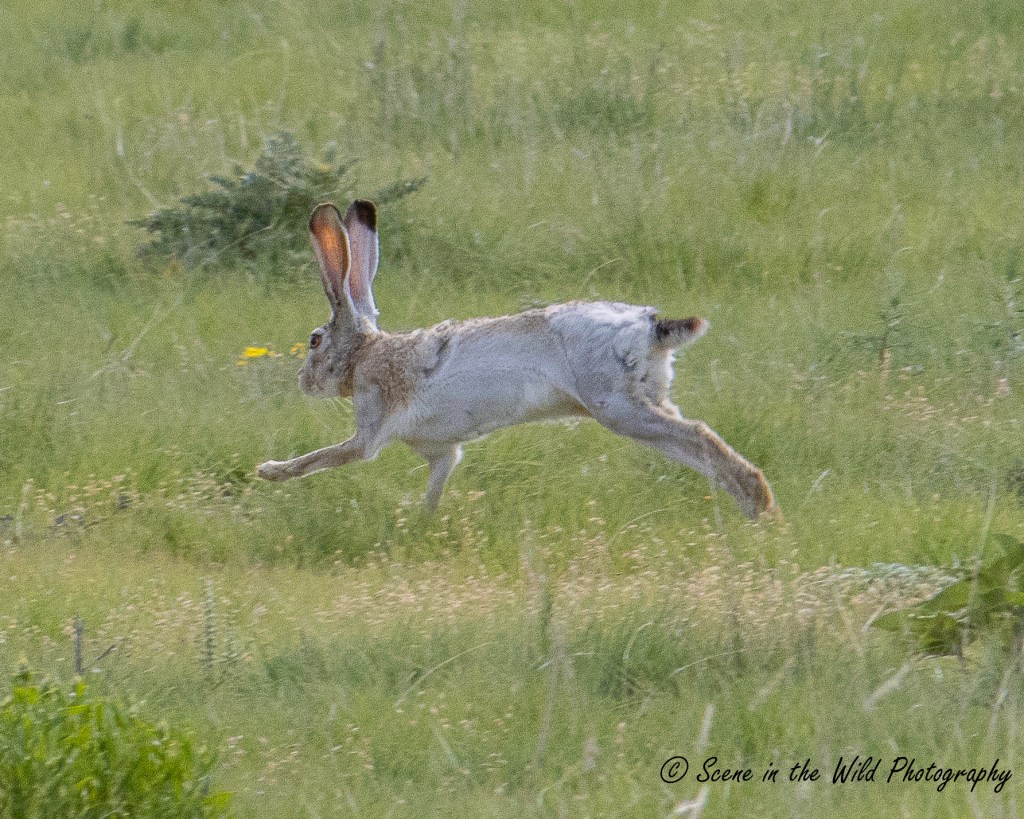
Mr. or Ms. Jack rabbit scurried away as our truck approached it June 4 at Adobe Creek Reservoir (Blue Lake).
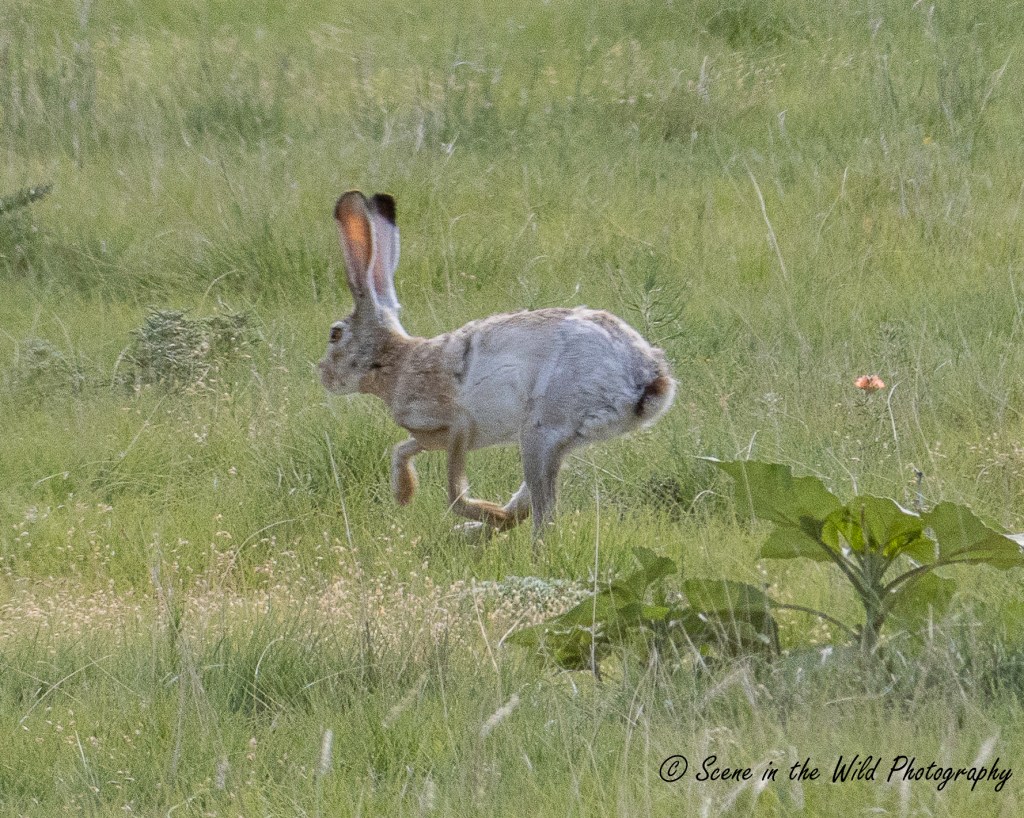
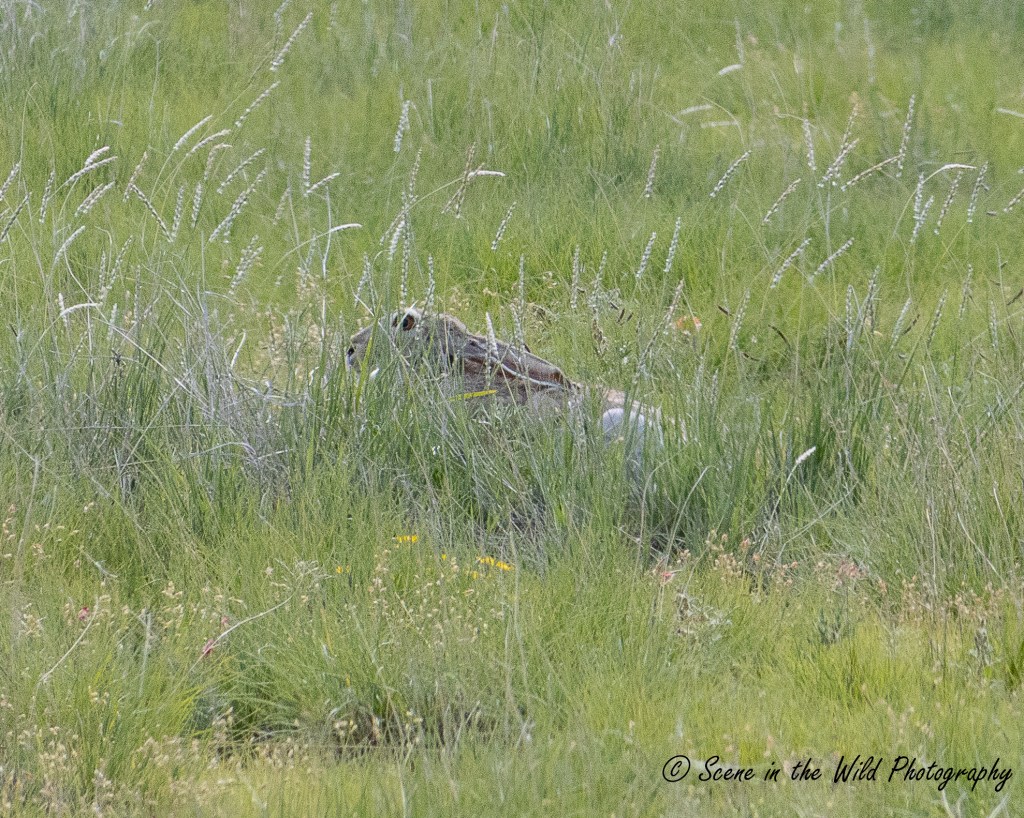
But then it took a rest. If I hadn’t seen it stop in the grass, I would never have spotted it. As it was, I had to do some close cropping to produce this shot, as it was quite a ways from the truck. Fun fact: did you know that Jack rabbits are not rabbits at all, but are hares? What’s the difference? They belong to the same family, Leporidae, but they’re from different genera. There are several differences between the two: hares are usually larger, with longer ears and longer and more powerful hind legs, which allows them to be faster runners. One of the biggest differences is that hares are born with fur and open eyes, while rabbits are born hairless and blind.
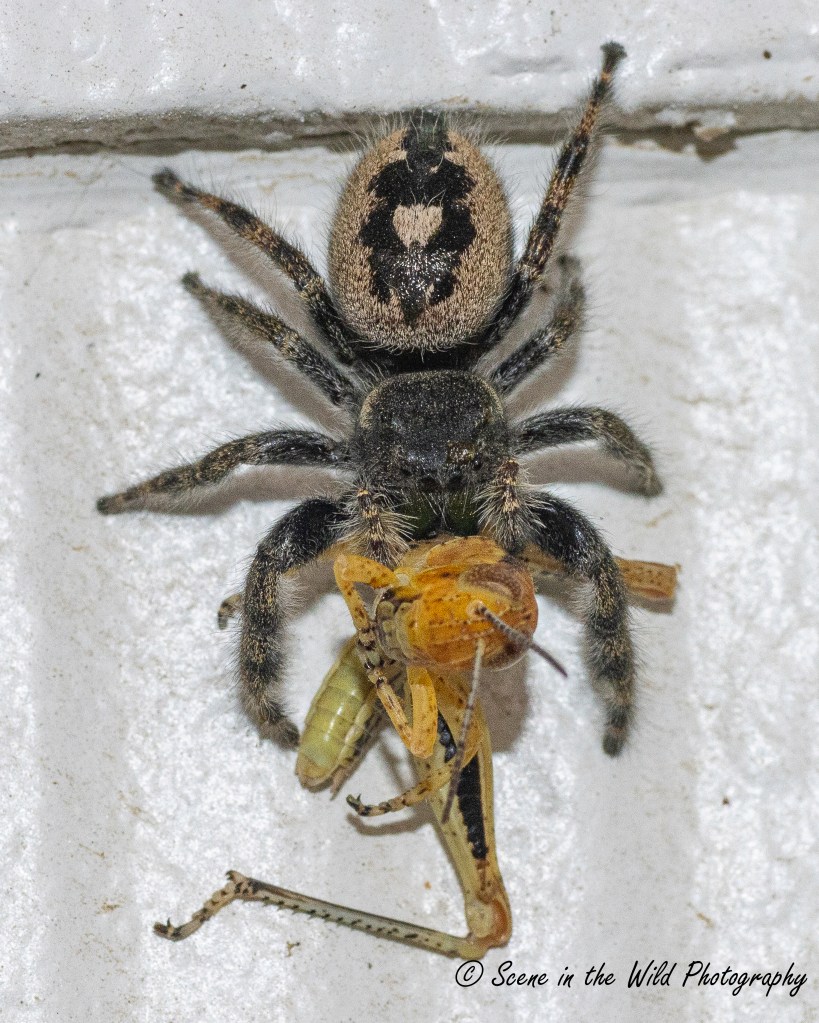
Here’s something else that I just happened to see hanging on the siding, right outside our front door (June 20). This jumping spider was making a meal out of a grasshopper. Thank you, spider! Please eat more! The hoppers are eating my plants! Did you know that jumping spiders have eight eyes? If you look at this one, you can see two pairs in the front of its head. There are two other pairs on the sides.
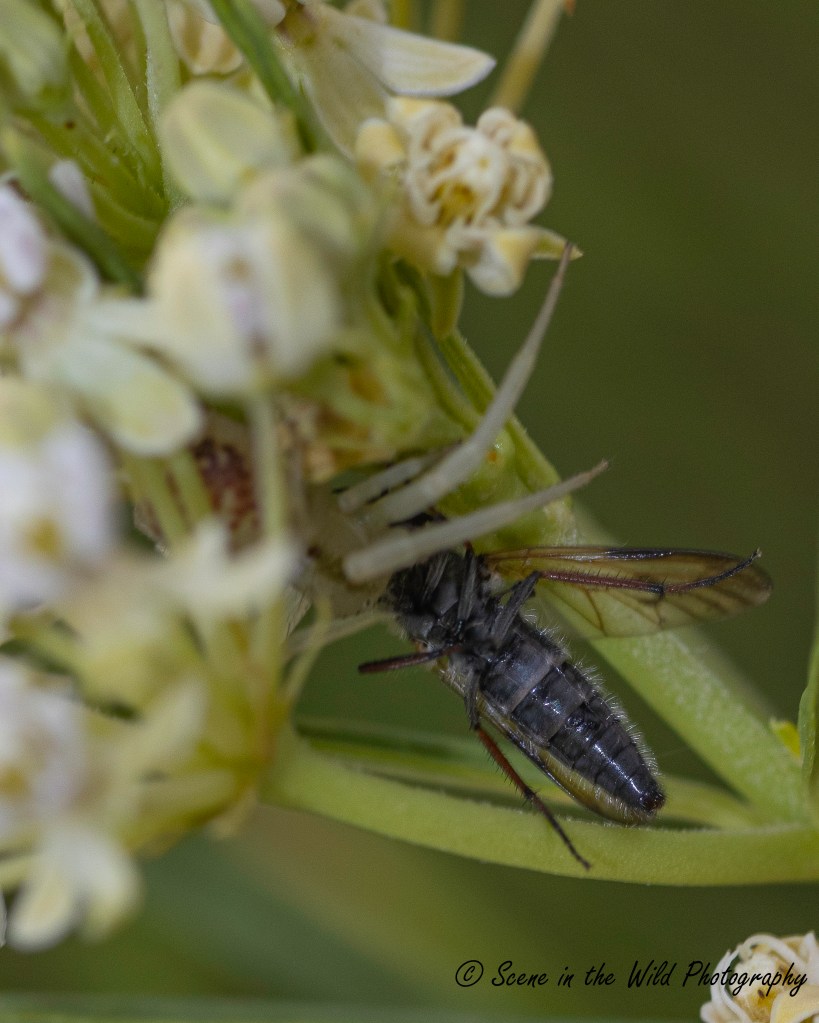
Since we’re already talking about spiders and their meals (cue the ewwws), here’s an interesting pair I found in our field June 30. I noticed the fly, which seemed to be at a weird angle, and then saw those white legs of a crab spider around its thorax. If you look through the flower, you can see the spider’s white and brown abdomen. Ms. spider was hanging out in some horsetail milkweed when apparently the stiletto fly made the mistake of landing. Crab spiders can change color depending on what plant they’re on. This one is horsetail milkweed.
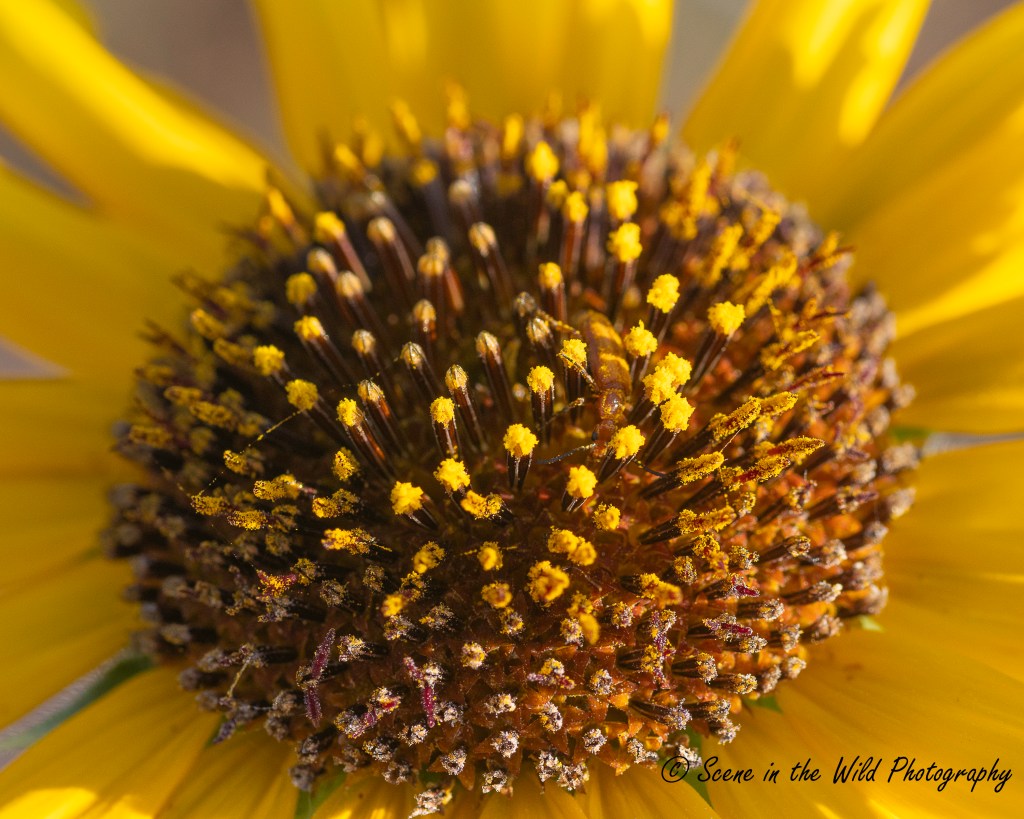
I took this photo of a sunflower in our field also on June 30. The combination of yellow and brown are soothing. I’ve seen lots of different insects burrow down into that brown center, amidst the small yellow disc florets. The sunflower head is made up of the ray florets, which we think of as petals, and the ray disc florets. Math fact: the florets often follow the Fibonacci sequence!
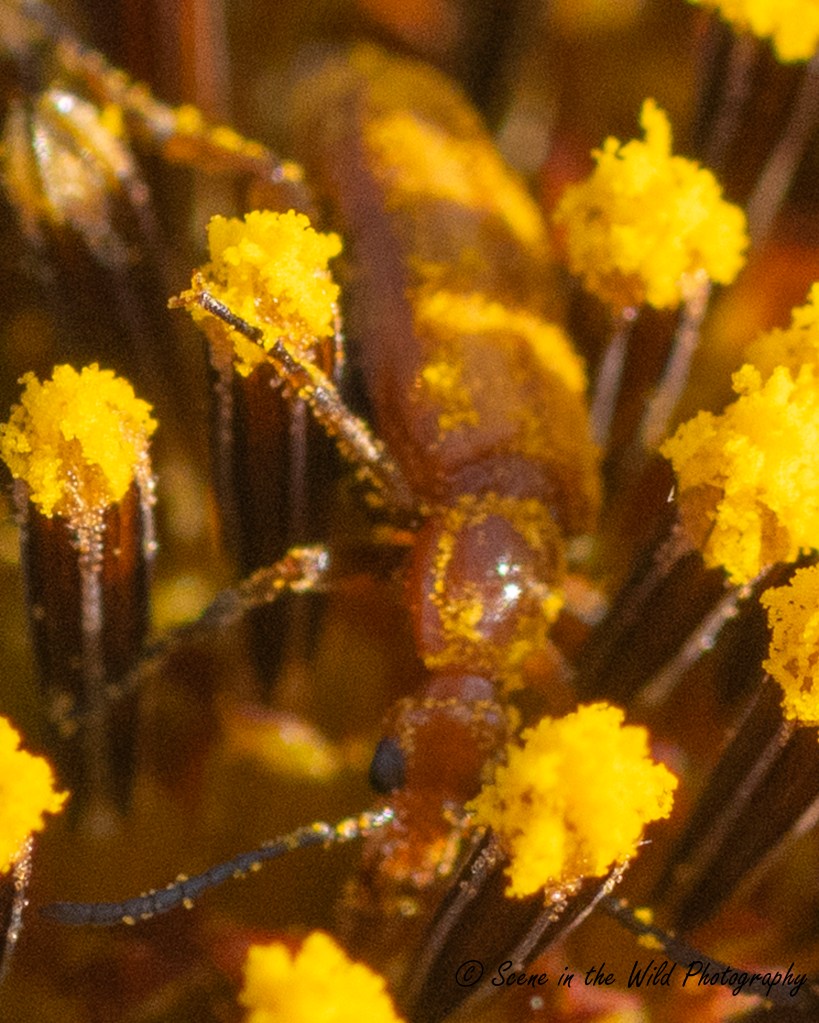
Surprise! Did you spot this beetle above? Notice all of the pollen on its body. Beetles are pollinators, too! This is a six-spotted flower longhorn beetle.
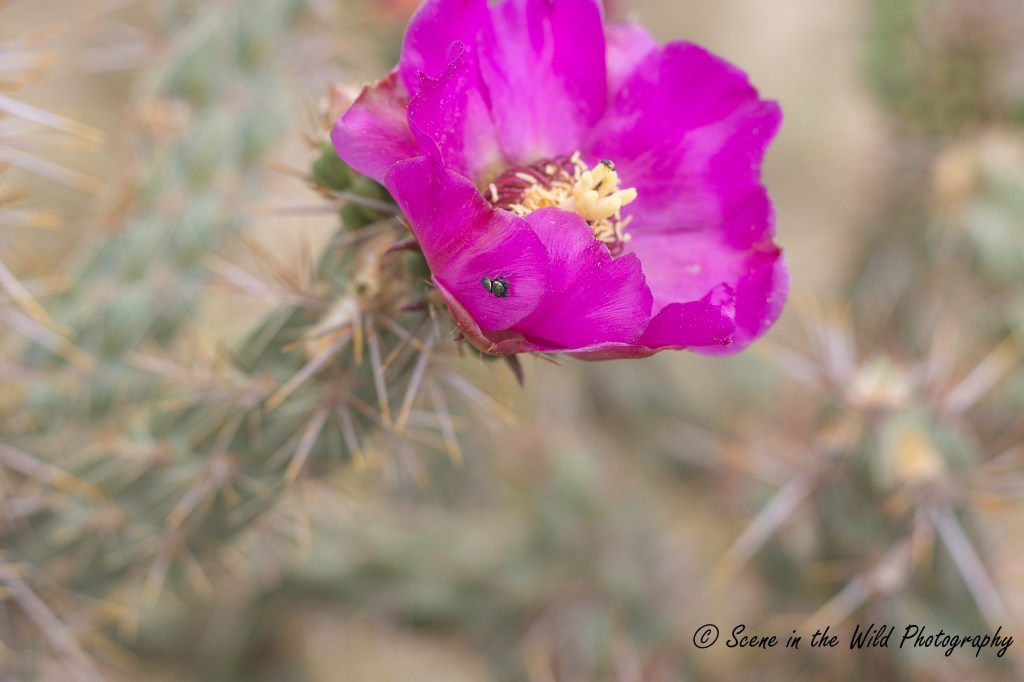
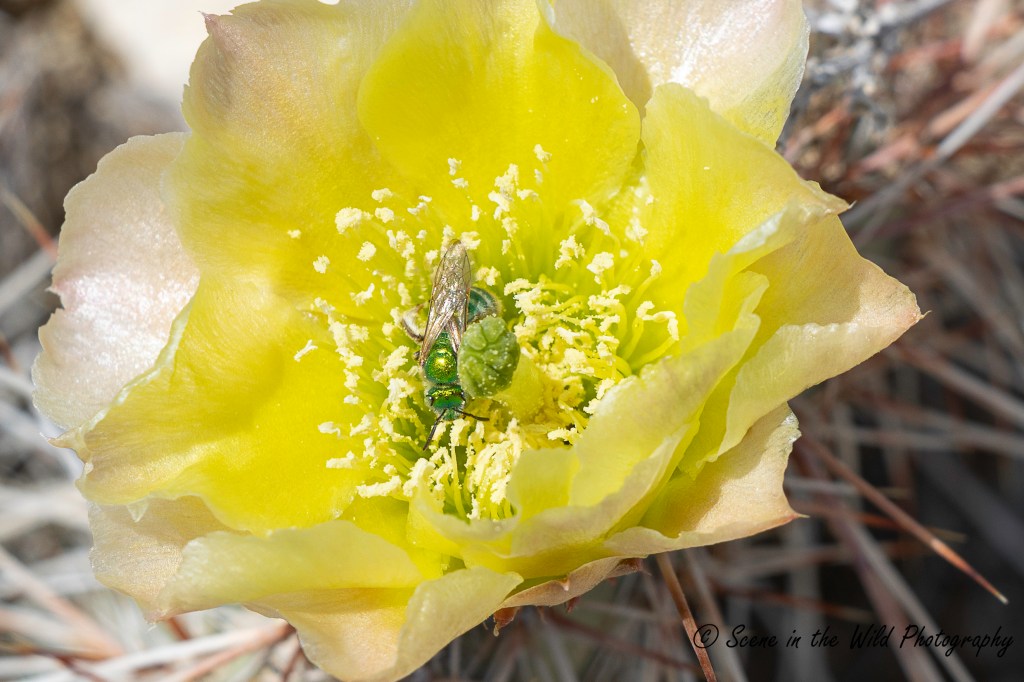
We went out to the Devil’s Canyon area of Comanche National Grassland June 23. After 100+ degrees several days in a row, that day it was “only” in the 80s. I was afraid I’d missed the cholla blooming, but there were many still flowering. Lots of insects love cholla, especially bees, but that’s not a bee on the petal. Maybe a beetle?
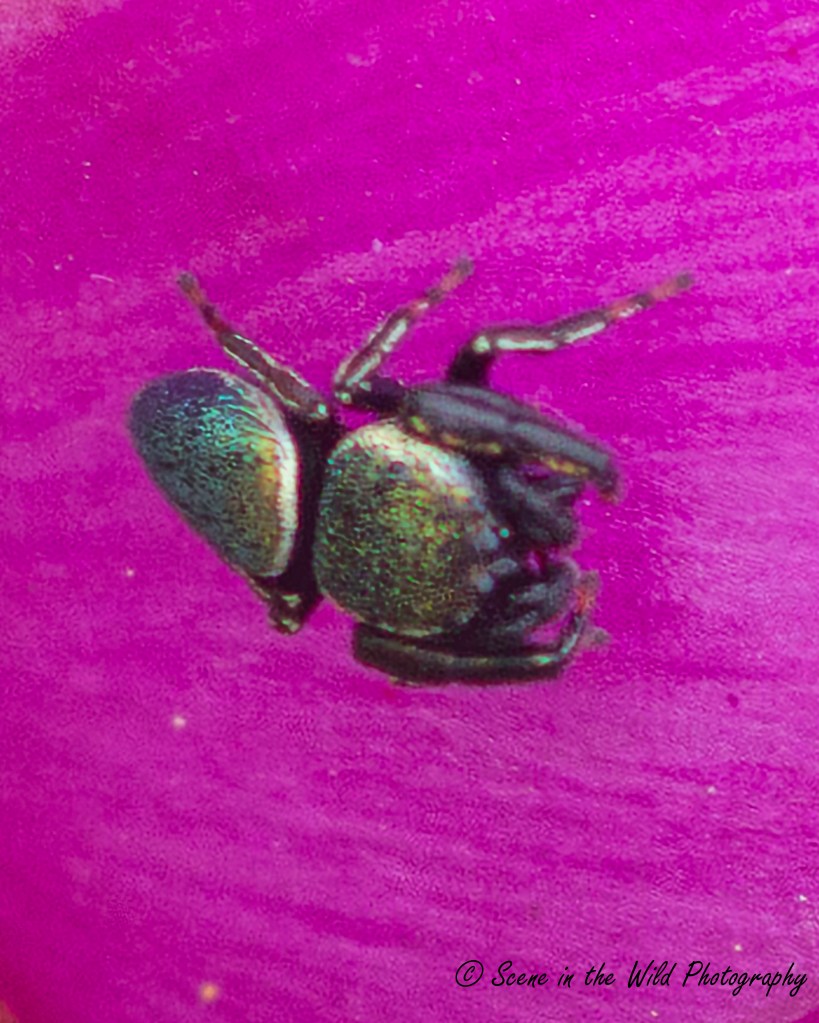
Meet Sassacus papenhoei, another jumping spider–colored an iridescent green. I’m assuming it was just waiting for an unsuspecting insect to wander by.
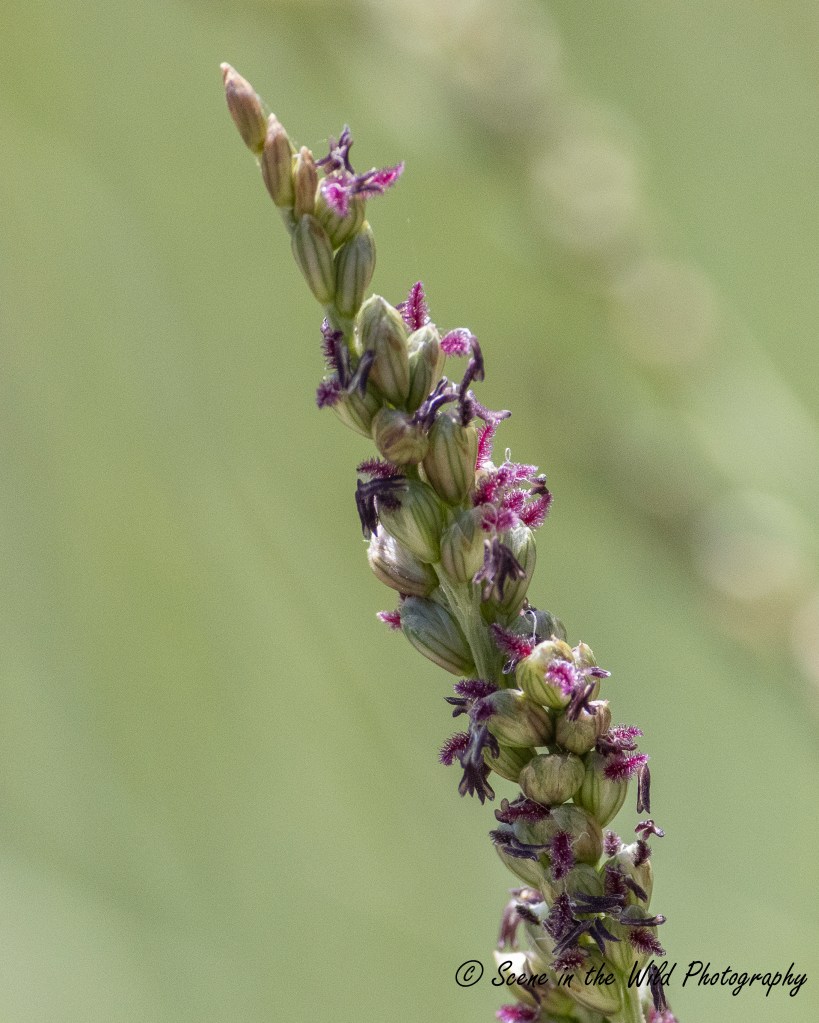
Did you know that grass has flowers? I thought these were especially beautiful. I think it’s Vine mesquite (Hopia obtusa). It was growing near a small pond. Devil’s Canyon, June 23.
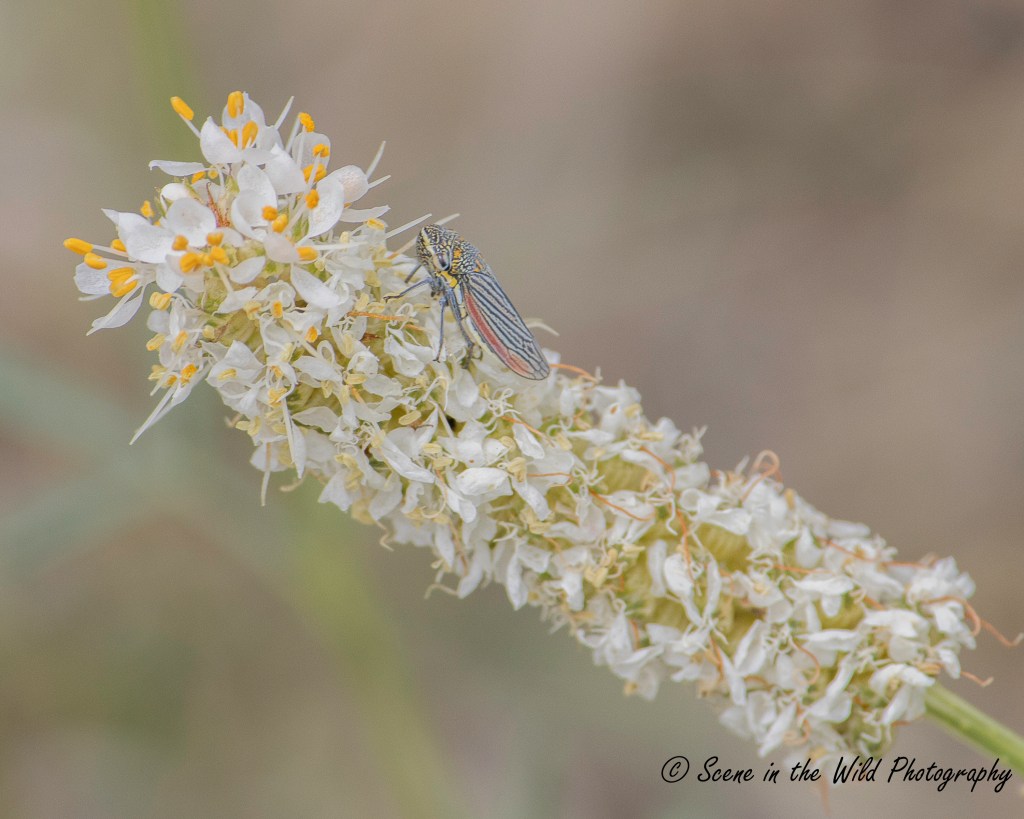
Because of the spring rains, the flowers are gorgeous on the prairie! White prairie clover, with a visitor. Devil’s Canyon, June 23.
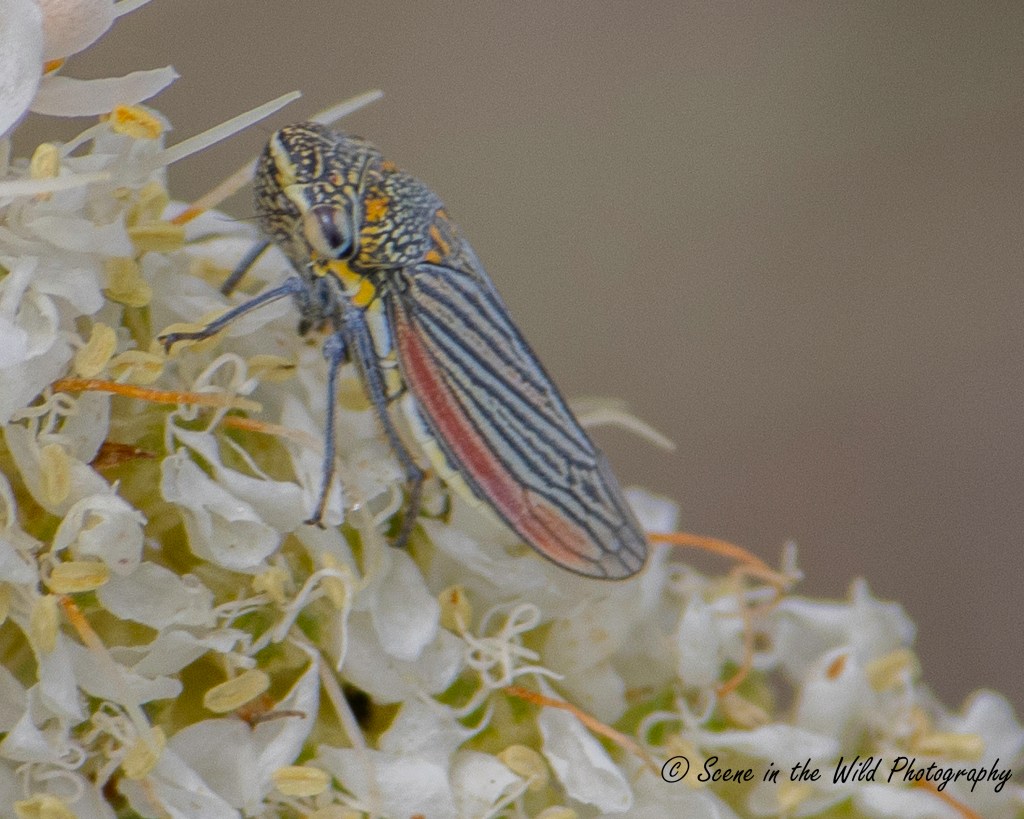
Aren’t those colors amazing for such a small insect? It’s a Lateral-lined sharpshooter (Cuerna costalis), a type of leafhopper. I don’t think I’ve ever seen one before.
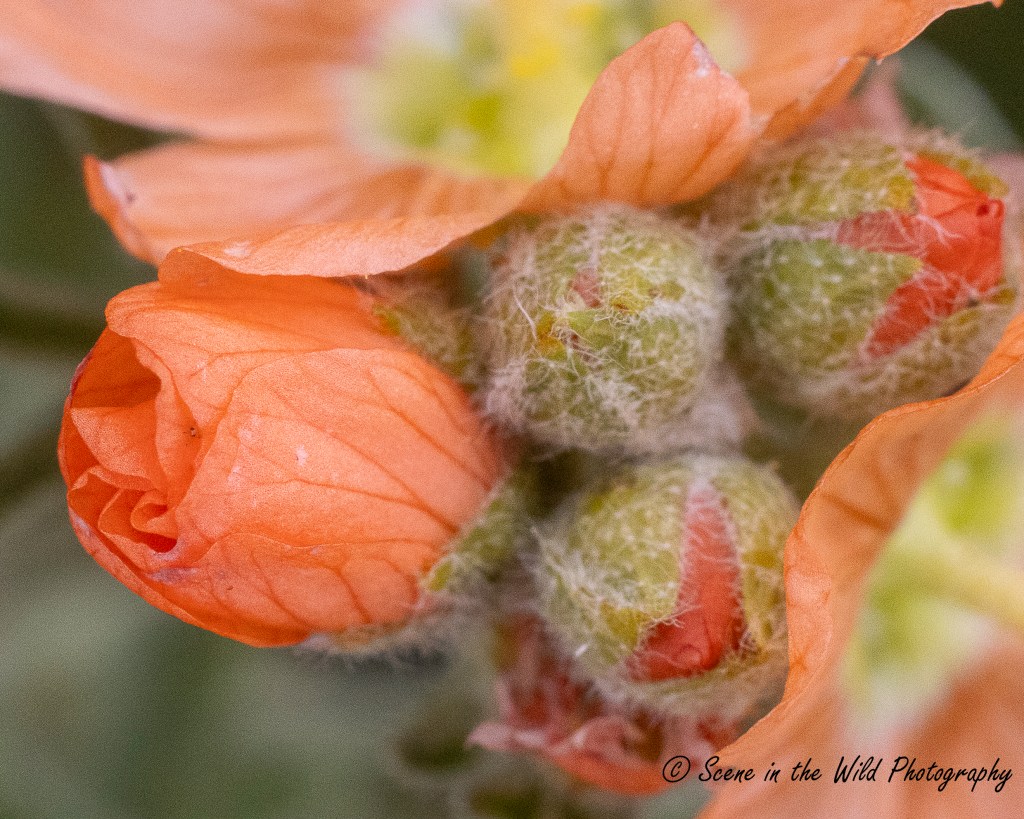
I’m jumping all over the place with locations and dates this time! Back to June 4, our field. This is scarlet globemallow, also called Cowboy’s Delight–why, I’m not sure. Common names can be interesting! This was one of the cases when I didn’t realize something else was in the photo. It happens quite a bit; I’ll be taking a photo of one insect, and when I’m editing the photo, I’ll see another, or maybe several others. I find it fascinating; it reminds me of something in New Orleans called “lagniappe,” something extra, such as when you buy something and the clerk adds a small gift to your purchase, like an extra piece of candy. In this case, it’s Mother Nature doing the gifting.
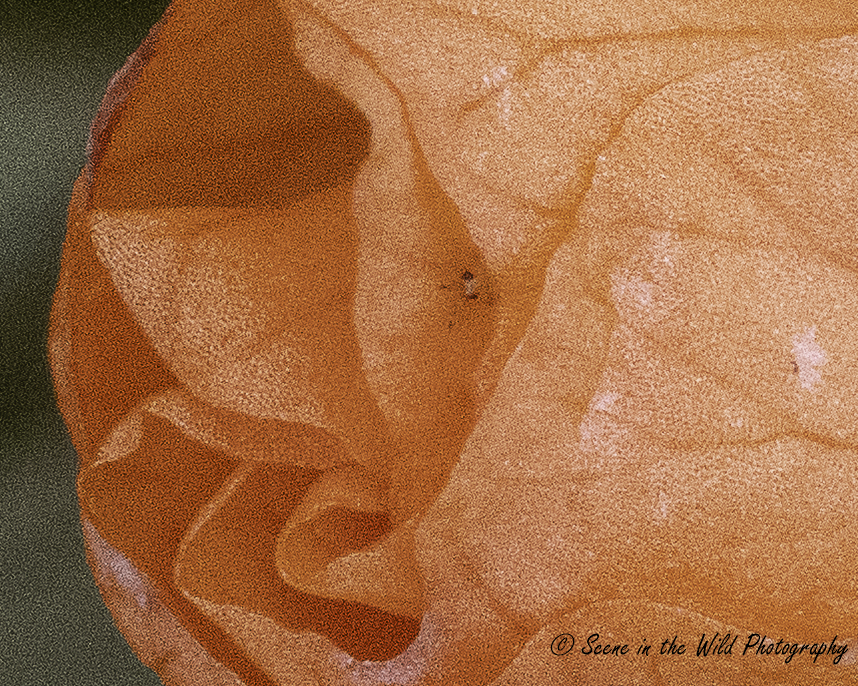
I had someone watching me when I took the photo! I have no idea what it is, but it’s quite tiny.
I want to show more photos of Adobe Creek Reservoir, Devil’s Canyon, and our field in future blogs. Yes, there will be more insects. Also spiders. I apologize if you’re an arachnophobe. I used to be one, until I realized how many flies and the dreaded MOSQUITOS, not to mention grasshoppers, that spiders eat. Also, I started looking at how beautiful they are, and how amazing they are as web builders. And I just remembered I need to add two more photos. Yes, another spider.
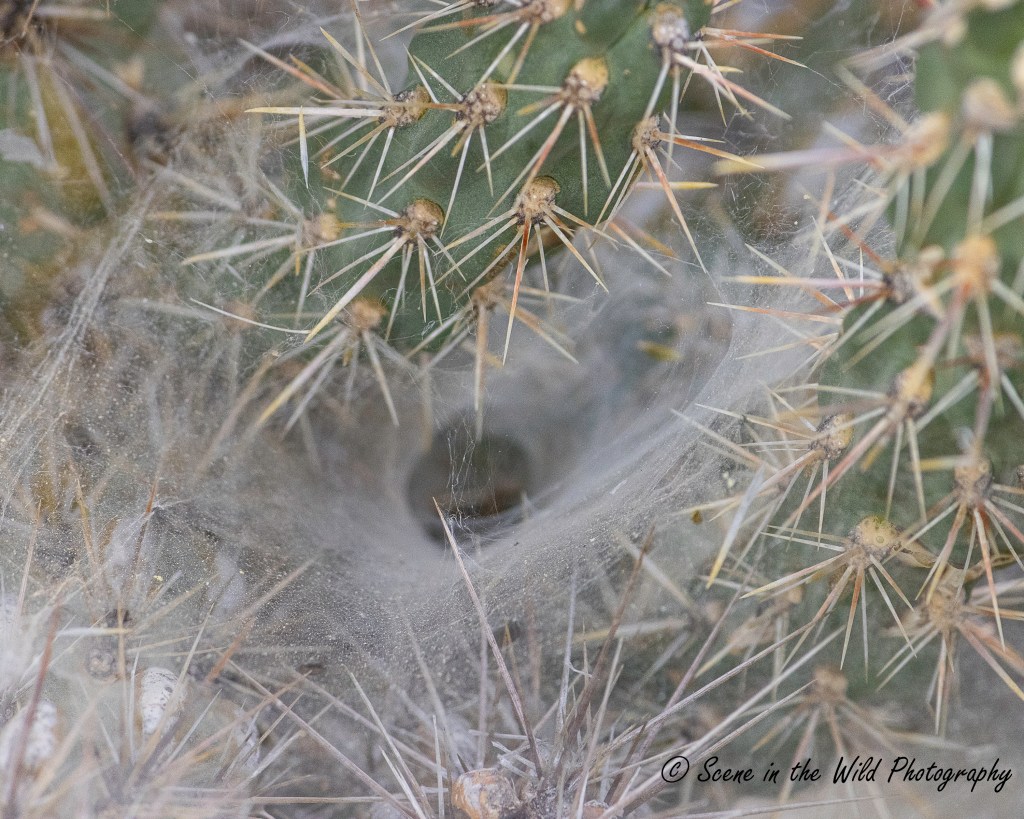
We’re back at Devil’s Canyon again June 23. This is a large cholla plant. A funnel-web spider has set up an elaborate trap.
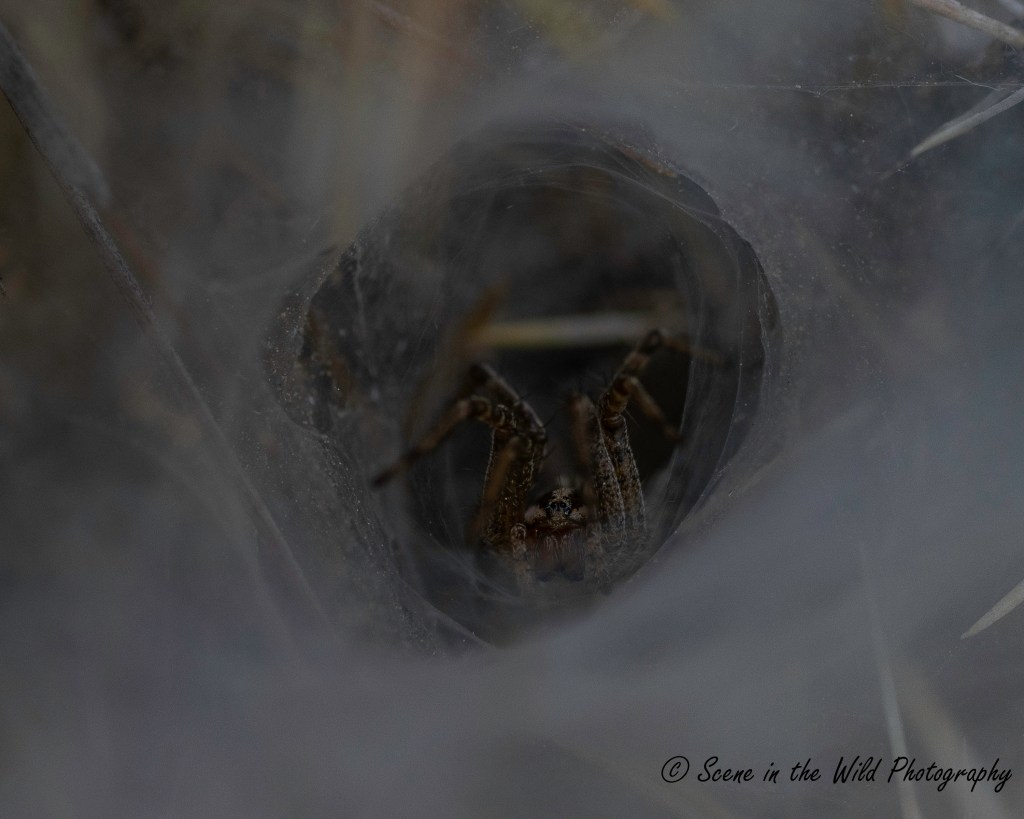
I worked hard to get this image of the spider. I could barely see it with my eyes, so it was very difficult to get it focused. I used flash to bring out the details. She’s just lurking there, waiting for something to get wander into the tunnel. Apparently they’re quite fast runners and dart out as soon as something appears.
That’s all folks. Have a safe but happy Independence Day. We’re spending it in my happy spot up in the the mountains near Westcliffe, CO. Expect photos!
 Scene in the Wild Photography