Tag: Scene in the Wild Photography

  • Visiting Custer County

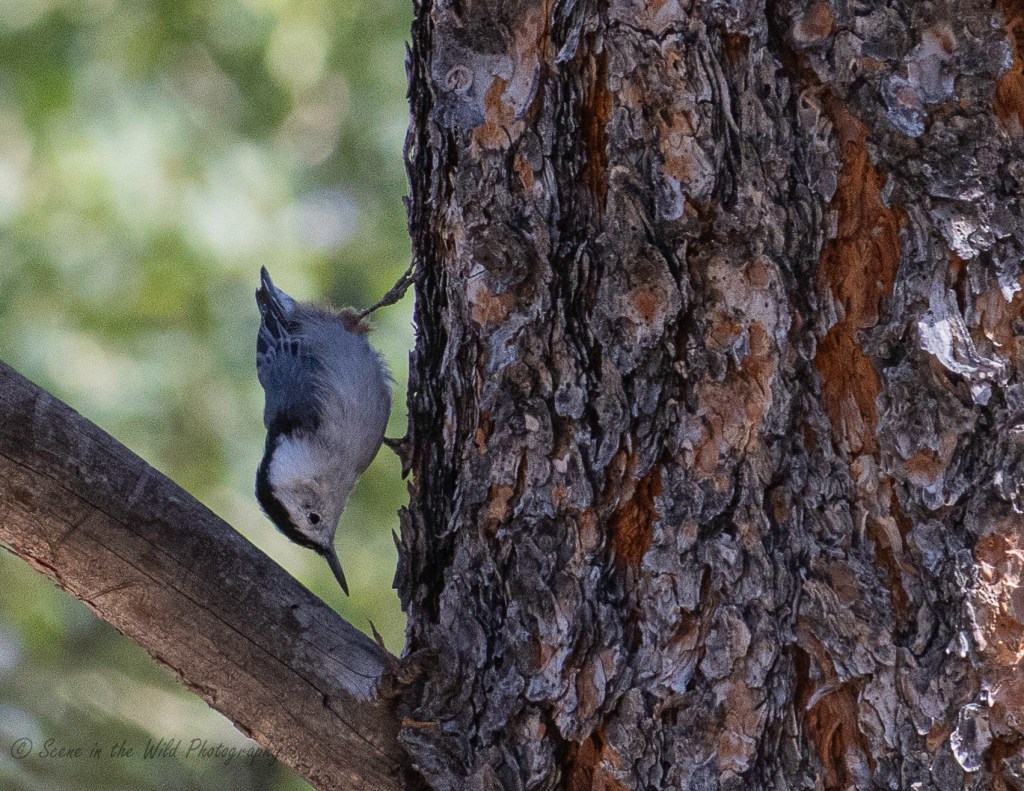
    White-breasted nuthatch Aug. 31, 2025

    There’s a place only about two and a half hours from here that I call my happy spot, but unfortunatley, I never spend as much time there as I’d like.

    Steve’s parents have a cabin up in the mountains in a community called Tanglewood Acres outside of Westclife, which is nestled in a gorgeous valley between the Wet Mountains and the Sangre de Cristo mountain range.
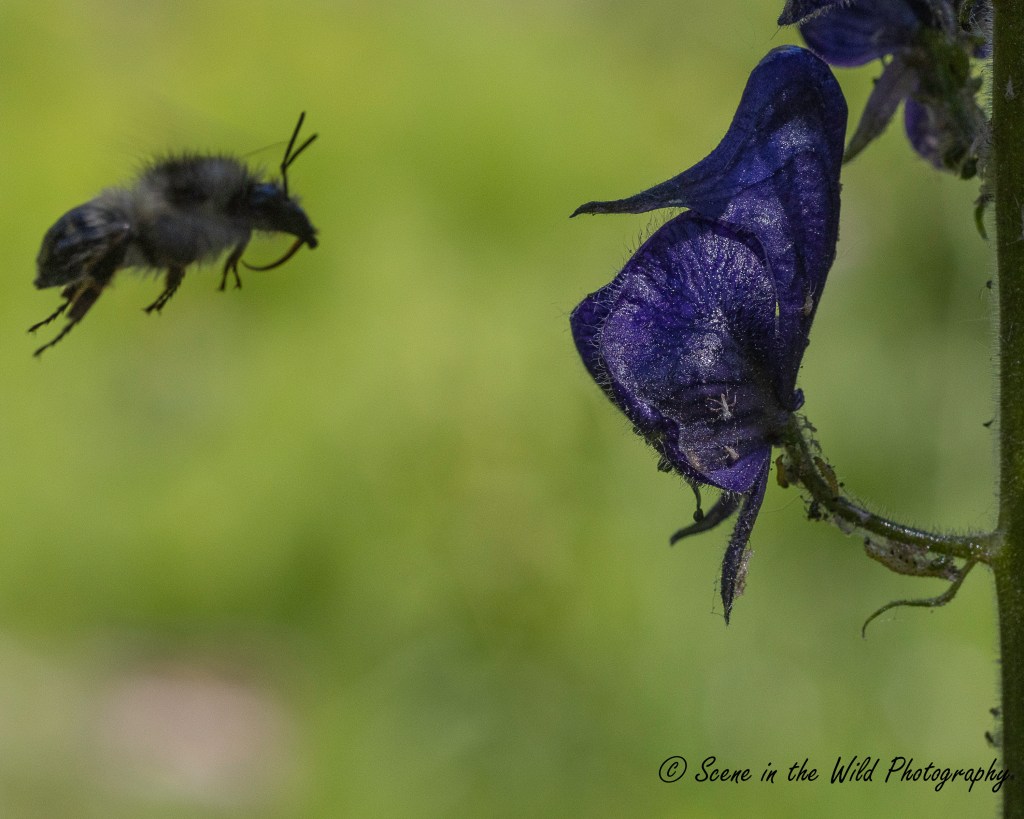
    Bumblebee visiting Monkshood flower July 5, 2025

    I have learned to like many aspects about where I currently live, but I have to say, since I first viewed the Rocky Mountains when I was 9 years old, the mountains have always held an enchantment for me.

    This year we visited over the Fourth of July, and a couple of days over Labor Day weekend. I was not satisfied. For one thing, I always make a calendar of Custer County scenes for family members, and I didn’t think I had enough photos to chose from. To be honest, I’d spent quite a bit of time photographing macro insects and spiders and not much time on anything else. (I’ve found that many people don’t get as excited about these critters as much as I do, but I’m sharing a couple anyway).
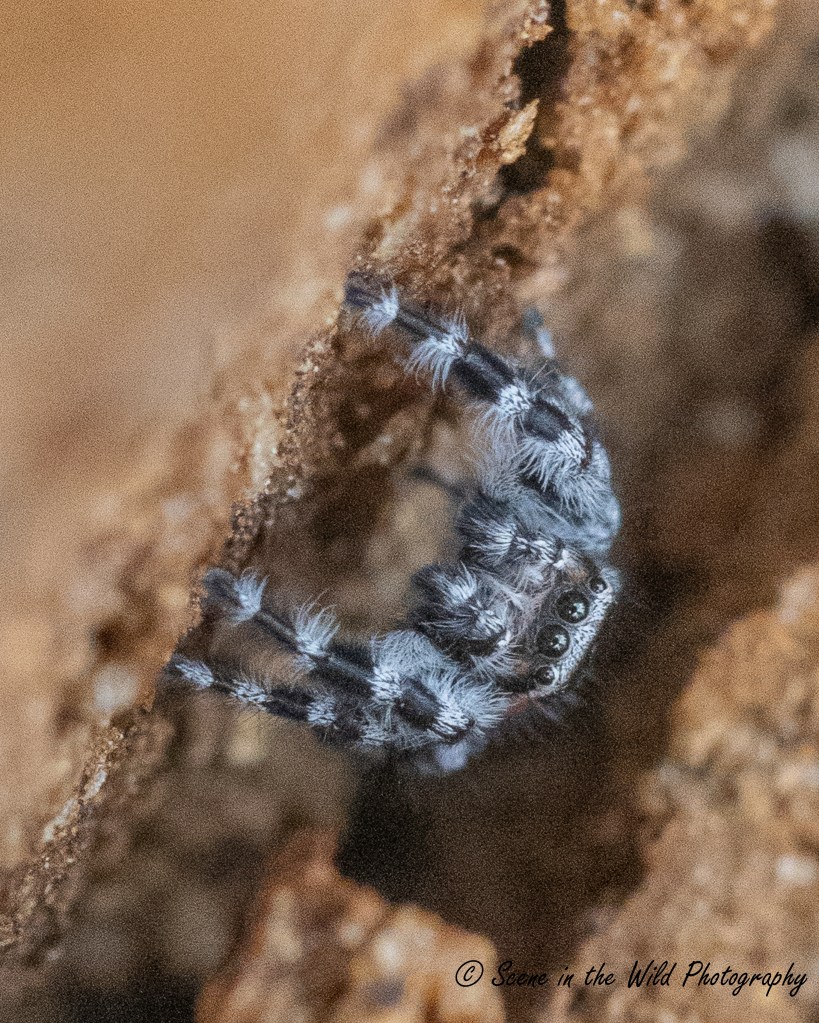
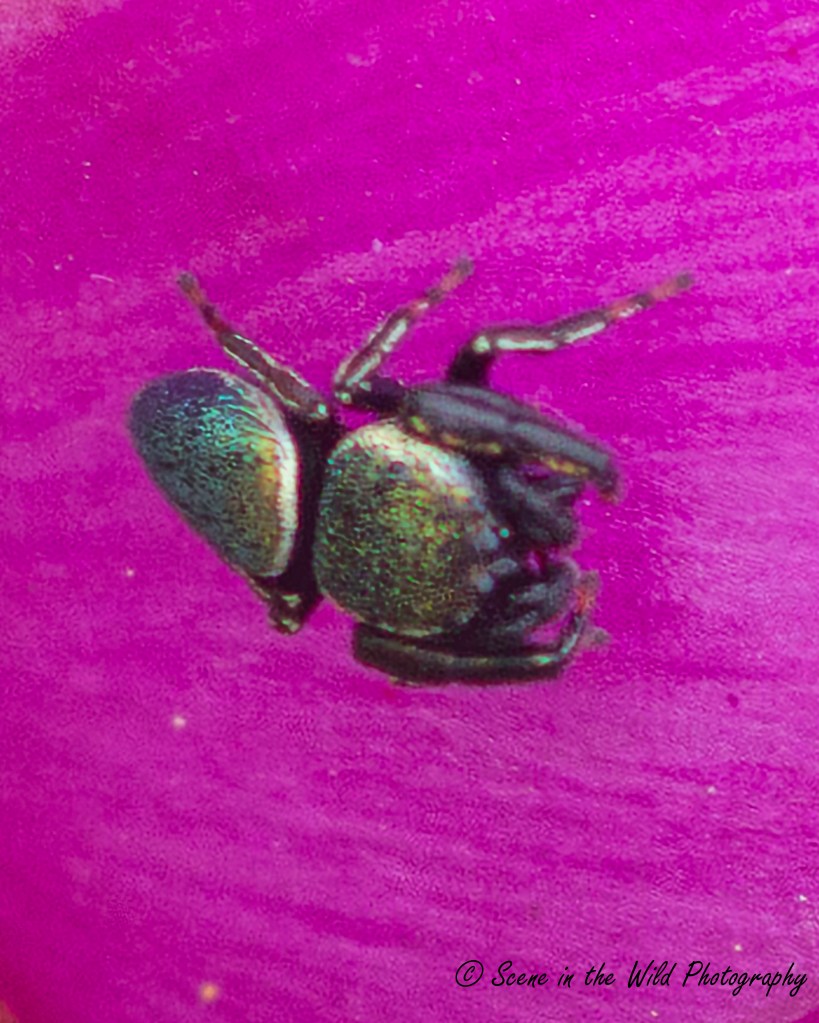
    A tiny little spider: Tyrell’s tufted jumping spider, July 6, 2025

    Plus, it had been a long time since I had experienced the color change in the fall. The first Friday in October, I decided to drive up there because it sounded as though weather was going to be coming in and most of the colors would be lost to the rain and wind. Steve wasn’t able to go with me due to something called hunting, so I put my corgi in the car and off we went.

    We’d discovered a particularly beautiful place to see the colors a few years back, so instead of taking the highway all of the way into Westcliffe, I veered off onto a county road. I can’t tell you how many times I stopped to take photos. The colors were truly splendid. Once I got into the valley, the awe continued.
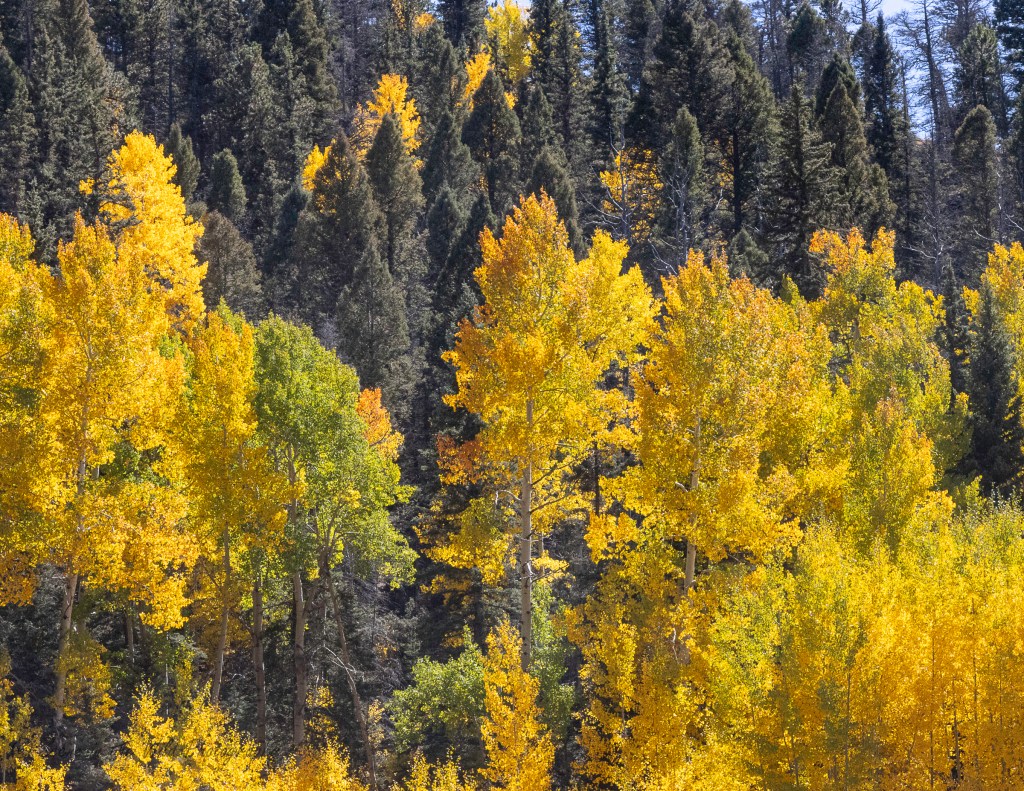
    Aspen Canyon Road, Oct. 3, 2025
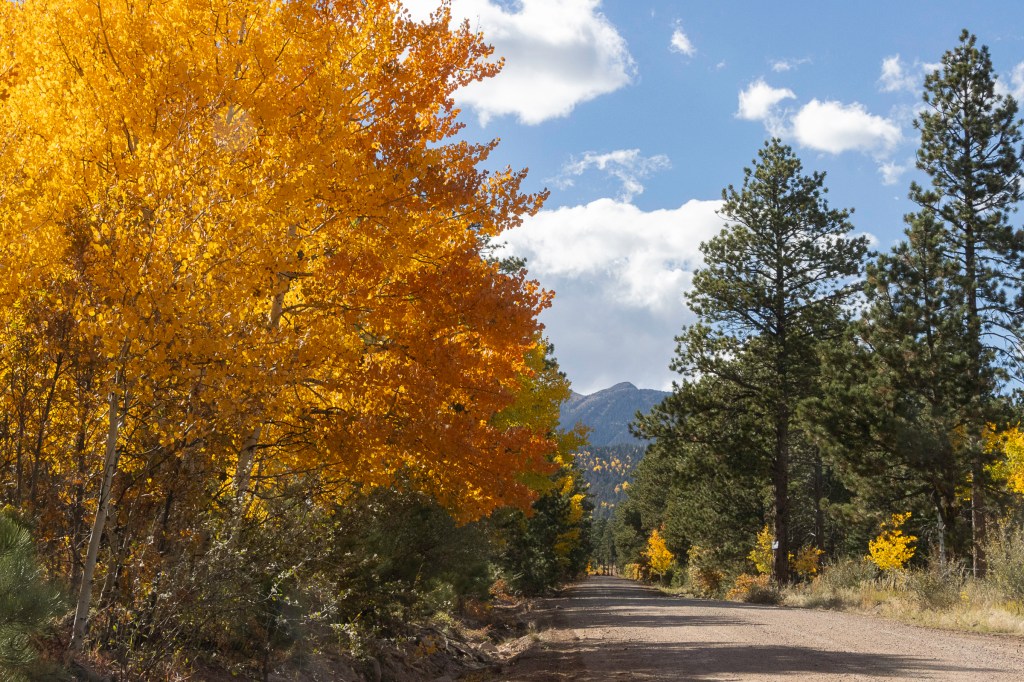
    Road to Tanglewood Acres, Oct. 3, 2025
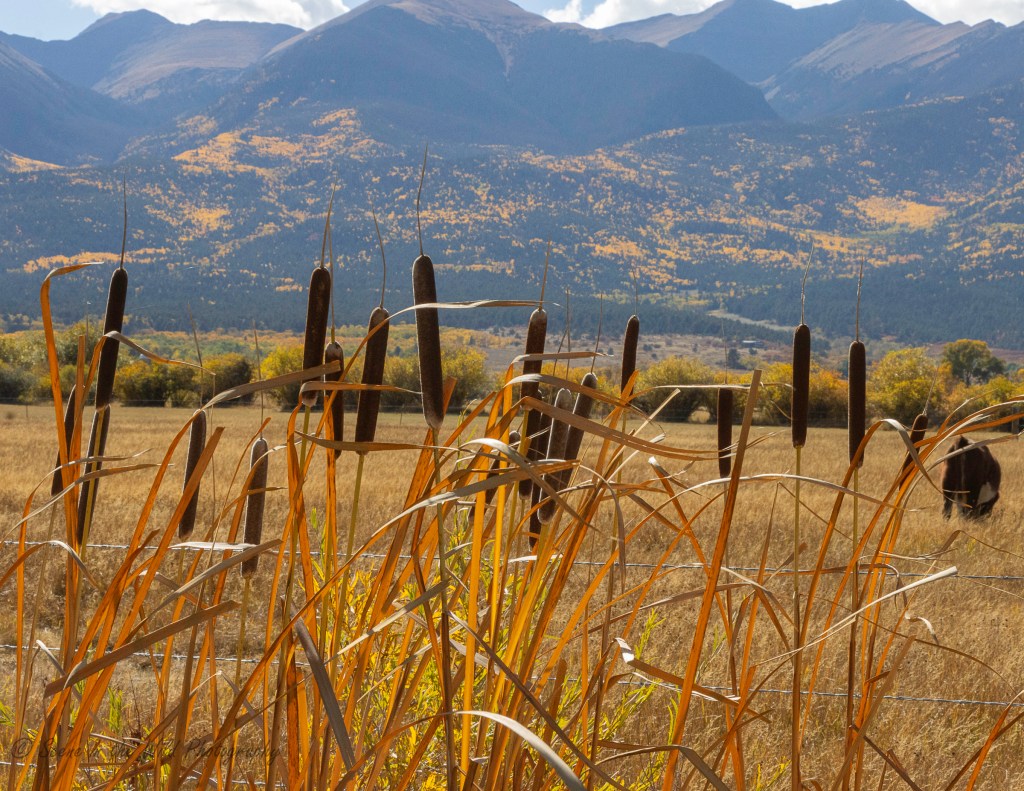
    Cattails with Sangre de Cristos in background Oct. 3, 2025

    After I settled into my inlaws’ house, I drove back into town to watch the sunset and have dinner. On the way, I noticed that I was being watched:
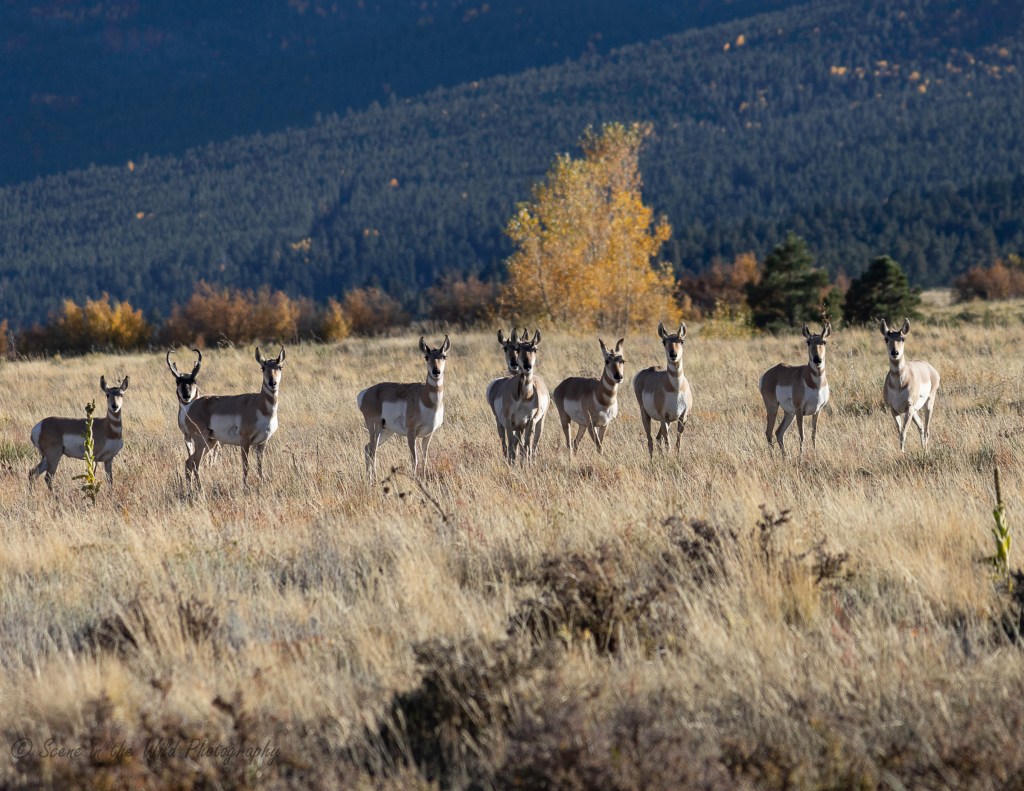
    Pronghorn herd, Schoolfield Road, Oct. 3, 2025

    After that, I had another surprise! I had no idea that I would be treated to a very special sunset! I am sure there is a name for this phenomenon of clouds and light, but I had certainly never seen anything like it before:
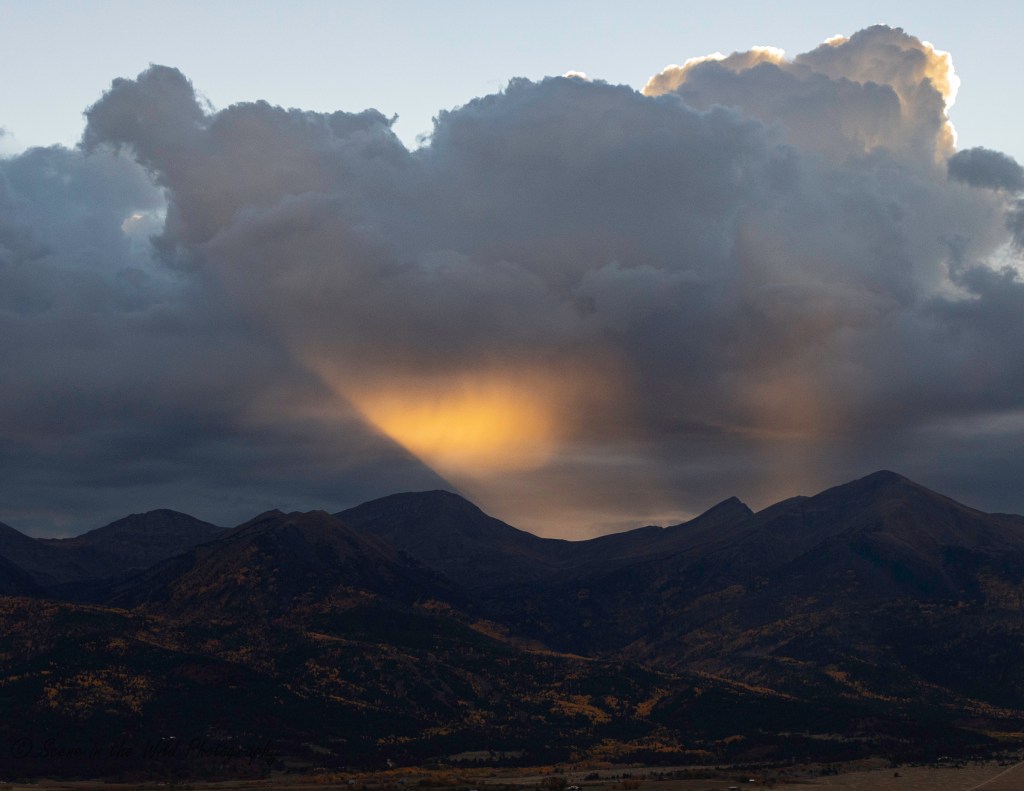
    Sunset over Sangres, Oct. 3, 2025

    The clouds were definitely a warning of what was to come. The next morning as I left, more were rolling in, and by the time I left town, the wind was blowing and rain had started. On my drive through the canyon I noted that many of the leaves I’d seen the day before had already been blown off the trees.
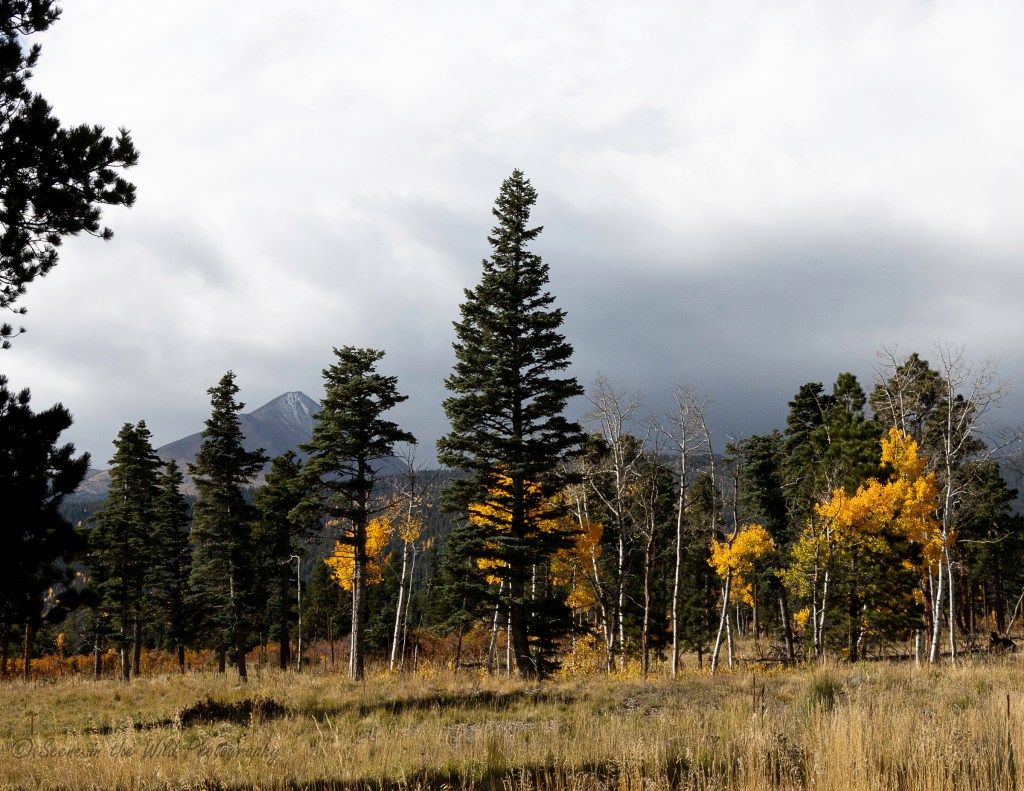
    Storm rolling in, Oct. 4, 2025

    Two weeks later, Steve and I drove up to close the cabin for the winter. Although there was still beauty to be seen, I was very pleased that I’d made the earlier trip, as most of the aspen colors were gone.
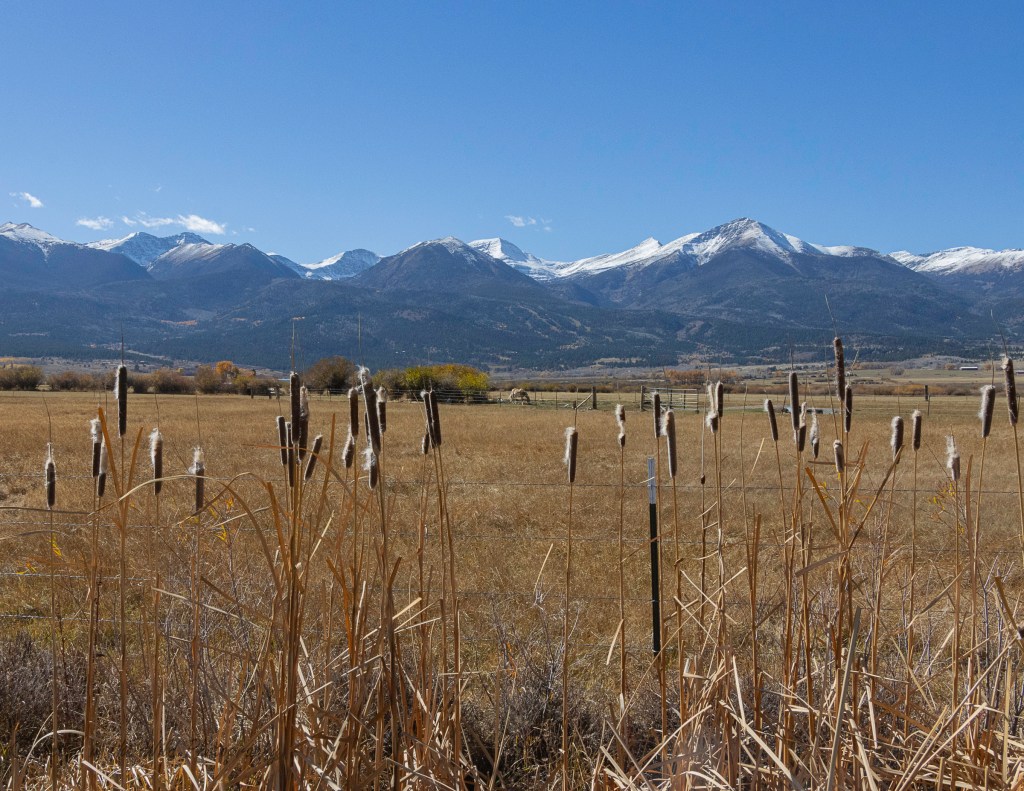
    Cattails, two weeks later, with snow on the peaks. Oct. 18, 2025

    There was still plenty of wildlife about:
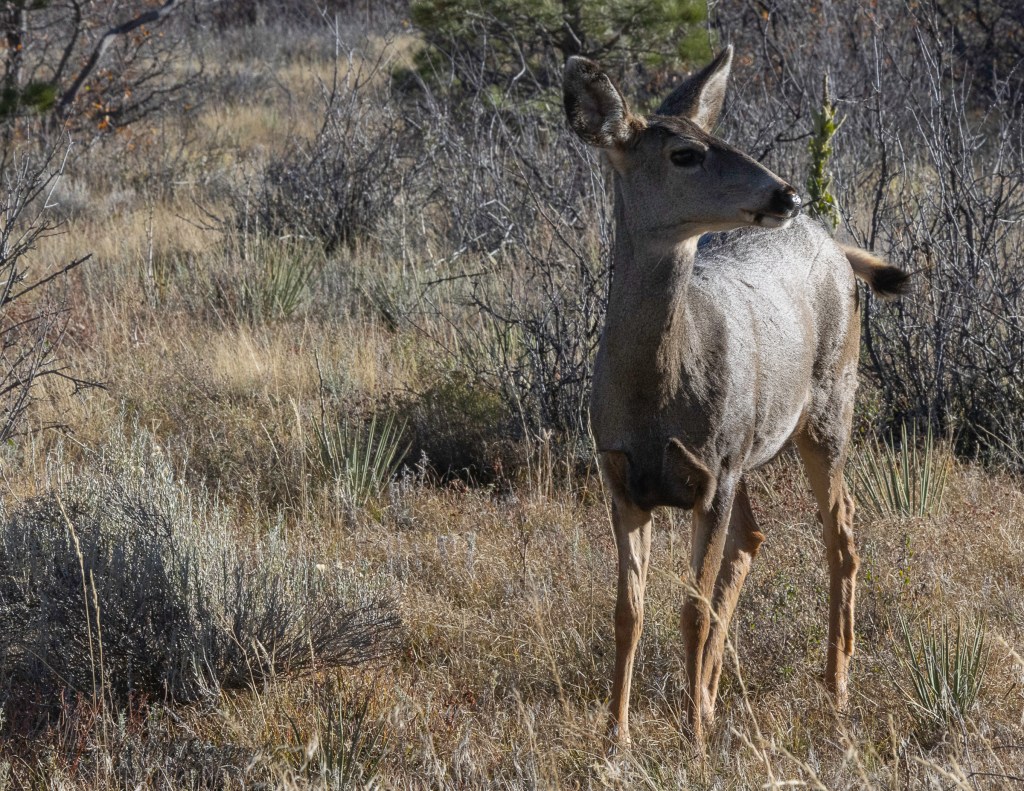
    Mule deer doe near Tanglewood, Oct. 18, 2025
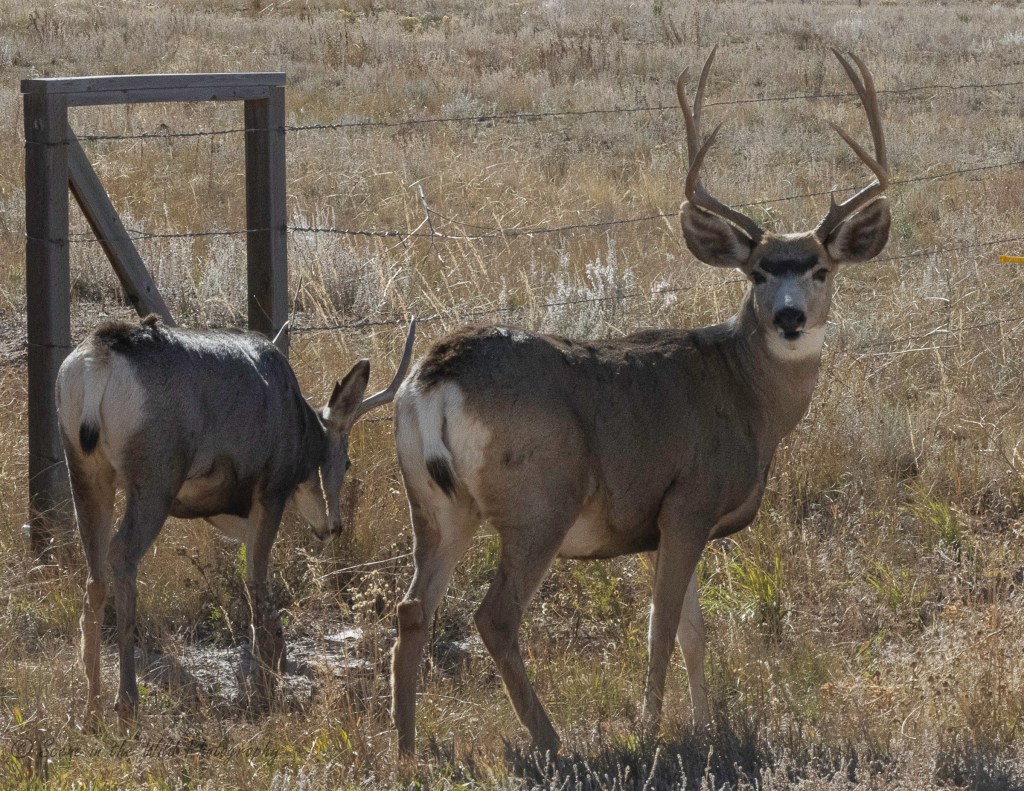
    Mule deer bucks by road to Lake DeWeese, Oct. 20,2025
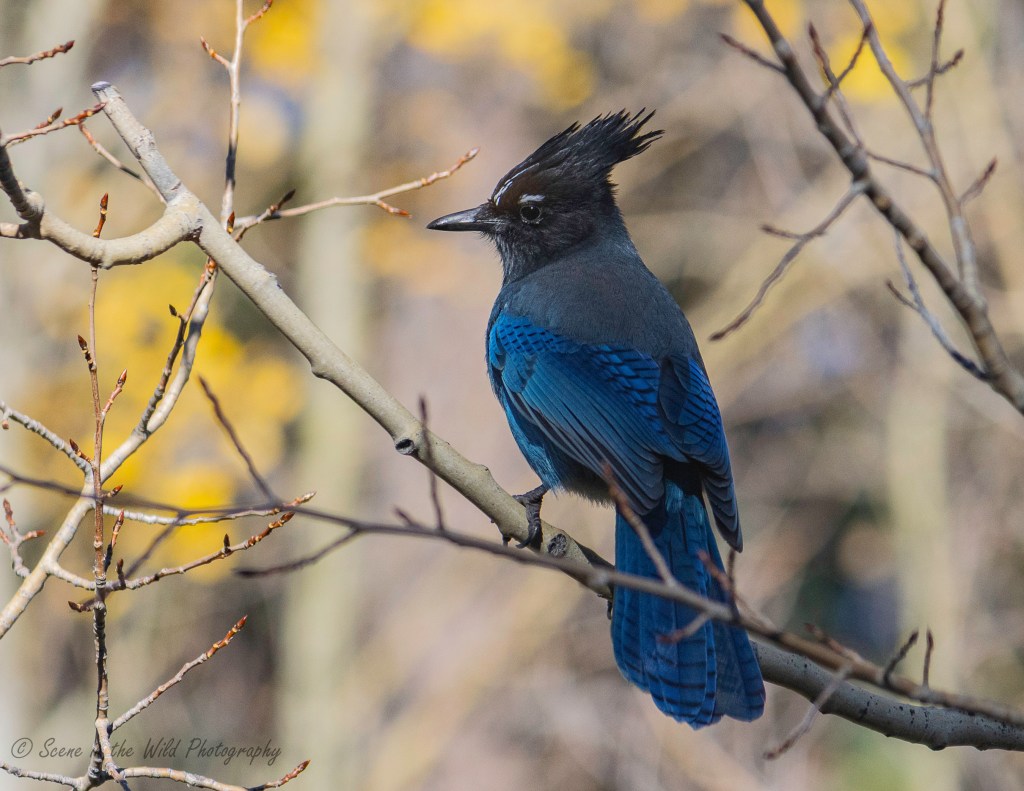
    Steller’s Jay, Oct. 21, 2025

    Of course there was still awe-inspiring scenery:
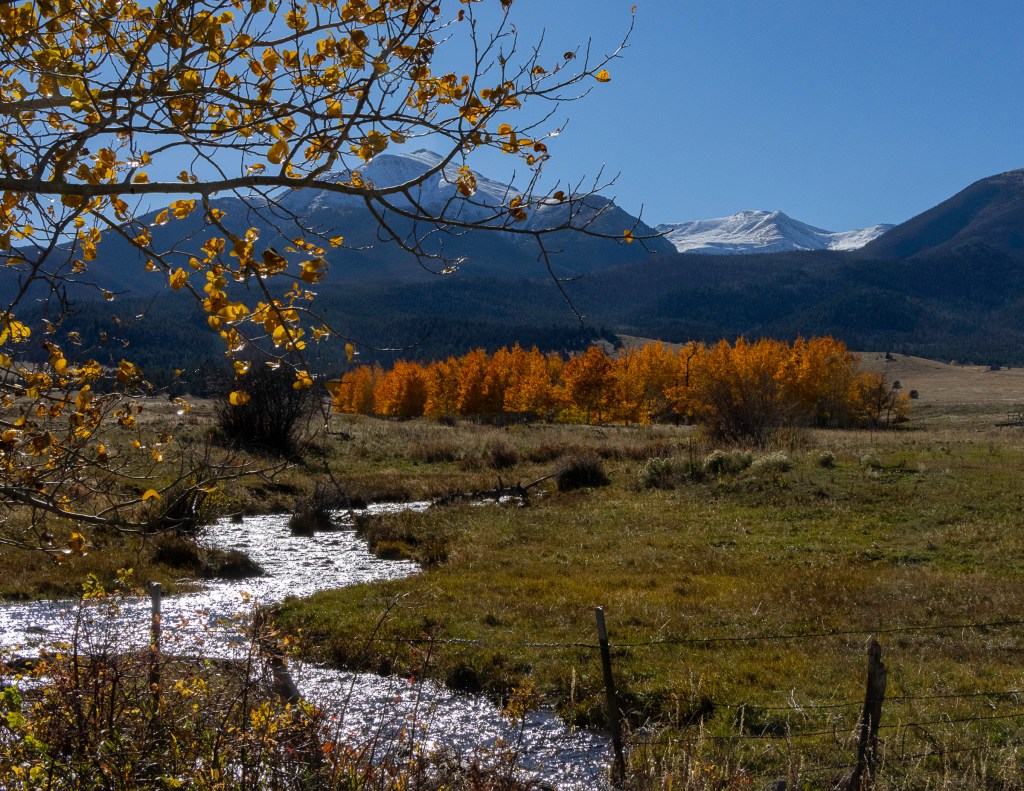
    Autumn splendor, Oct. 20, 2025
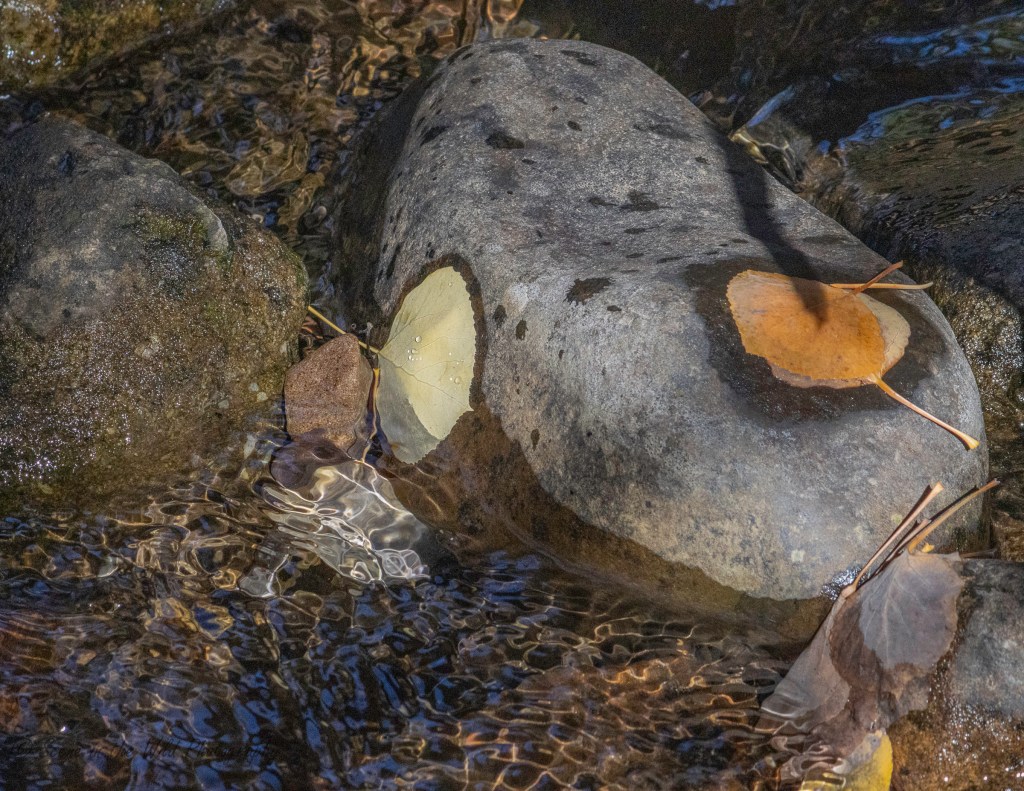
    Aspen leaves in stream, Oct. 21, 2025

    I’m astounded that it’s been more than three months since I wrote a new blog! It’s certainly not because I haven’t taken any photos during that time, because I definitely have. I would imagine you’ll see some of those during the winter. I hope to write blogs more frequently. Until then, Happy Thanksgiving to all! (If you like my blog, be sure to add your email address so they will automatically be sent to you when I post a new one. No cost, no ads!)
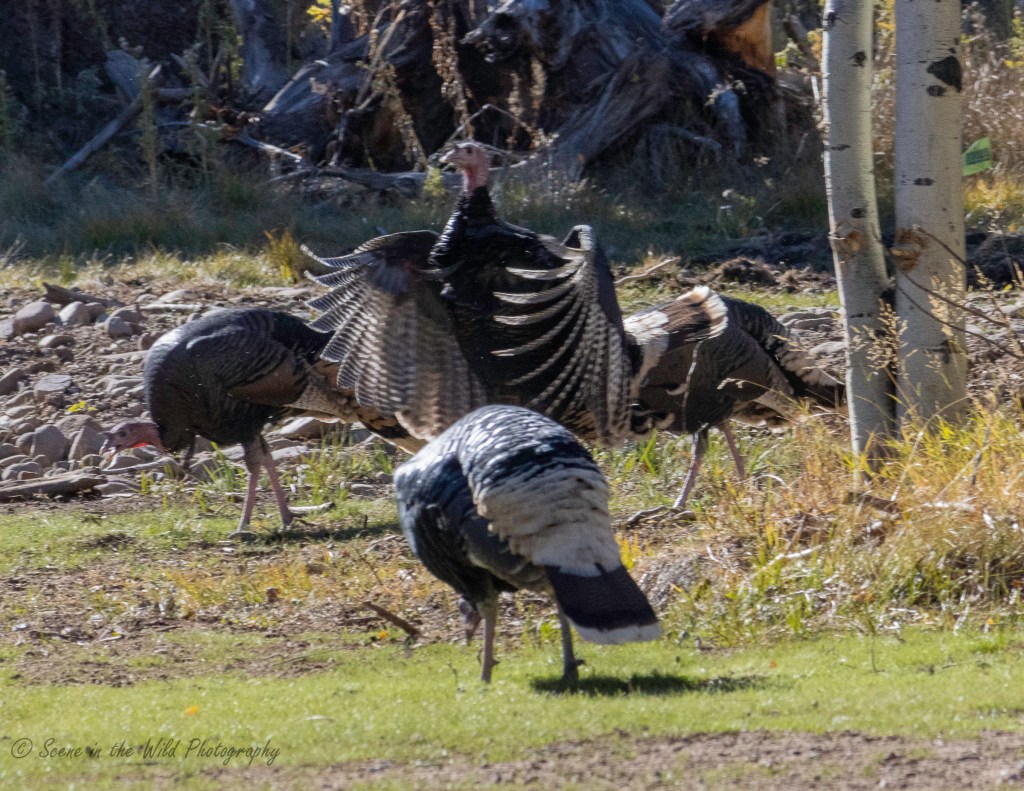
    Wild turkeys near cabin, Oct. 21, 2025
  • A Tiny Red and Gray Beetle and Some Milkweed; or Adventures with iNaturalist

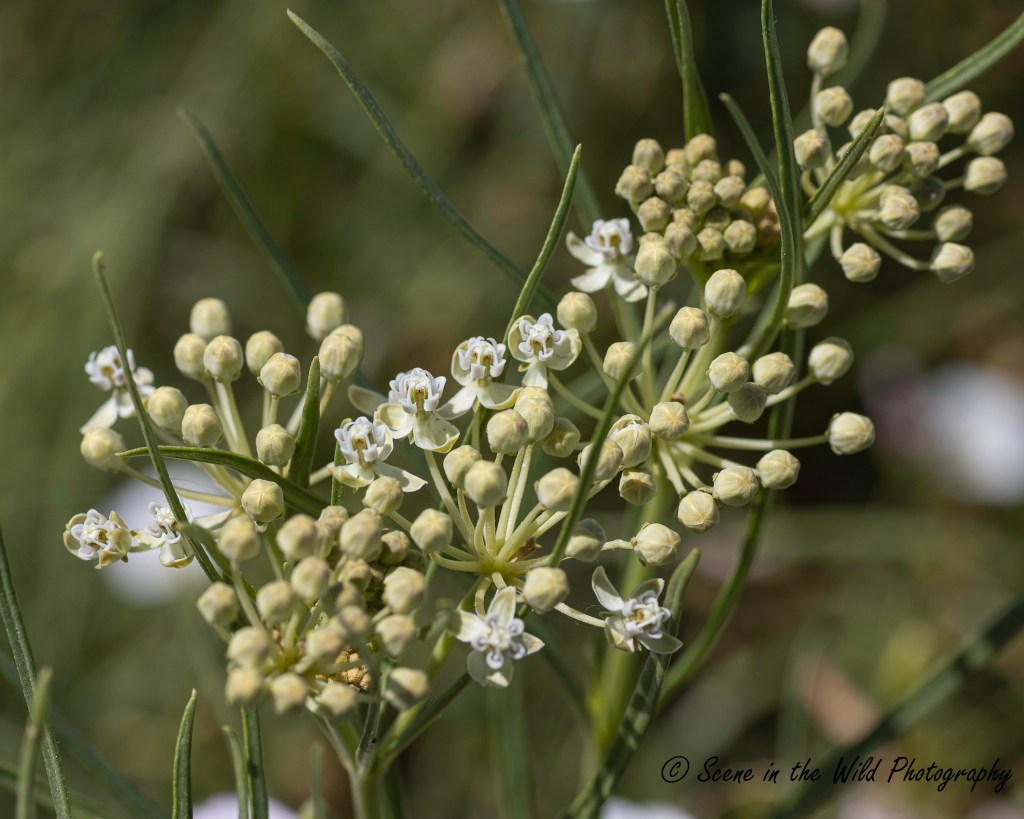
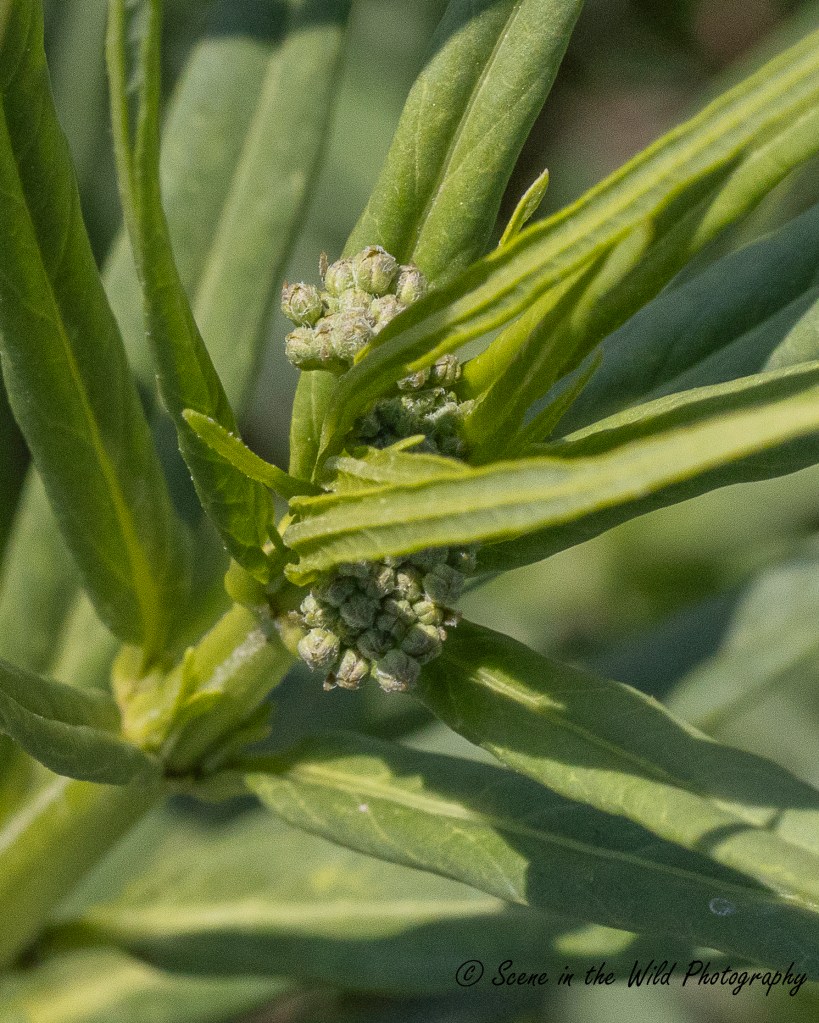
    This is Asclepias subverticillata, which has a common name of Horsetail Milkweed. It’s not what most of us typically think of when we think of milkweed–the one with the pretty pink and white flowers and broad leaves, which is Asclepias speciosa, or Showy or Common Milkweed. This photo was taken June 8, when the plant was just starting to bud. We have an abundance of this type of milkweed in our field.

    Here is one of the flowers just starting to bloom. (June 18) (As an aside, Ackerfield’s Flora of Colorado lists 19 different species of milkweed in the state!)

    Although we have had this type of milkweed on our property for years, I became extremely interested in it about a year ago, because of a post I made on iNaturalist of a tiny longhorned milkweed beetle:

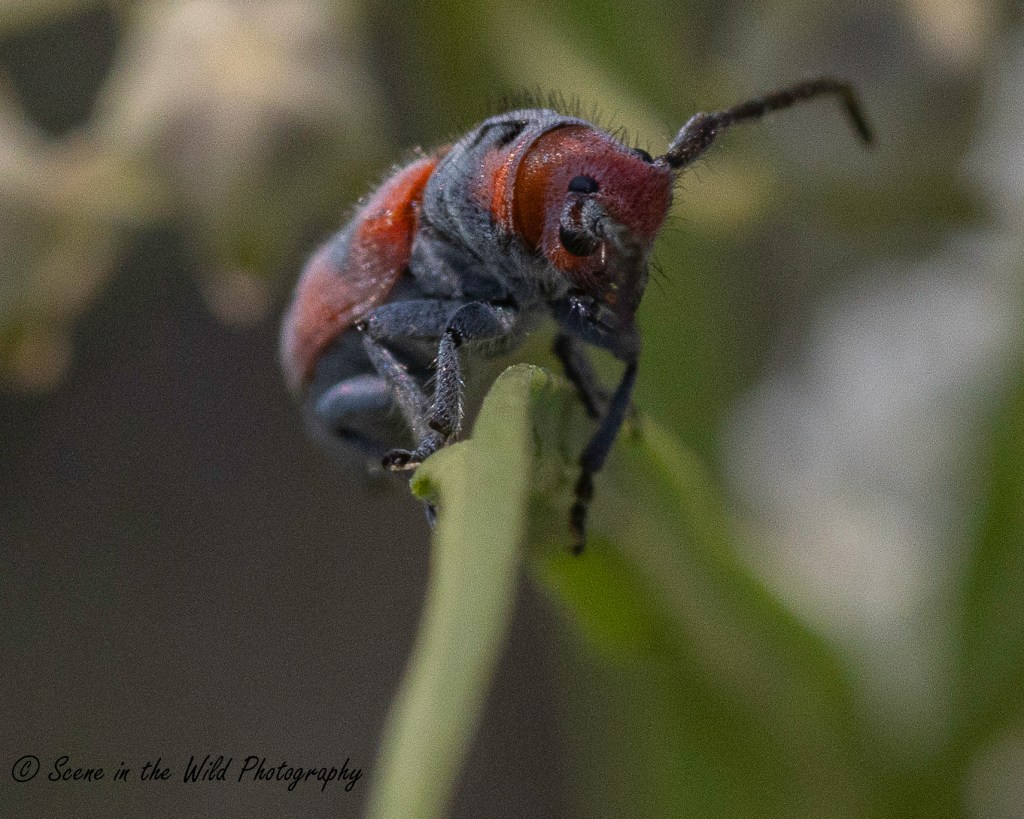
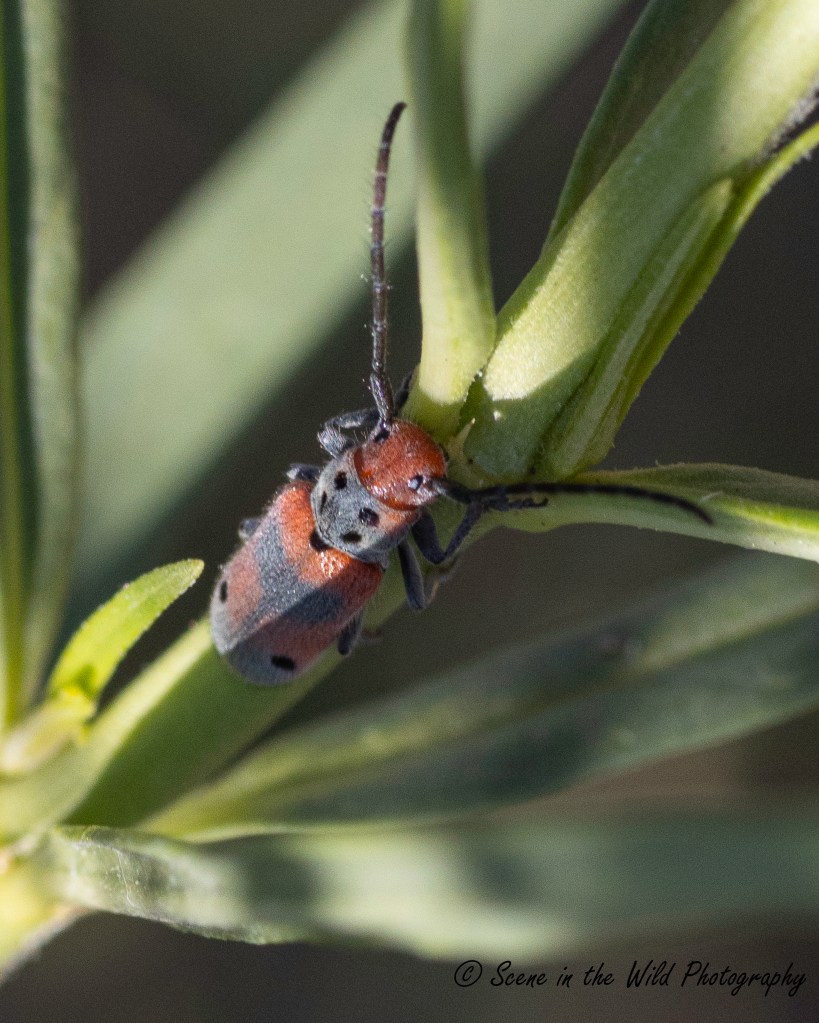
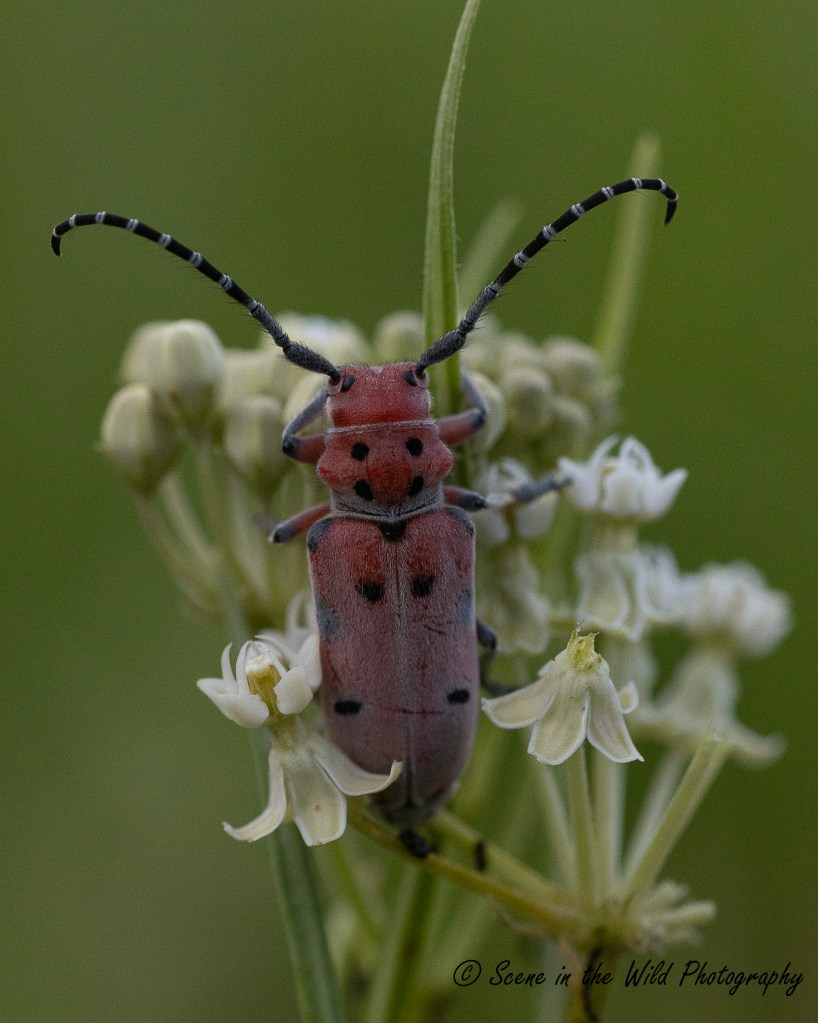
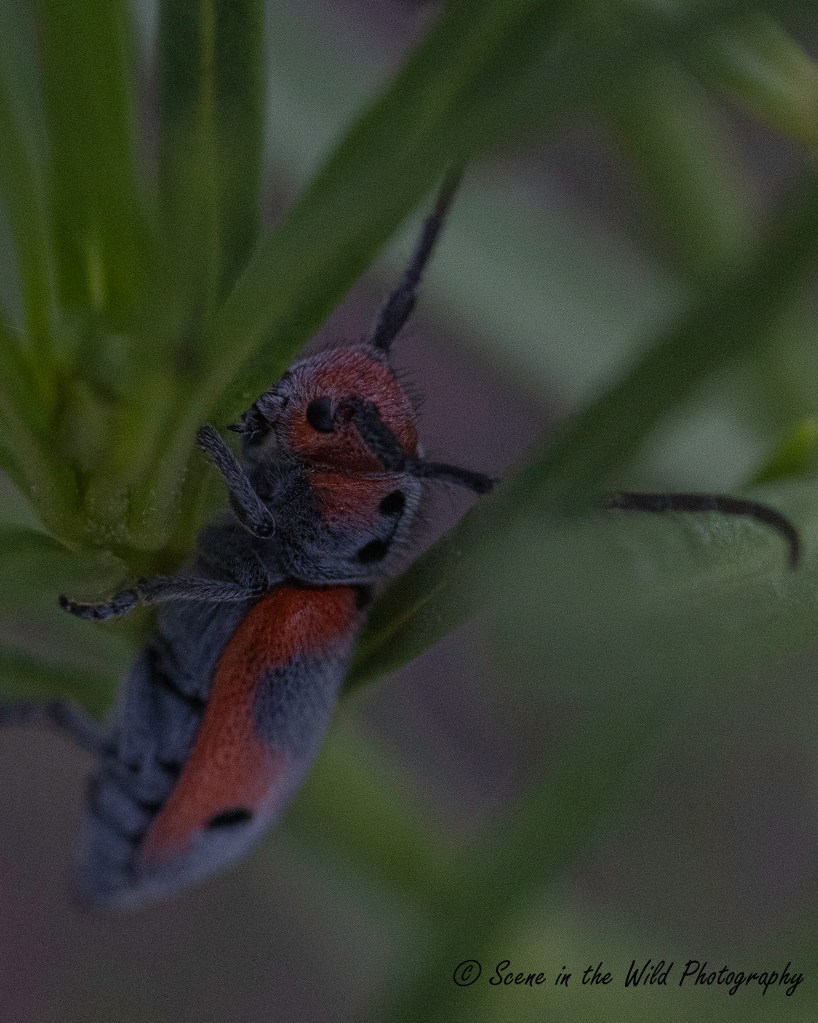
    I wasn’t exactly sure what the beetle was. It was quite small, not much bigger than my pinky fingernail, and I thought it was very colorful. It was identified on iNat as Tetraopes discoideus. (July 26, 2024)

    A few days after I posted the photo, I received an email from a professor of biology at the University of Memphis. He’d seen the post and was wondering if the beetles might be nearby (yes, they’re in my field!) He explained that he studies beetles, insect-plant interactions, genomes, and insect biodiversity conservation. He was seeking this particular beetle for a collaborative gene sequencing project; they were sequencing several other Tetraopes species and studying the genomic basis of their interactions with toxic milkweeds. To make a long story short(er), I had a very interesting phone conversation with him in which he further explained that the beetle and the milkweed have co-evolved. Like the other beetles in the tribe, the beetle has modified its genes to manage the plant’s toxicity and has an ability to use the plant’s polysaccharides more efficiently. He said it’s one of the earliest species in this lineage of beetles that can do this, and it’s the only one in its lineage that’s found in North America. (According to texasento.net, its range is from Colorado to e. Kansas; Arizona to Texas; Mexico to Honduras).

    During the conversation, I agreed, excitedly, to find some of the beetles and send them to him. This involved going out in the early morning before it got unbearably hot for both woman and beast. I did find four; following his instructions, I sent them off, each in its own individual container with a bit of the milkweed (apparently the beetles like to nibble on each other), and some milkweed by itself. He suggested I add a freezer pack since it was so hot, and they’d be traveling across a few states. (I texted him that George, Paul, Ringo and John were on their way).

    Unfortunately, one of the beetles was dead when it got there. However, they successfully extracted both RNA and DNA from the remaining beetles and are assembling them in to a genome. They also generated data from the milkweed and found out that it is a polyploid; actually, a hexaploid (it has six homologous sets of chromosomes; polyploids are apparently not known from milkweeds). He said it’s possible that not all of the populations of this milkweed are polyploid, and they are still studying them.

    All of this to say that since this experience last summer, I have been posting many of my flora and fauna photos on iNaturalist, because I’ve realized that what I’m doing can benefit science. For those who don’t know, “iNaturalist is a nonprofit social network of naturalists, citizen scientists, and biologists built on the concept of mapping and sharing observations of biodiversity across the globe.” (Wikipedia).

    To me, although I like entering photography shows and receiving ribbons, or (very) occasionally selling one of my photos, my contributions to iNaturalist are so much more important, especially in these days of funding cuts for scientific endeavors.

    When I was thinking of what to write this blog on, I decided to talk about my beetle friend and where it led me. When I started going through my photos, I realized that I had quite a few photos of various insects and spiders on A. subverticillata, and I thought it might be interesting to showcase them as well. The diversity is quite impressive!

    Here are some photos taken June 30:

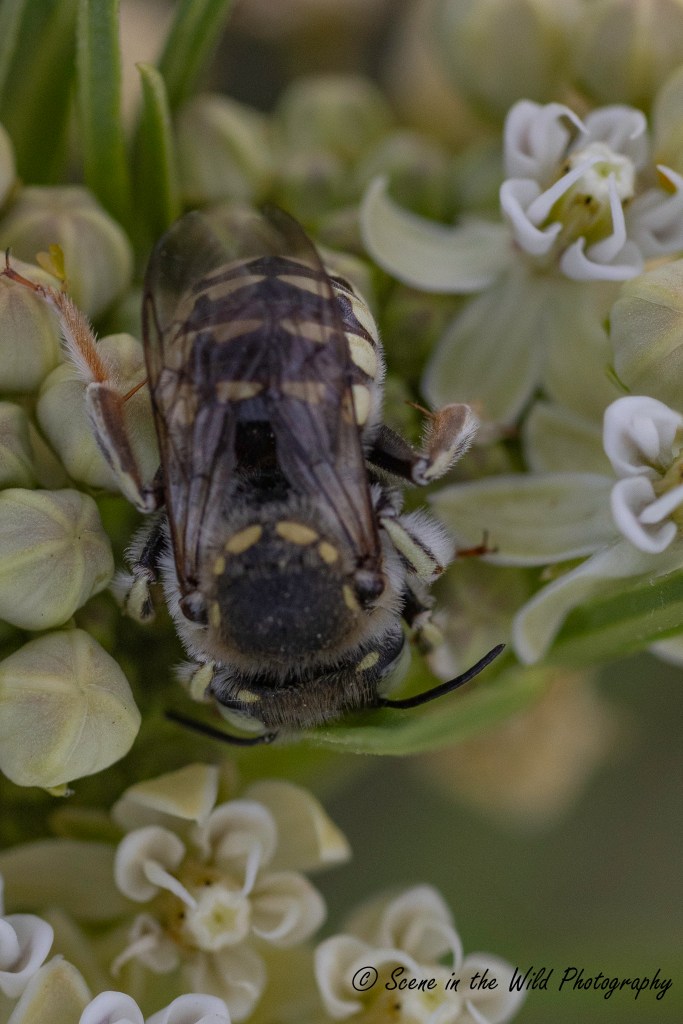
    This bee, probably a wool-carder bee, was sleeping peacefully on one of the flowers.

    A checkered melon beetle.

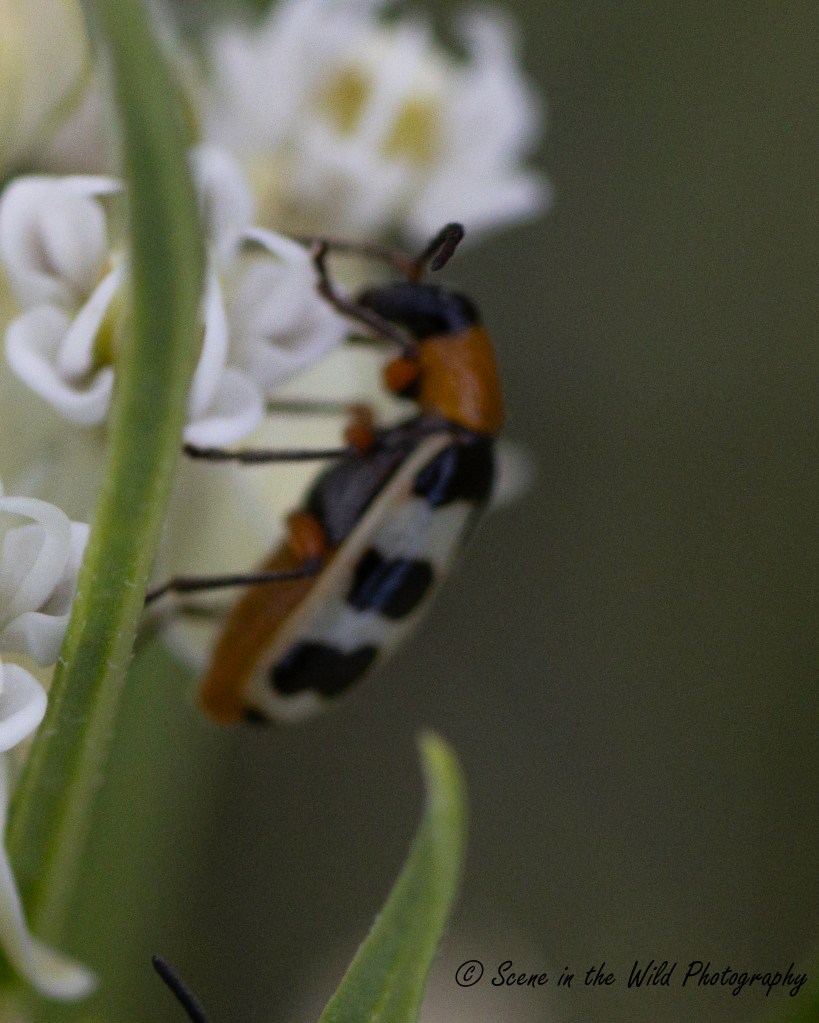
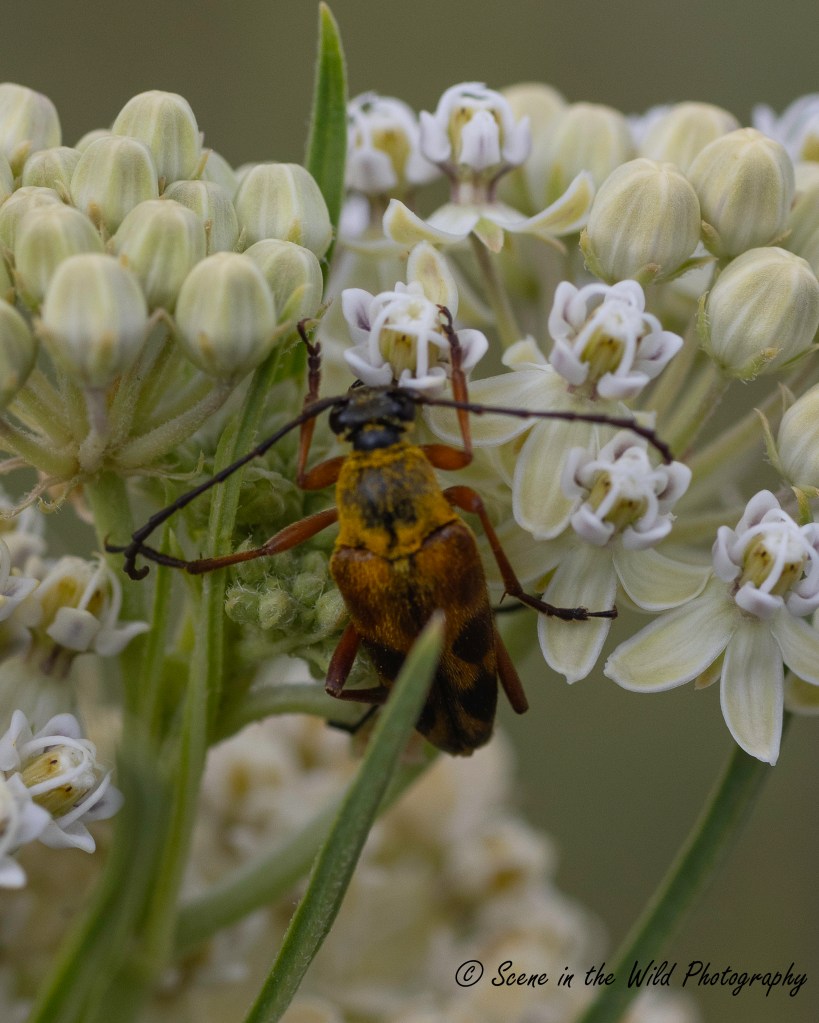
    An eight-spotted flower longhorn beetle. Did you know that some beetles are pollinators?

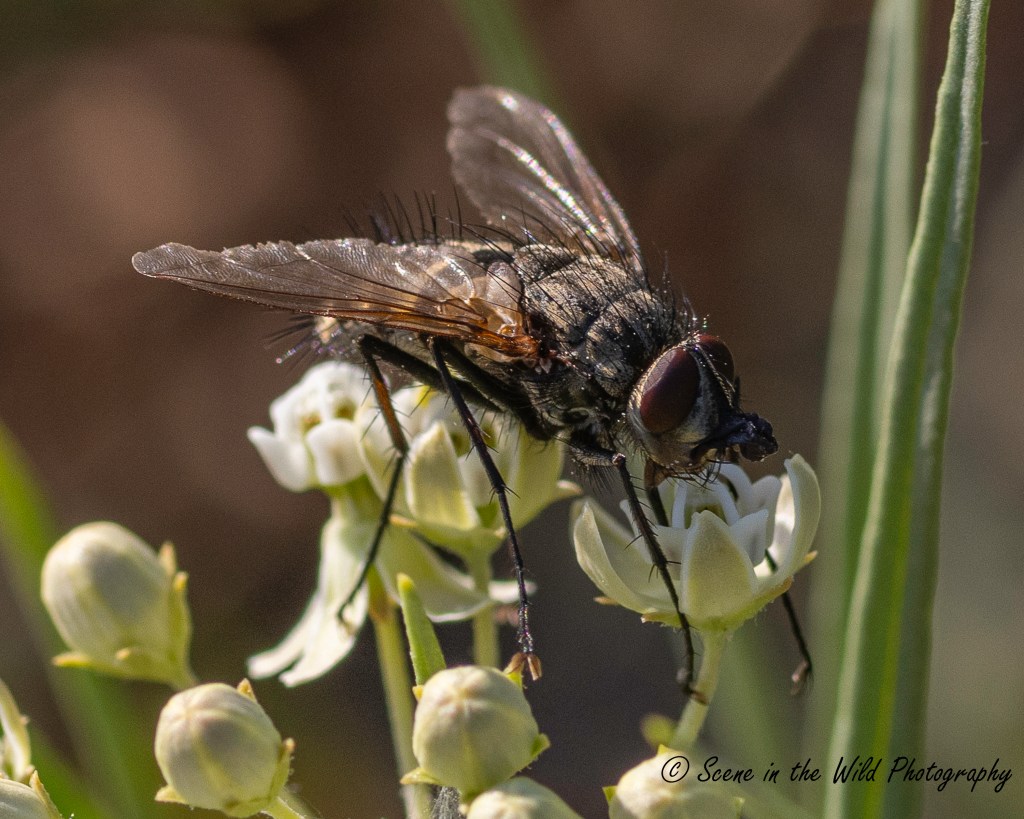
    A tachnid fly, identified because of the bristles on its abdomen. (Flies have huge eyes a small antenna, which is one way to tell them apart from bees). This one looks as though it just draped itself over the flowers.

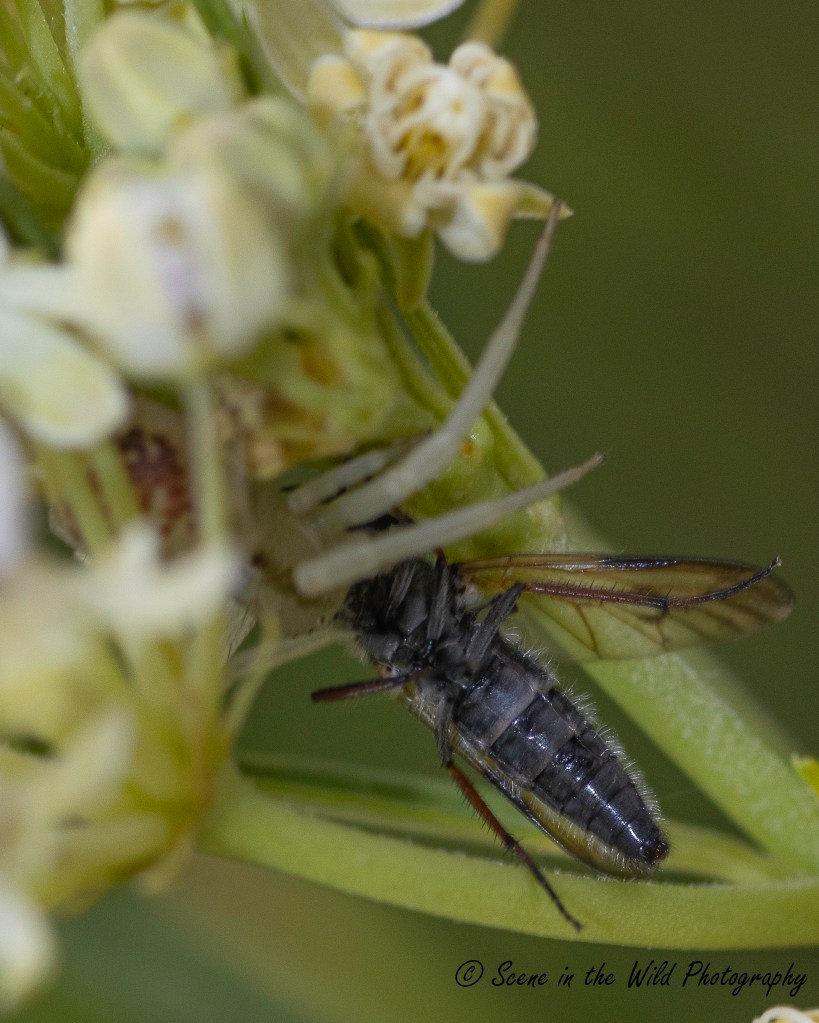
    I think I shared this in a previous post: a crab spider that nabbed a robber fly for lunch.

    The following photos were all taken July 20:

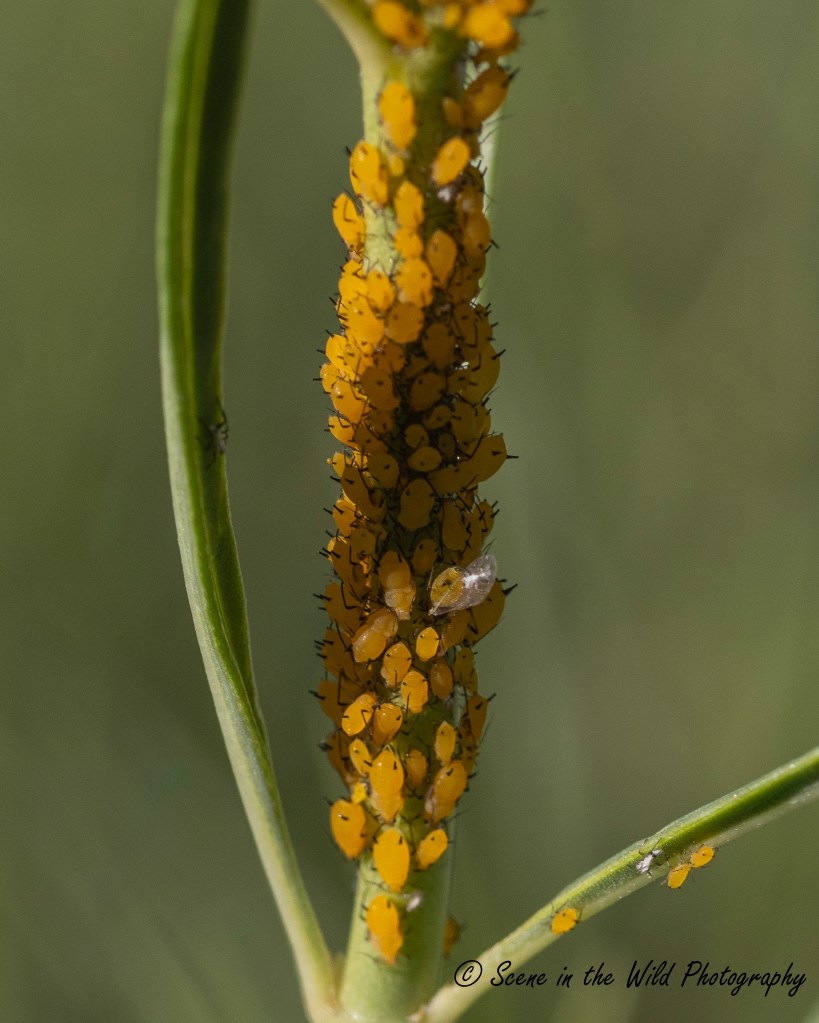
    Aphids on a milkweed stem.

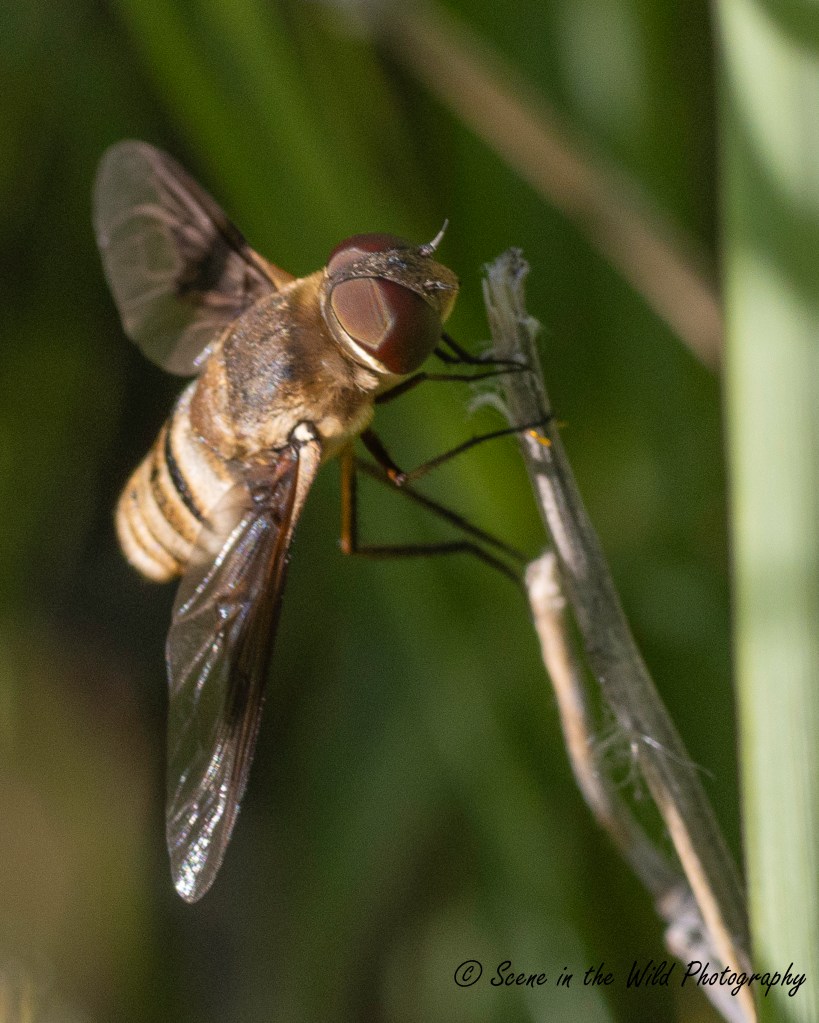
    A bee fly on a dried piece of stem from last year.

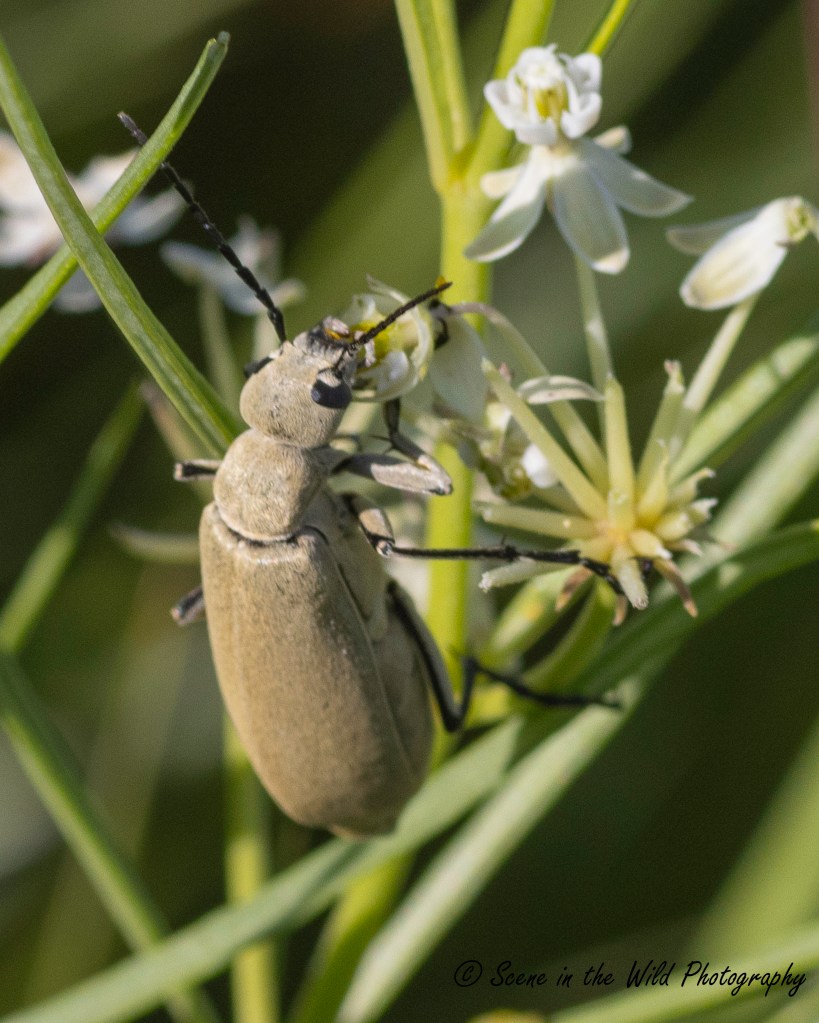
    A blister beetle.

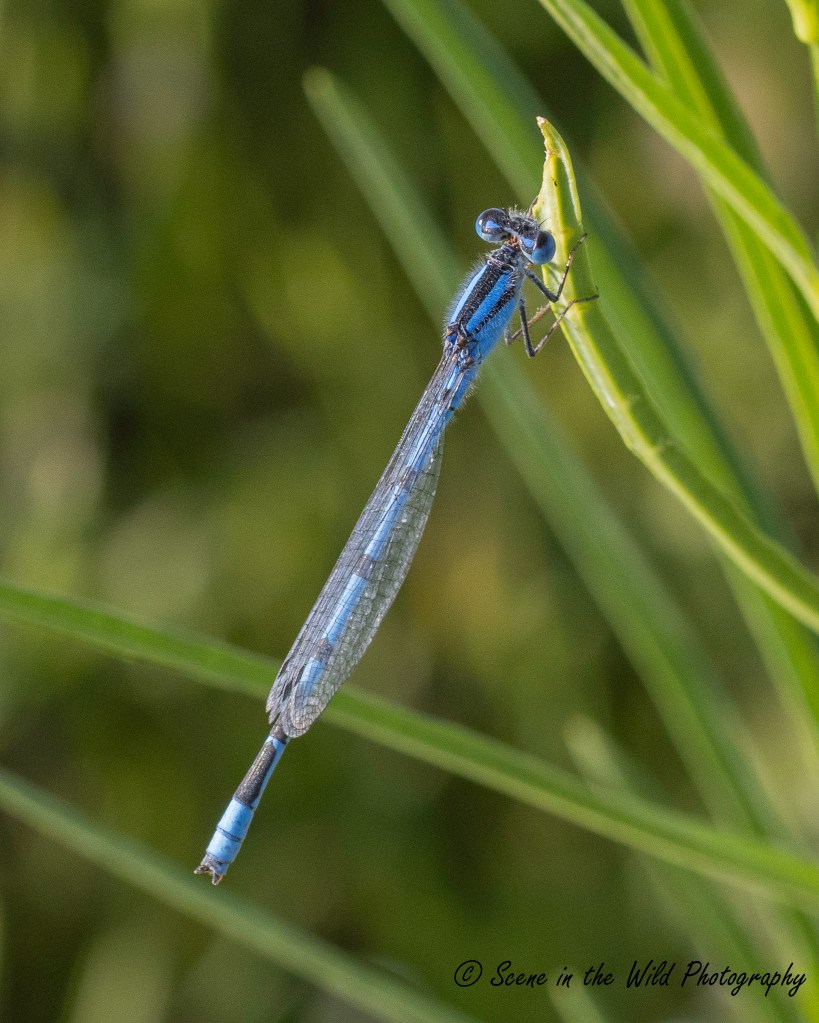
    A familiar bluet (Damselfly).

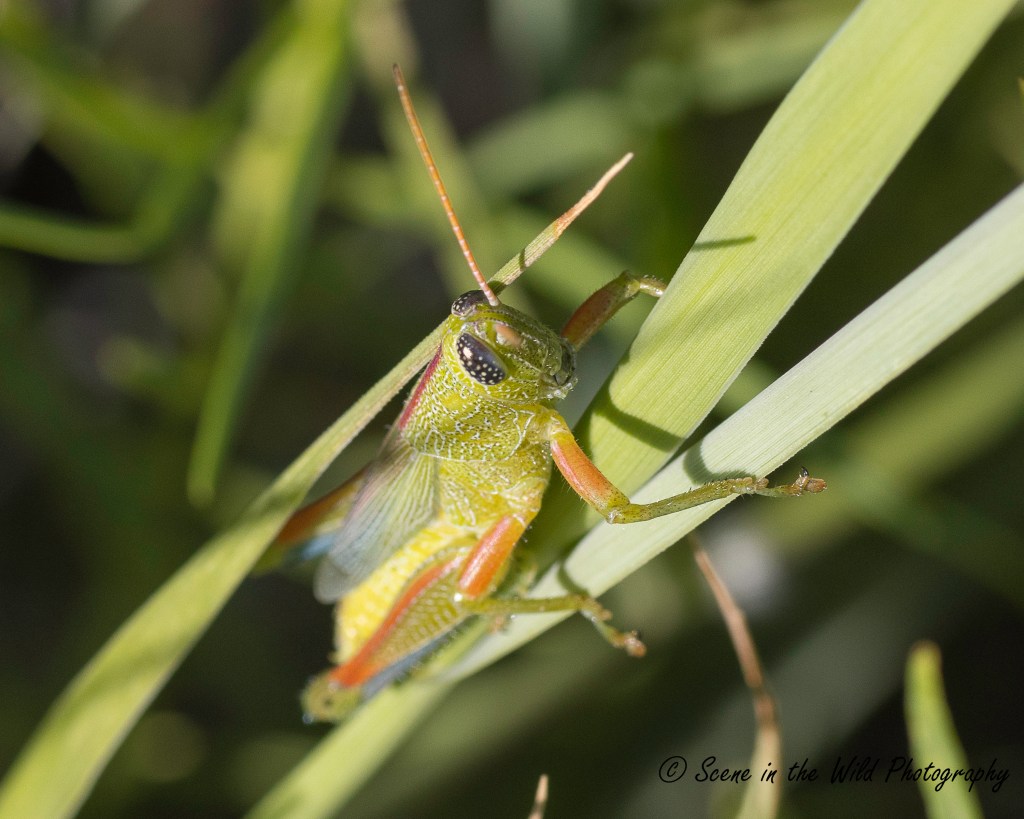
    A young grasshopper.

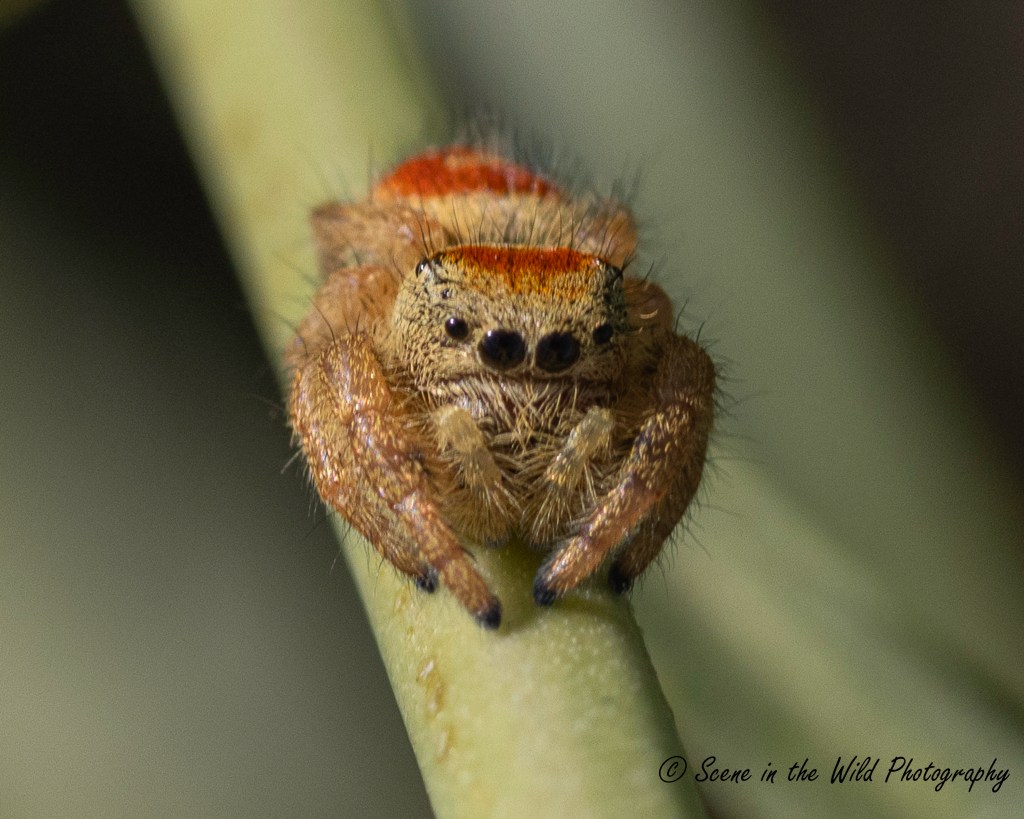
    An Apache jumping spider (I might have shared this one previously, too, but it was posing so nicely for me, I thought I should share it again. I saw several of these spiders on milkweed that day).

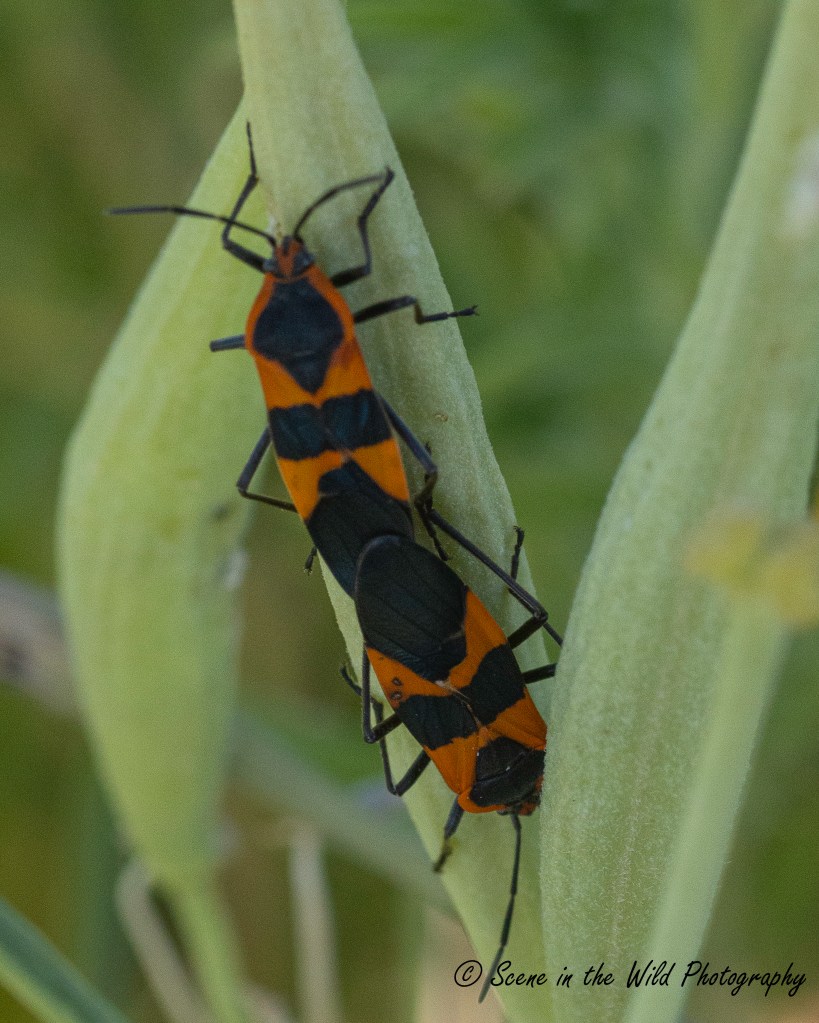
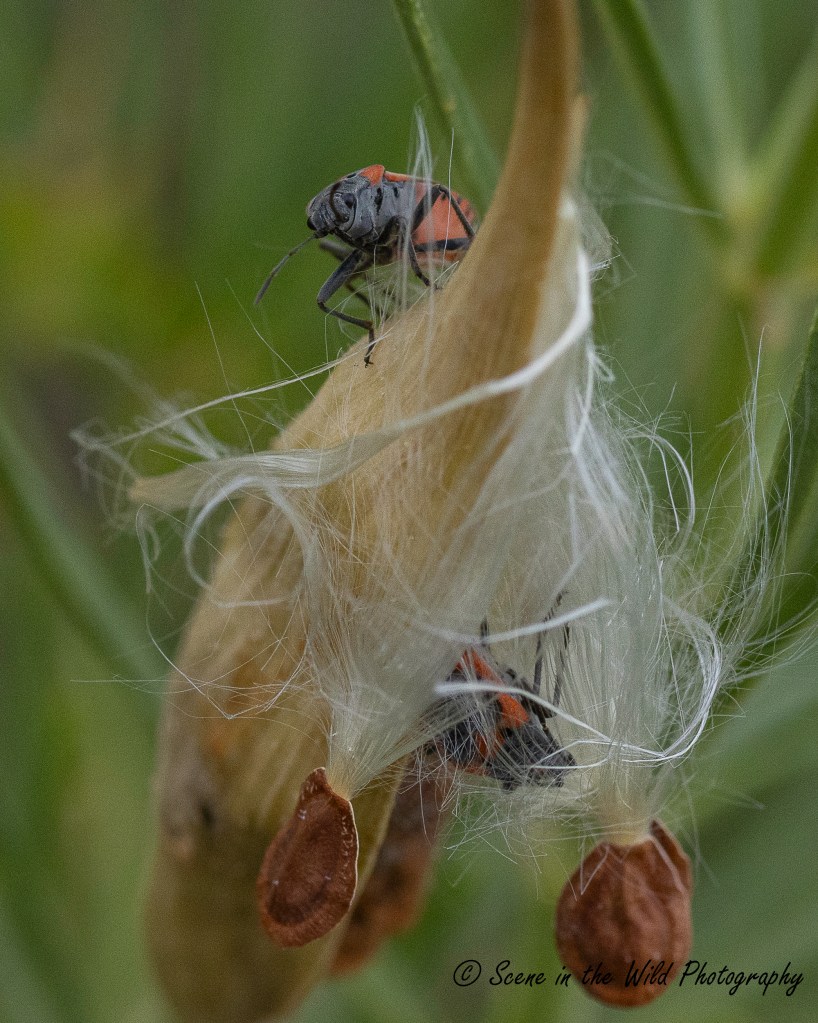
    Large milkweed bugs, mating.

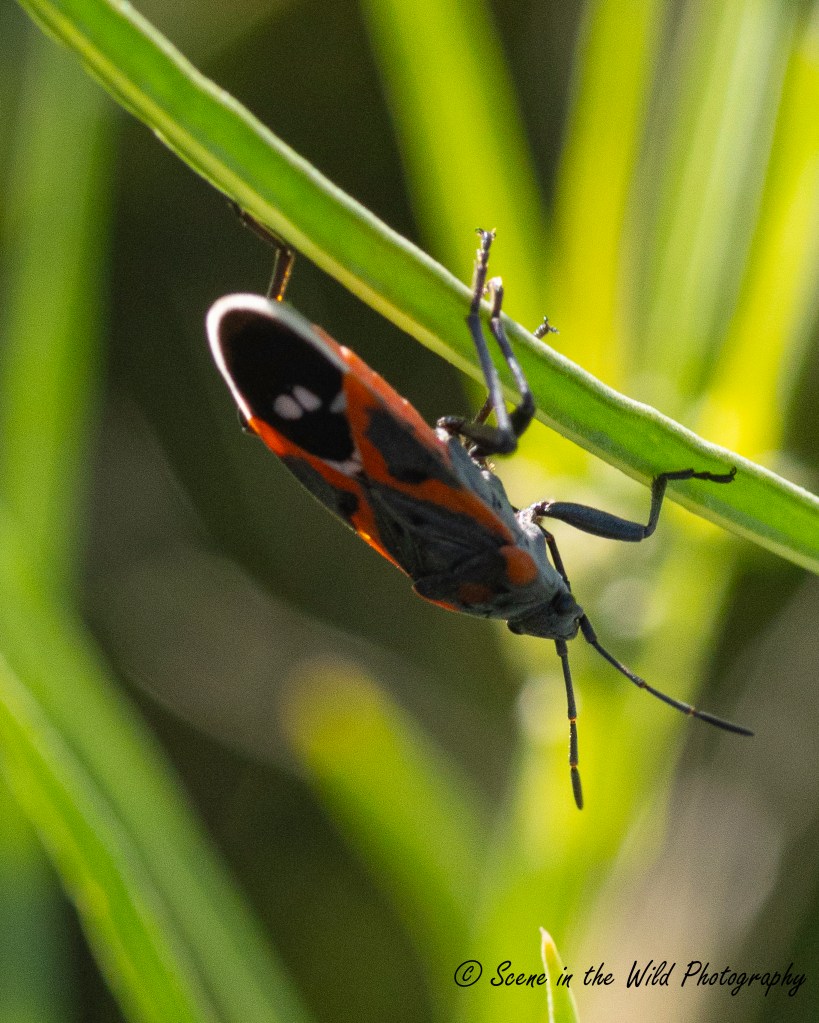
    Small milkweed bug.

    They’re back! My friend, Tetraopes discoideus. My professor friend said that the larvae are subterranean and presumably feed on milkweed rhizomes. They have a two-year life cycle, but are unpredictable. Apparently the beetles stay underground until the conditions are right, but it’s not clear what those conditions are.

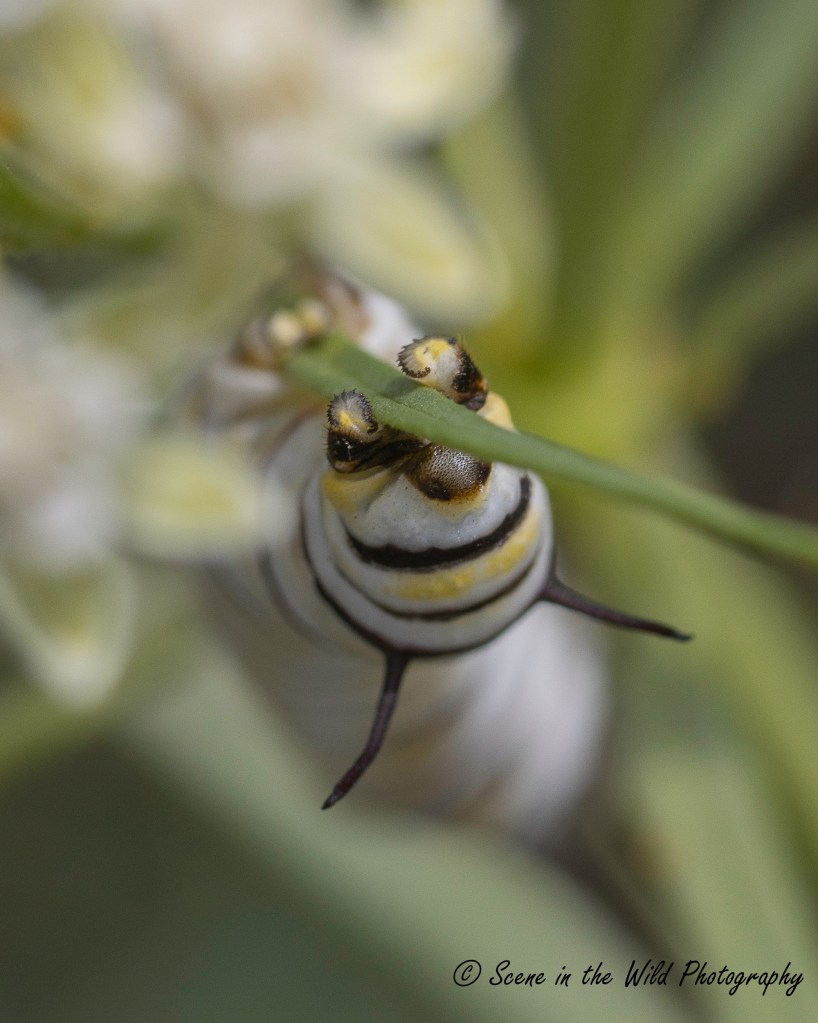
    I was jumping up and down in our field July 30 when I spotted this Monarch caterpillar on some horsetail milkweed! (Yes! A 73-year-old woman getting excited about a caterpillar!) Monarchs are listed as threatened by the U.S. Fish and Wildlife Service, and I hadn’t seen any Monarch caterpillars for a couple of years. I had spotted some Monarch butterflies this year. I also saw two more Monarch caterpillars, in different spots, a couple of days later, also on horsetail milkweed. Since then, I’ve had three Monarch butterflies visiting my Dotted Gayfeather/Blazing Star (Liatrus punctata).

    The next day (July 31), I found a few more insects:

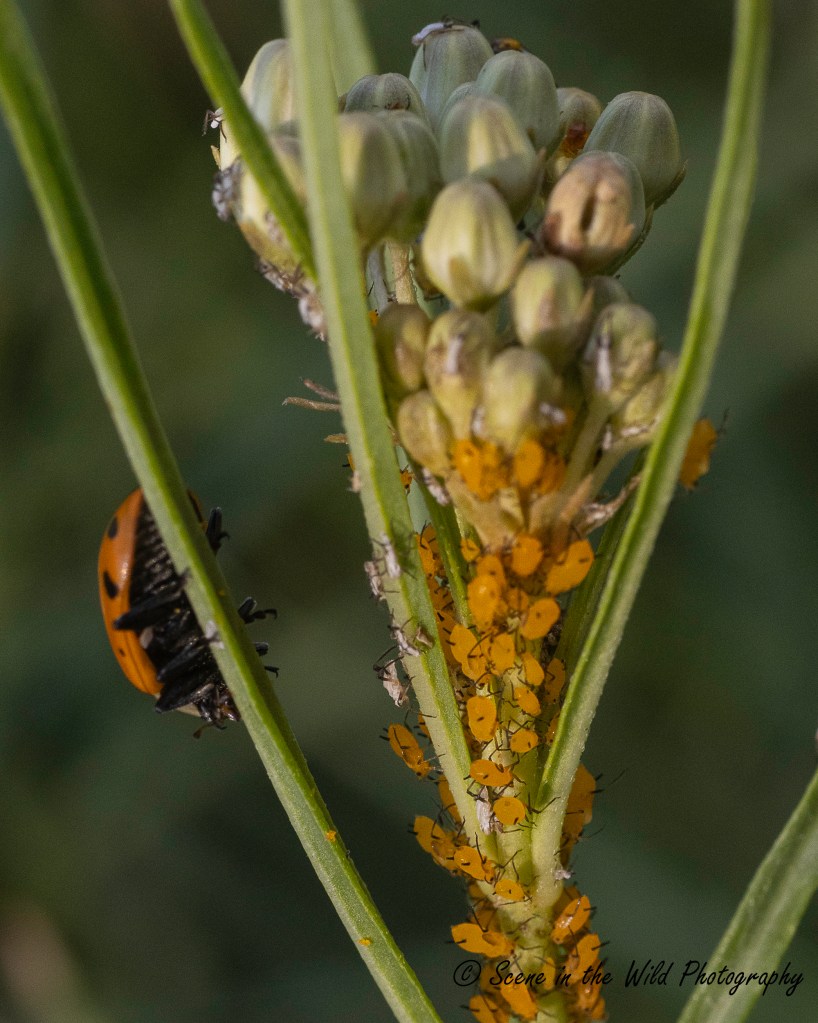
    A lady beetle with her aphids, probably deciding how many she’s going to have for dinner. (Lady beetle larvae eat larger amounts of aphids than the adults do!)

    Another blister beetle. If you look back at the one from July 20, you can see that they’re different species.

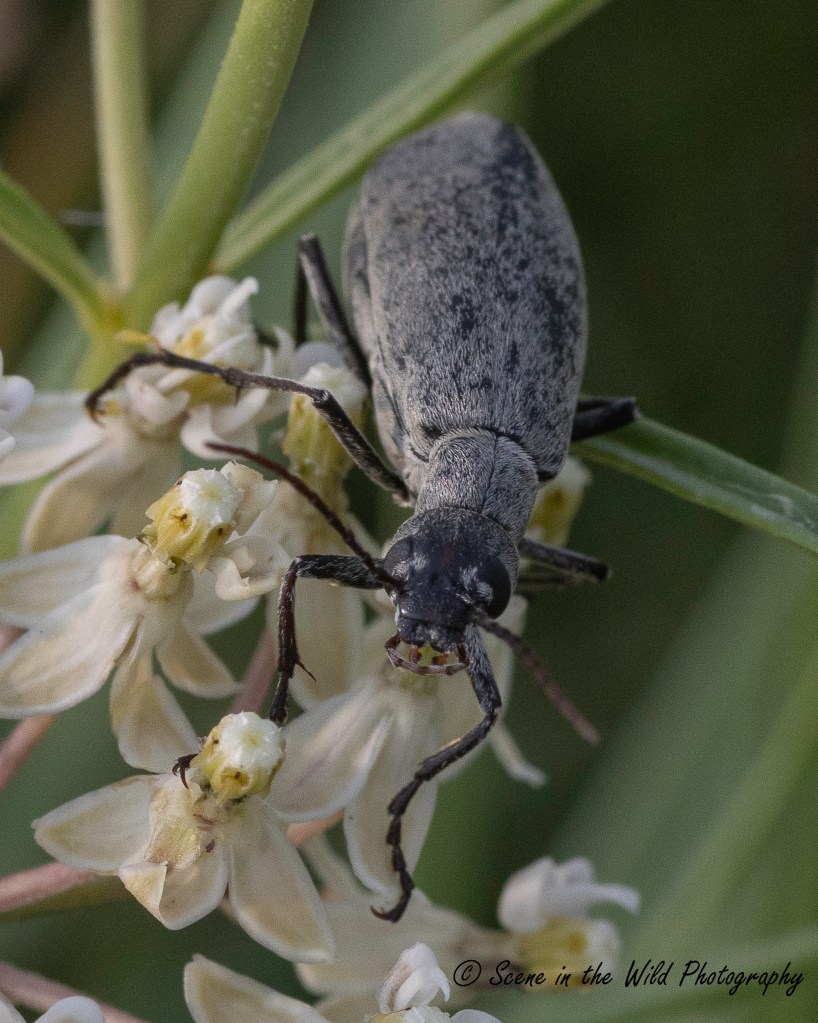
    I was confused when I saw this beetle. It’s a lot bigger than the T. discoideus I’d seen earlier. I wondered if why. Well, it turns out it’s a different species, according to my professor friend. It’s probably T. femoratus, but could be T. annulatus. They’re both found here.

    The smaller one again (which wasn’t far from the larger one). T. discoideus.

    Small milkweed bugs on a horsetail milkweed seedpod. Yes, the seeds look very much like the milkweed seeds you’re used to seeing, but the pods are much smaller and don’t harden up as much as the others do.

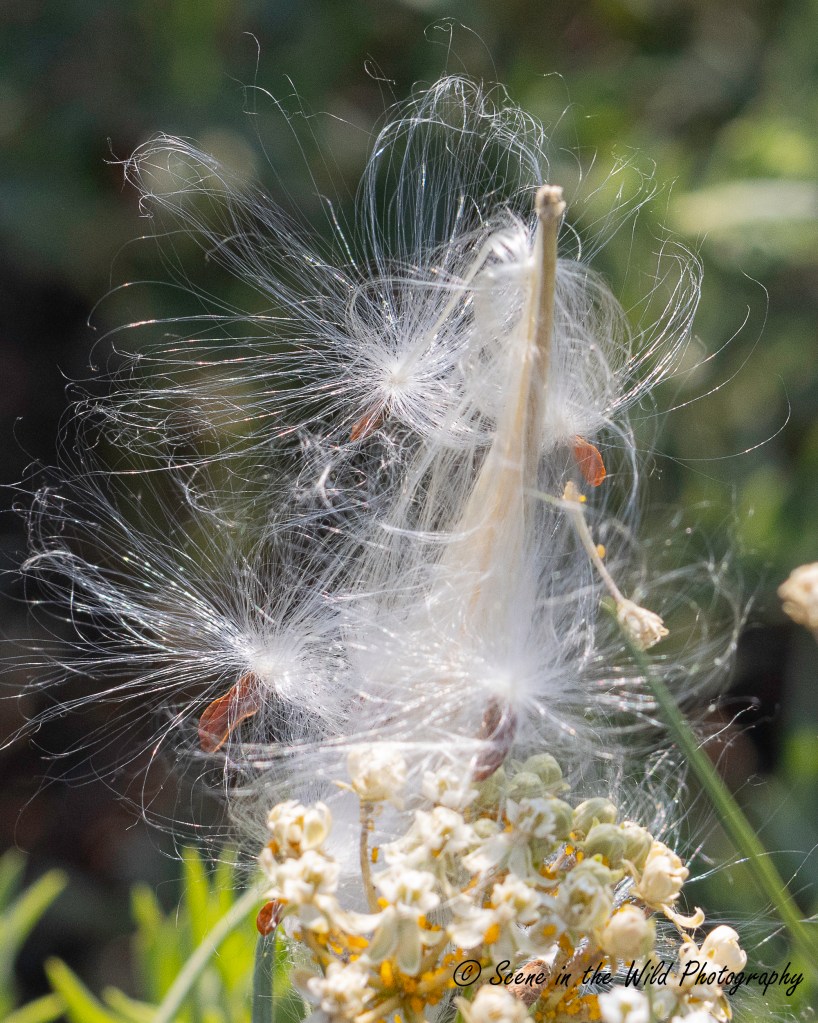
    Milkweed fluff in sunlight.

    I’d like to encourage all of you to consider posting photos to iNaturalist. You don’t have to have perfect photos, but they should be fairly clear so the specimen can be ID’d. Preferably, take photos from different angles. You can even use your cellphone. There’s an app you can download for both Androids and iphones, or you can post online at inaturalist.org. You don’t have to be an expert; you don’t have to get very specific; others will help with IDs. It’s even possible that you might find a new species! It happens! If nothing else, go to iNaturalist.org and check it out!

  • Look closer!

    In this blog, I’m not highlighting any particular area; instead I’m focusing on the critters we can see if we look just a bit closer. This past year, I’ve really been working on macro photography–mostly flowers, insects, and arachnids. You’ll definitely see some of them here, but there’s also a mammal that’s playing hide and seek.

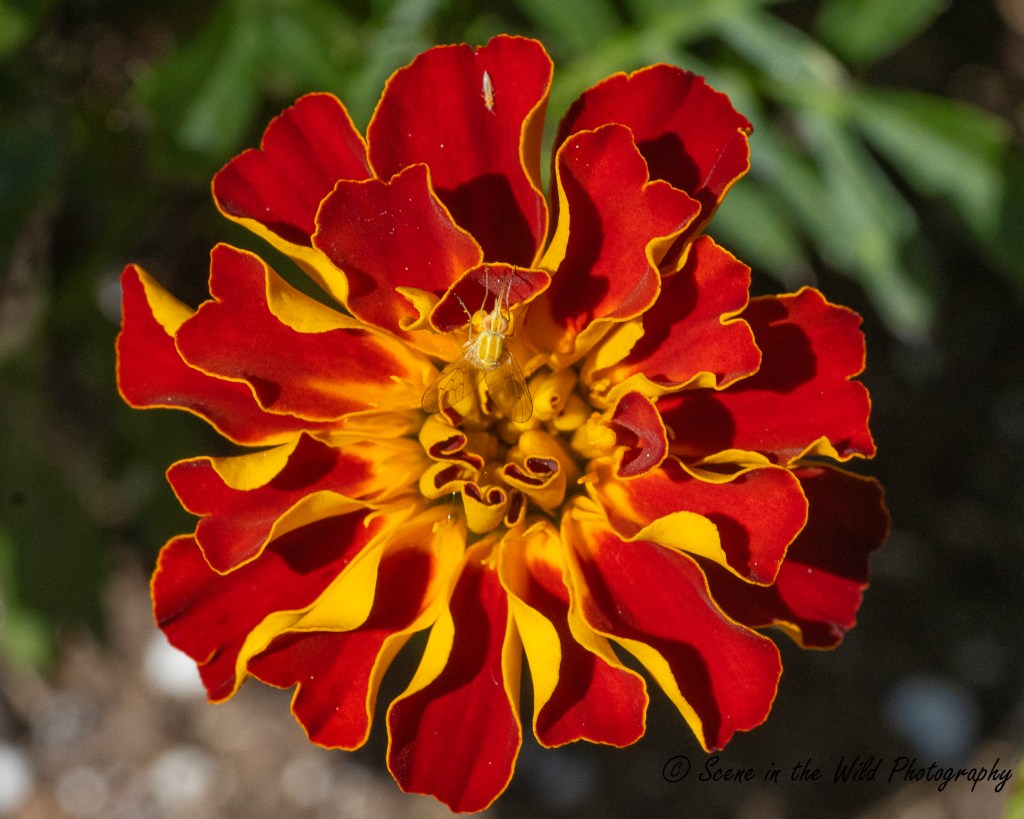
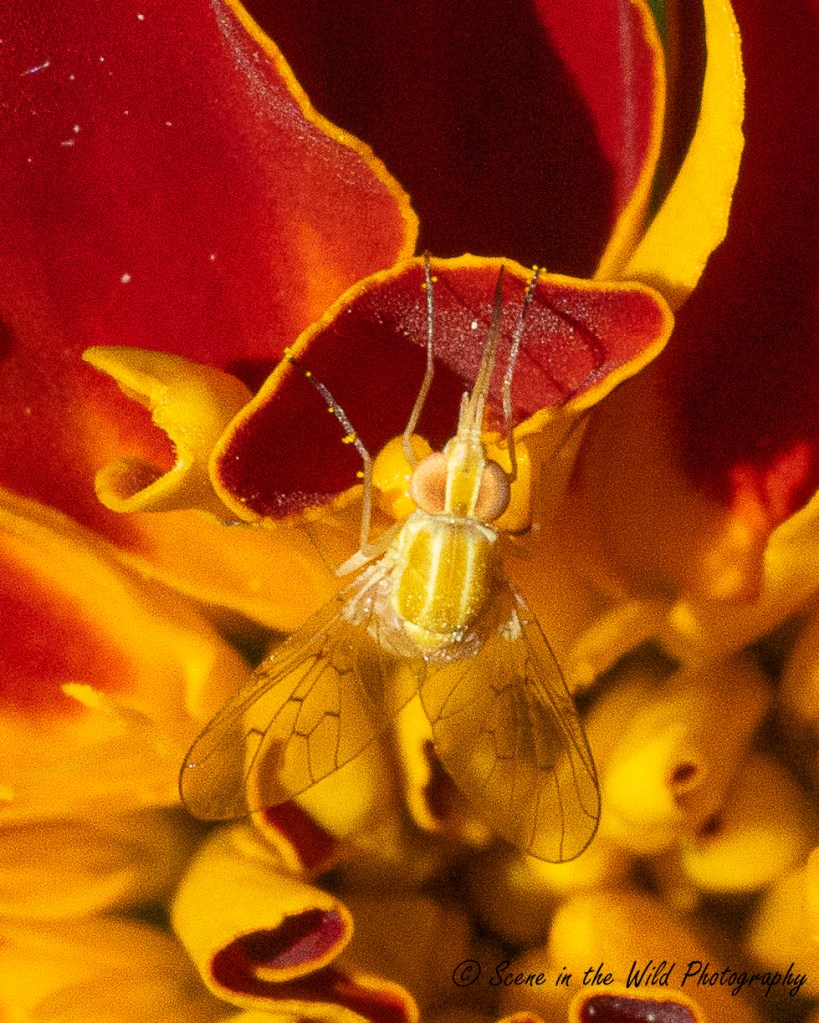
    This is a marigold from my garden, taken June 8. Do you see anything that looks out of place?

    If you saw it, did you realize what it was? It’s a fly; probably a flower fly of some sort. Look how well it blends into the flower. Did you realize that flies can be pollinators, too?

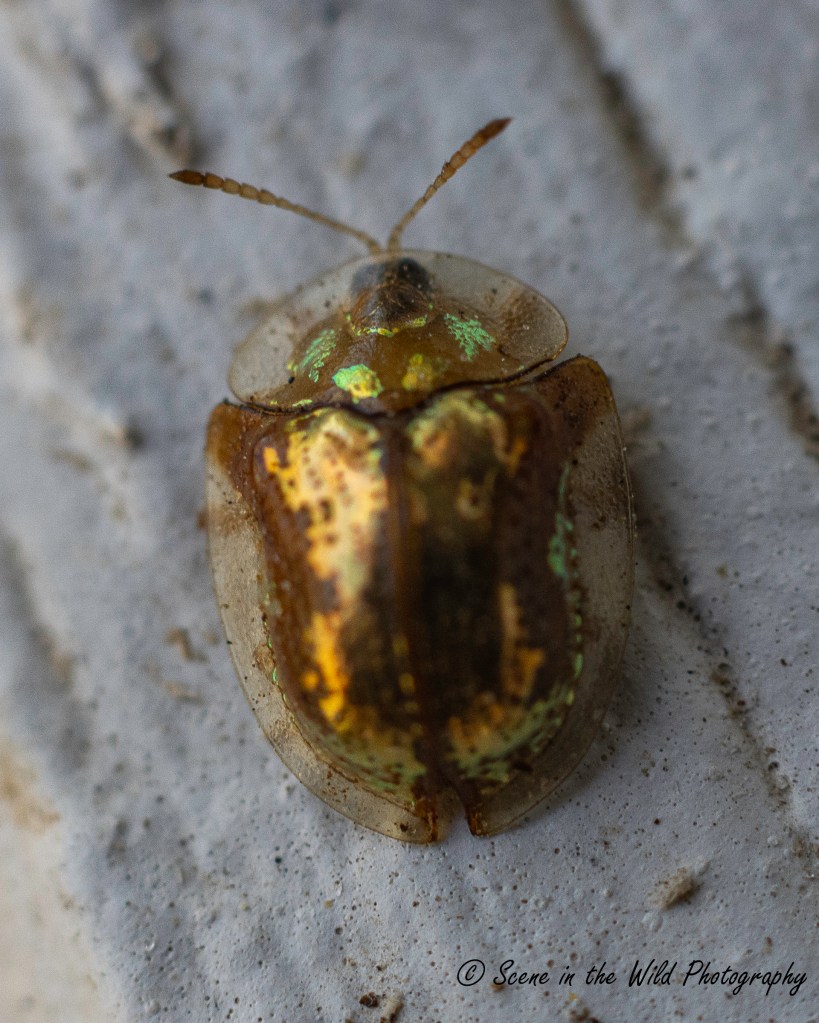
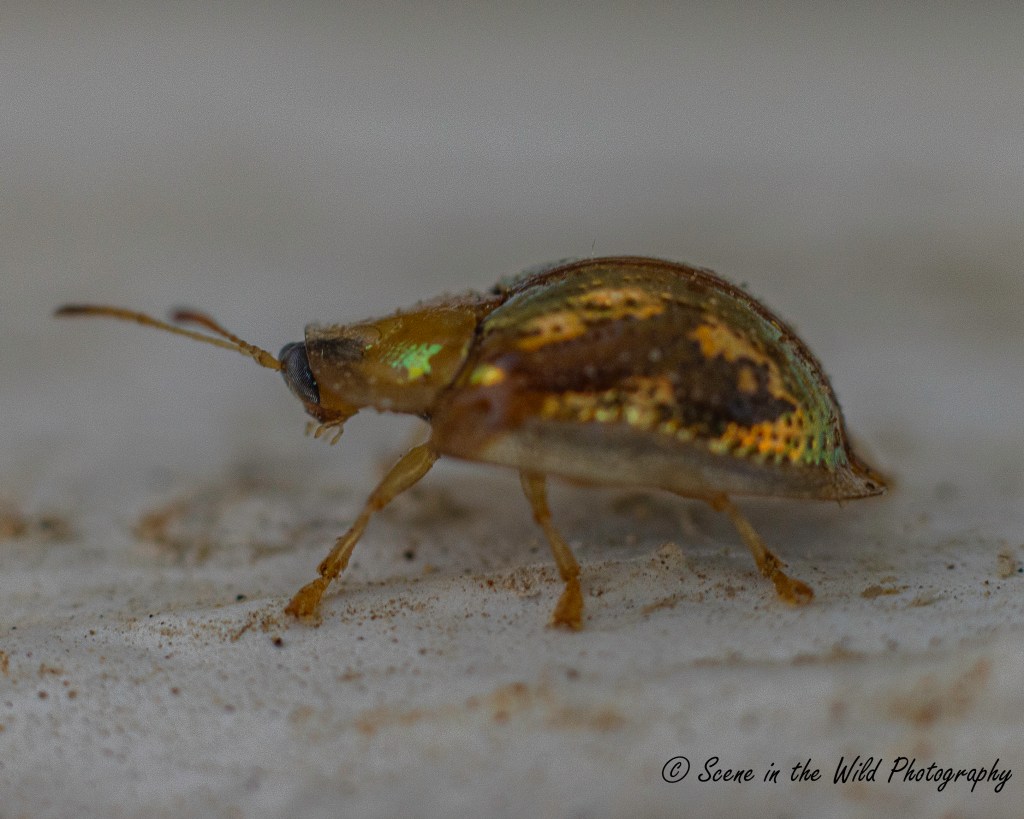
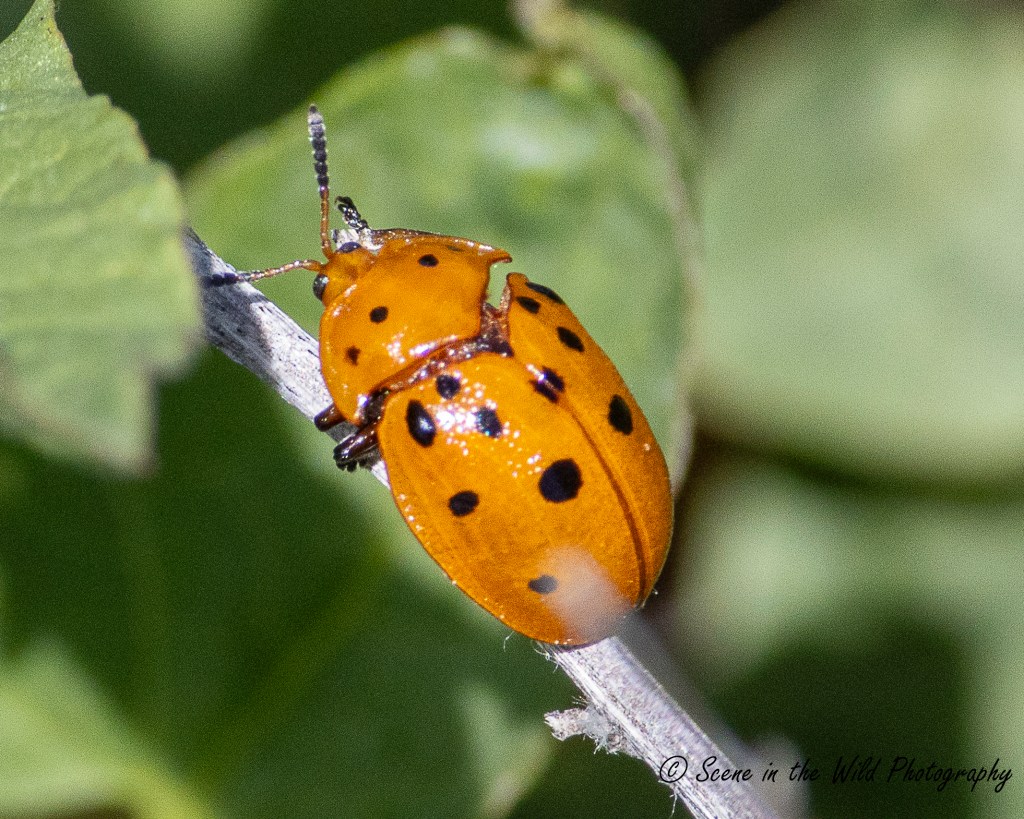
    I would have missed this mottled tortoise beetle that was crawling on the siding of our house April 15 if I hadn’t noticed a glint of gold. On a closer look, I was amazed at the colors of this beetle. Of course I ran inside to get my camera!
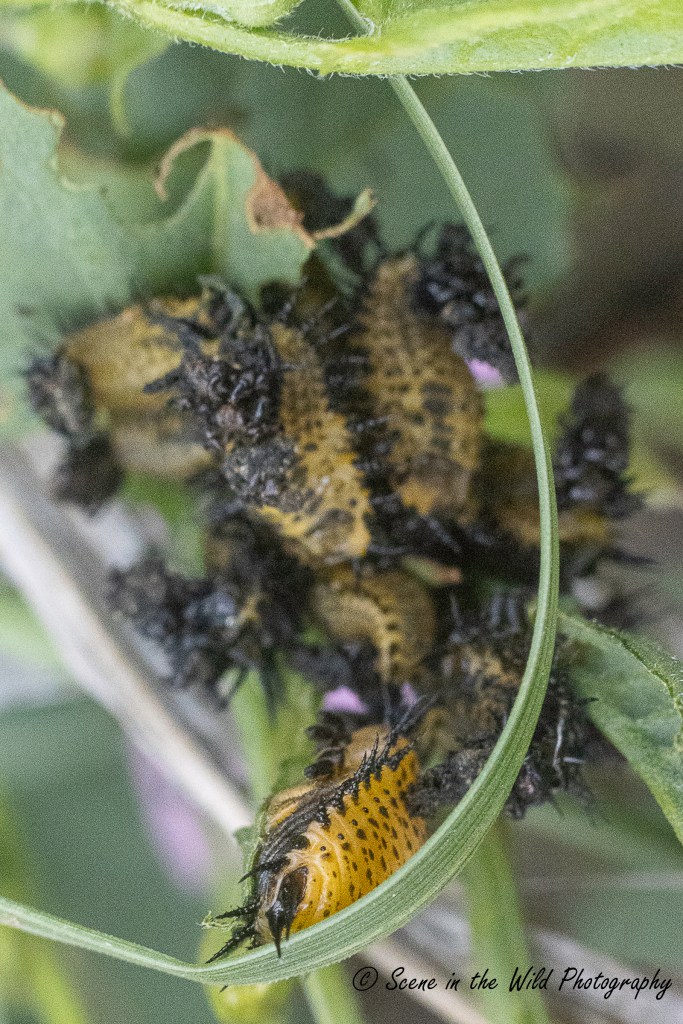
    Don’t these things look like they should be in a horror movie? I was walking in our field June 4 when I spotted a small black blob of “stuff.” Then I realized it was moving. These are Argus beetle larvae. They are welcome here, because they eat bindweed!! I’d seen an adult previously, but until I could get an ID, I didn’t know that these were the same insect, just an earlier form. Below is the adult. There’s not a lot of similarity, is there?

    Argus tortoise beetle adult, May 18, our field. Notice that the shape is similar to the mottled tortoise beetle above, but the colors are totally different. Plus it doesn’t look at all like the larval form. At first I thought this was a lady beetle, because of the spots.

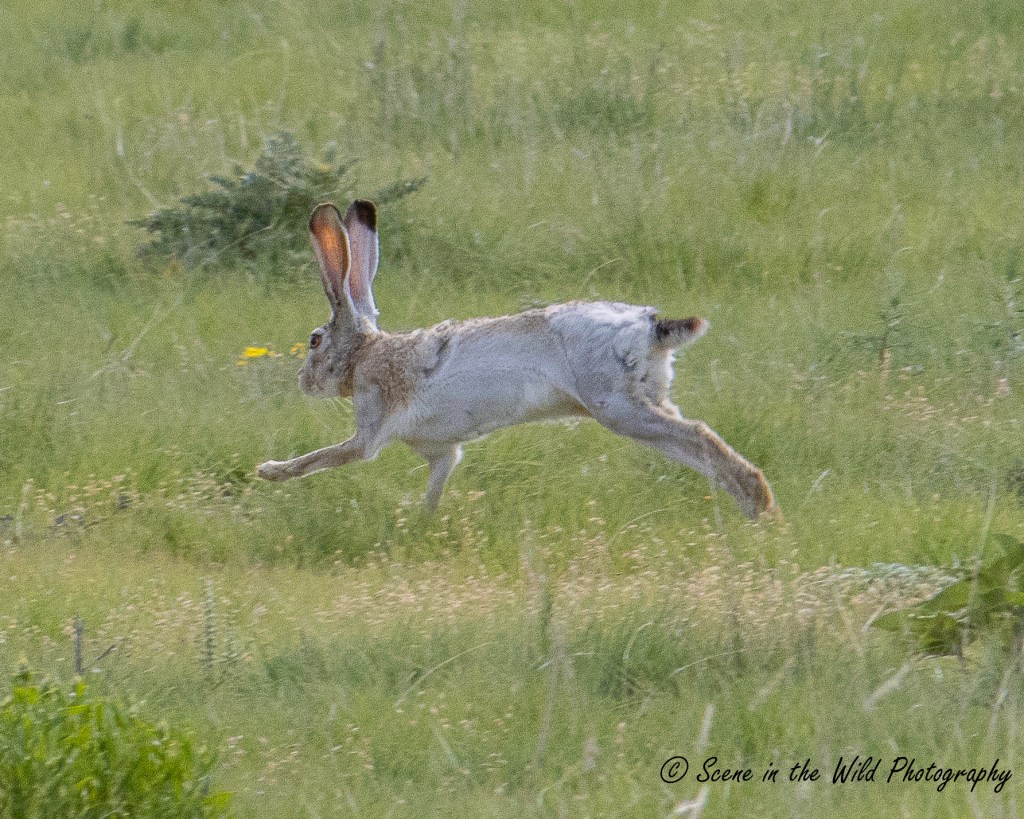
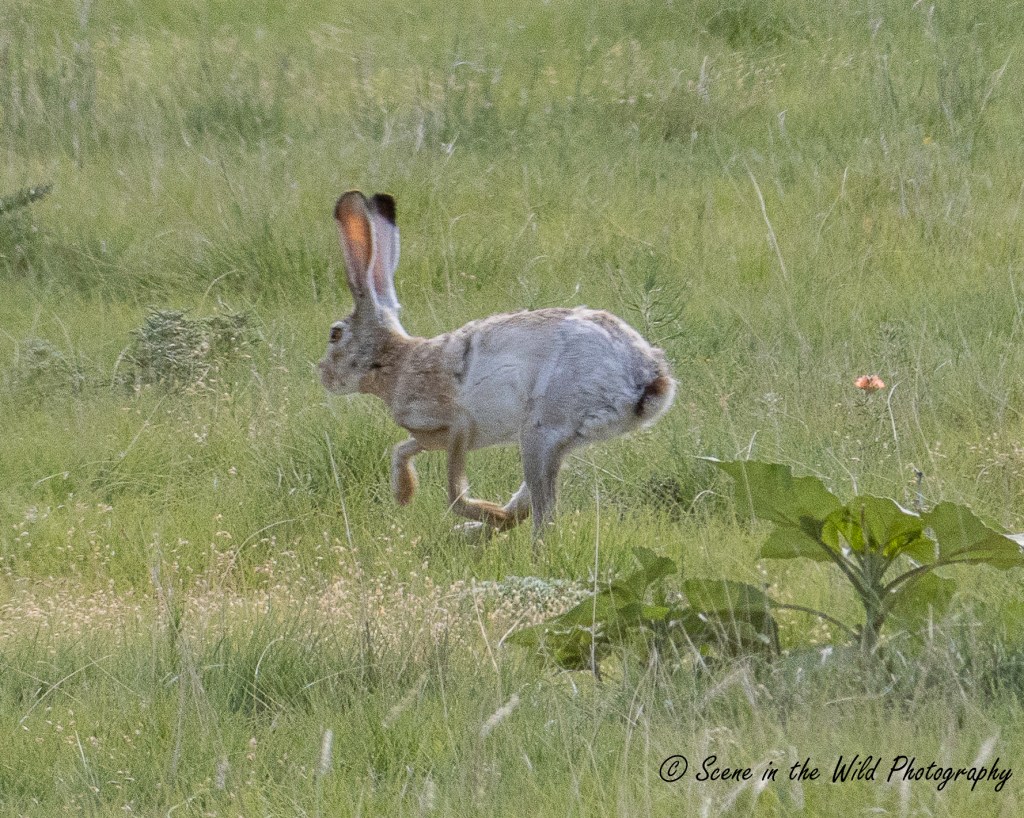
    Mr. or Ms. Jack rabbit scurried away as our truck approached it June 4 at Adobe Creek Reservoir (Blue Lake).

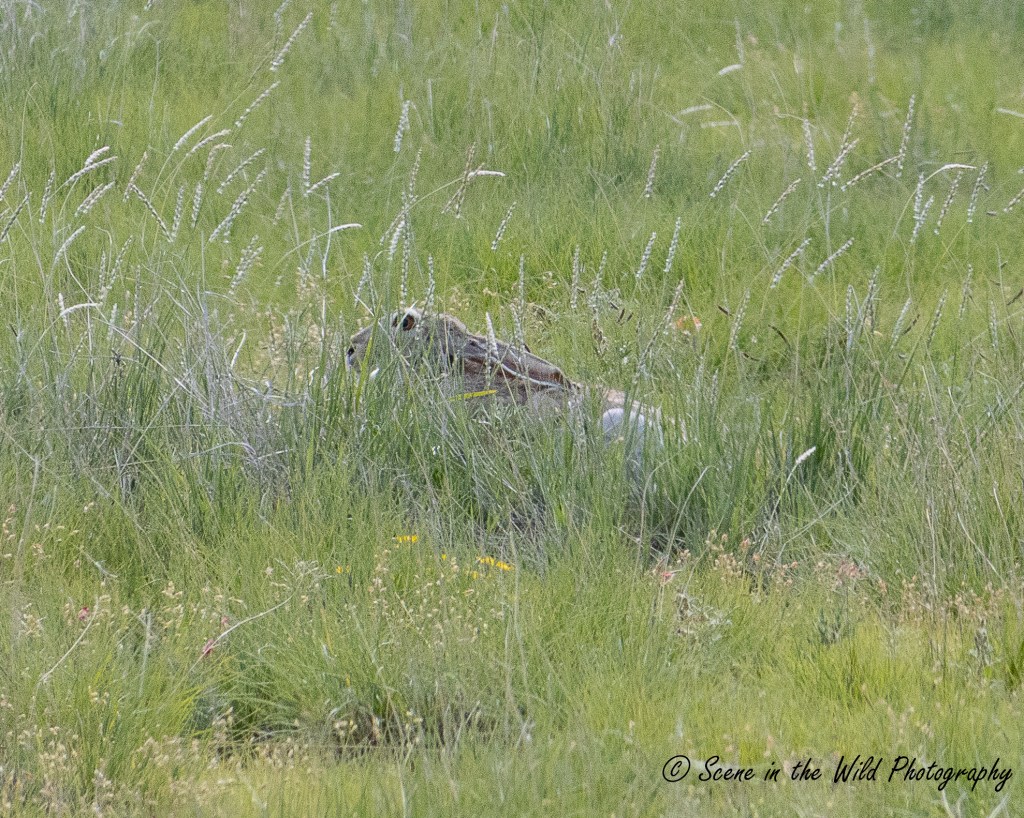
    But then it took a rest. If I hadn’t seen it stop in the grass, I would never have spotted it. As it was, I had to do some close cropping to produce this shot, as it was quite a ways from the truck. Fun fact: did you know that Jack rabbits are not rabbits at all, but are hares? What’s the difference? They belong to the same family, Leporidae, but they’re from different genera. There are several differences between the two: hares are usually larger, with longer ears and longer and more powerful hind legs, which allows them to be faster runners. One of the biggest differences is that hares are born with fur and open eyes, while rabbits are born hairless and blind.

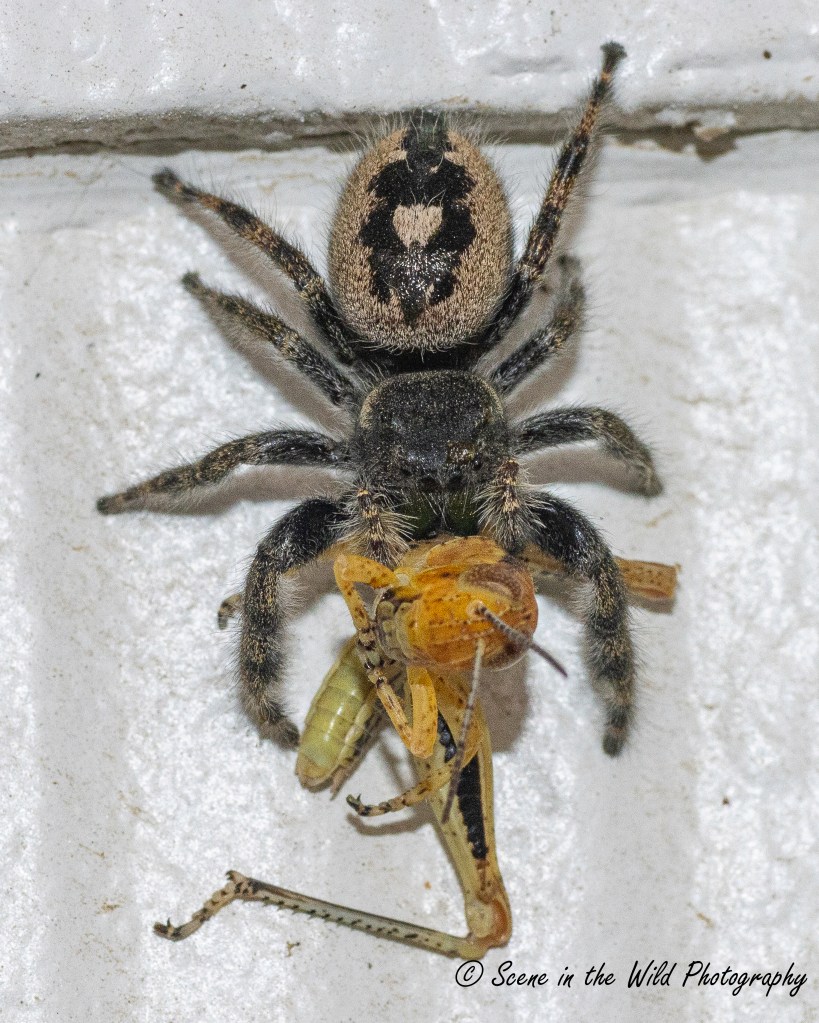
    Here’s something else that I just happened to see hanging on the siding, right outside our front door (June 20). This jumping spider was making a meal out of a grasshopper. Thank you, spider! Please eat more! The hoppers are eating my plants! Did you know that jumping spiders have eight eyes? If you look at this one, you can see two pairs in the front of its head. There are two other pairs on the sides.

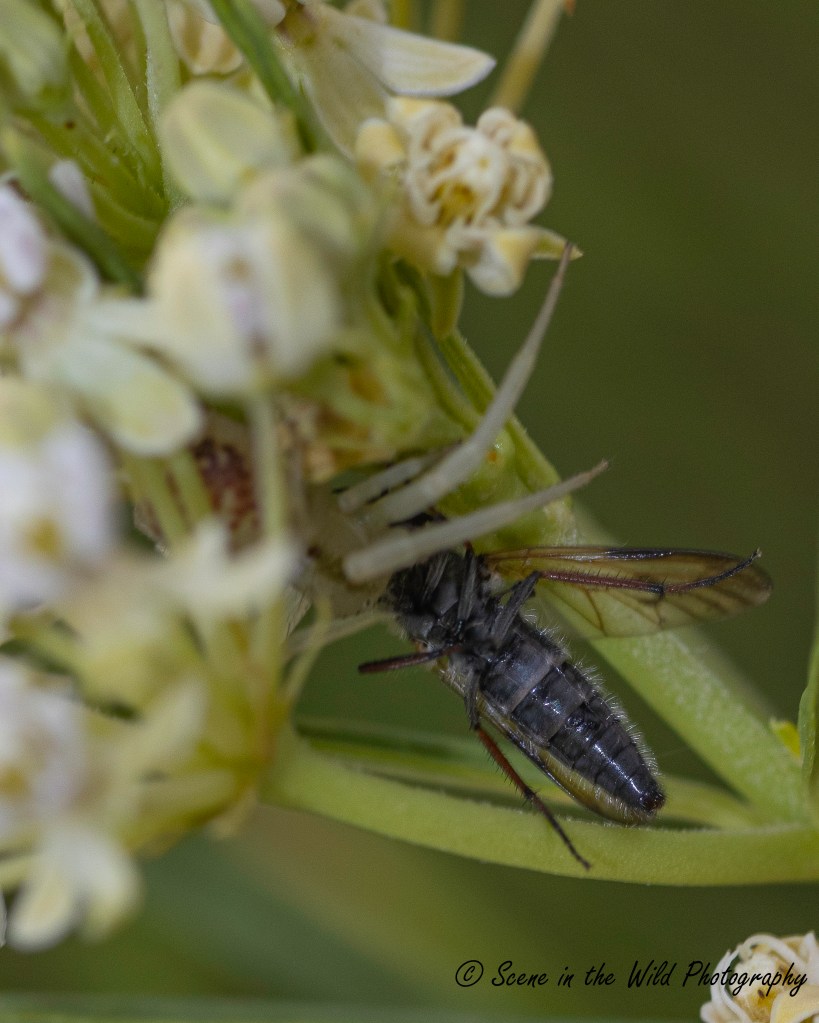
    Since we’re already talking about spiders and their meals (cue the ewwws), here’s an interesting pair I found in our field June 30. I noticed the fly, which seemed to be at a weird angle, and then saw those white legs of a crab spider around its thorax. If you look through the flower, you can see the spider’s white and brown abdomen. Ms. spider was hanging out in some horsetail milkweed when apparently the stiletto fly made the mistake of landing. Crab spiders can change color depending on what plant they’re on. This one is horsetail milkweed.

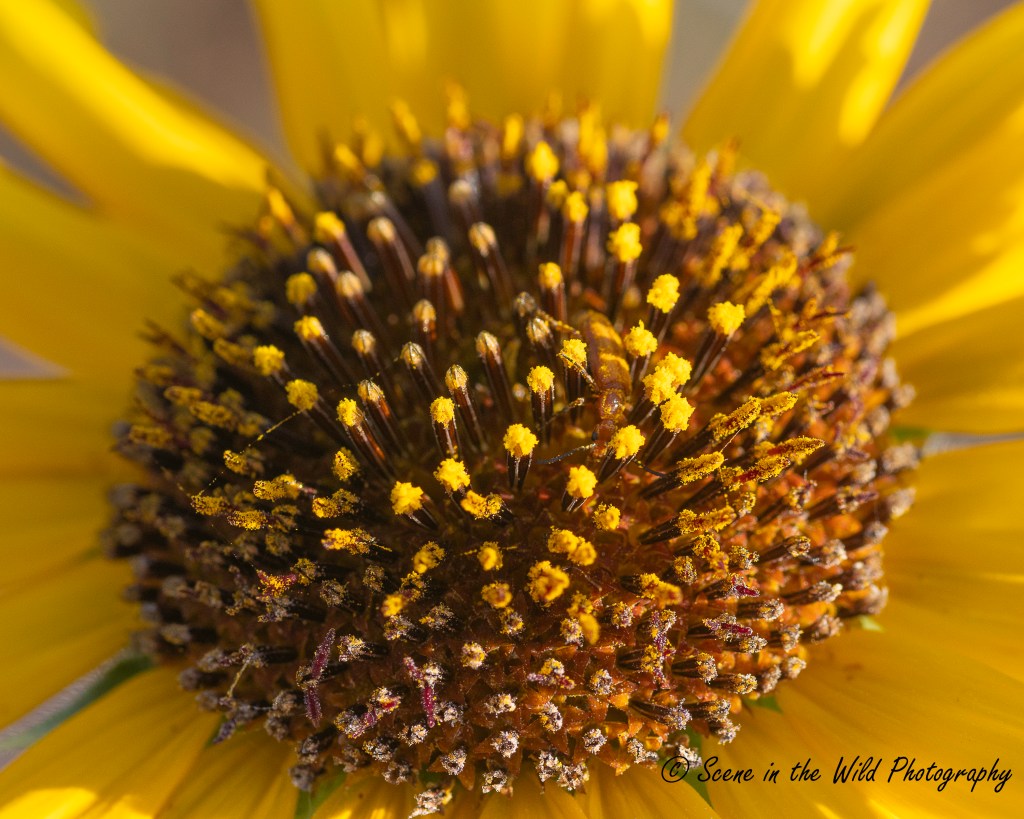
    I took this photo of a sunflower in our field also on June 30. The combination of yellow and brown are soothing. I’ve seen lots of different insects burrow down into that brown center, amidst the small yellow disc florets. The sunflower head is made up of the ray florets, which we think of as petals, and the ray disc florets. Math fact: the florets often follow the Fibonacci sequence!

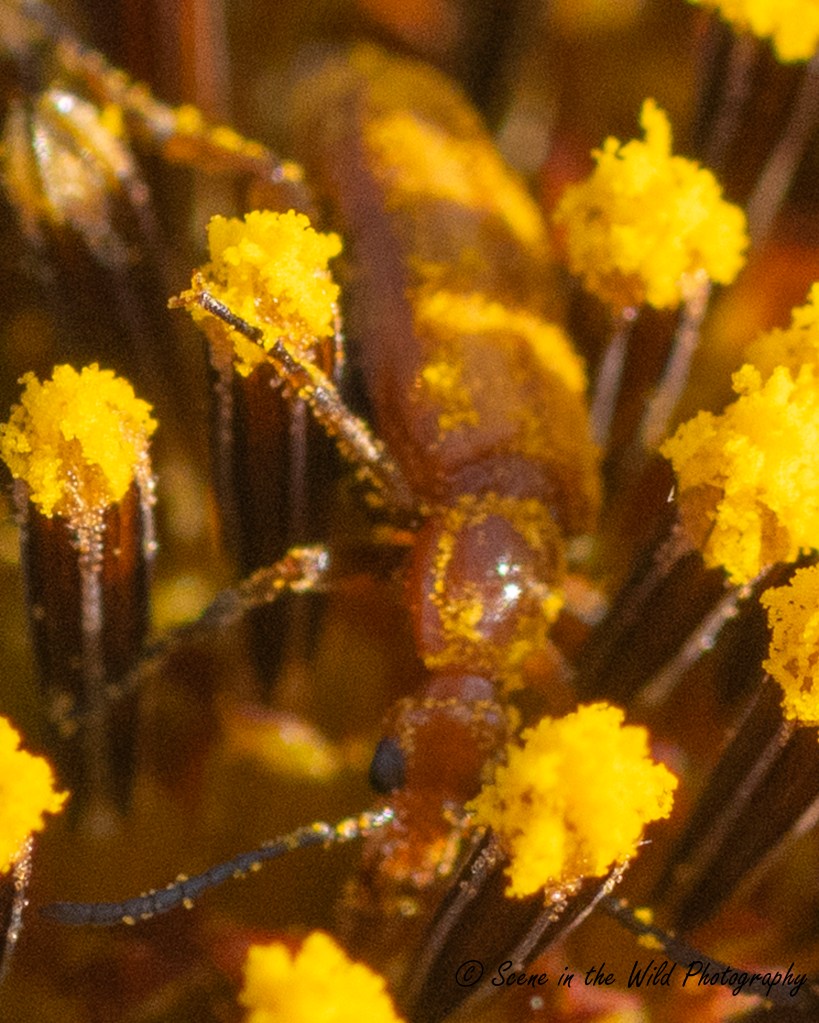
    Surprise! Did you spot this beetle above? Notice all of the pollen on its body. Beetles are pollinators, too! This is a six-spotted flower longhorn beetle.

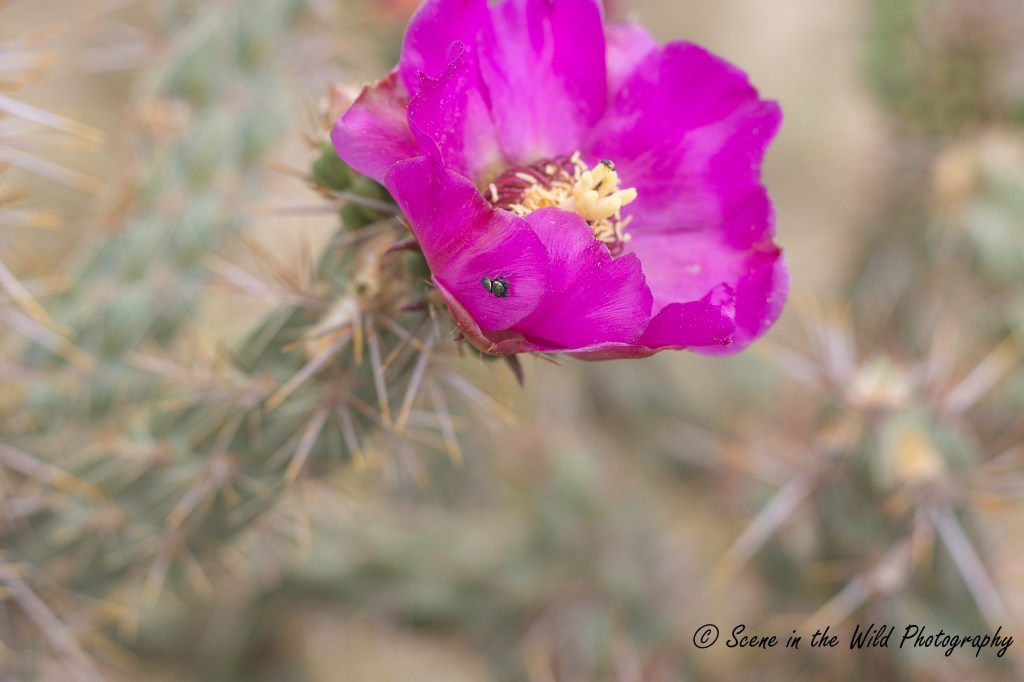
    We went out to the Devil’s Canyon area of Comanche National Grassland June 23. After 100+ degrees several days in a row, that day it was “only” in the 80s. I was afraid I’d missed the cholla blooming, but there were many still flowering. Lots of insects love cholla, especially bees, but that’s not a bee on the petal. Maybe a beetle?

    Meet Sassacus papenhoei, another jumping spider–colored an iridescent green. I’m assuming it was just waiting for an unsuspecting insect to wander by.

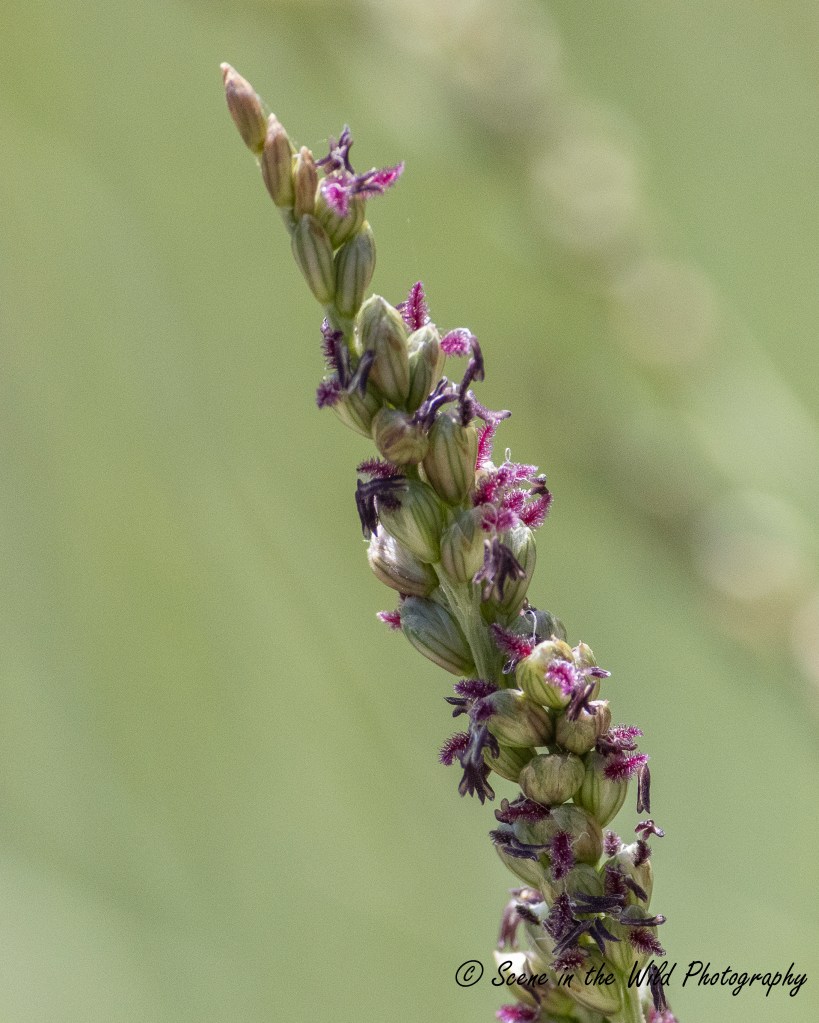
    Did you know that grass has flowers? I thought these were especially beautiful. I think it’s Vine mesquite (Hopia obtusa). It was growing near a small pond. Devil’s Canyon, June 23.

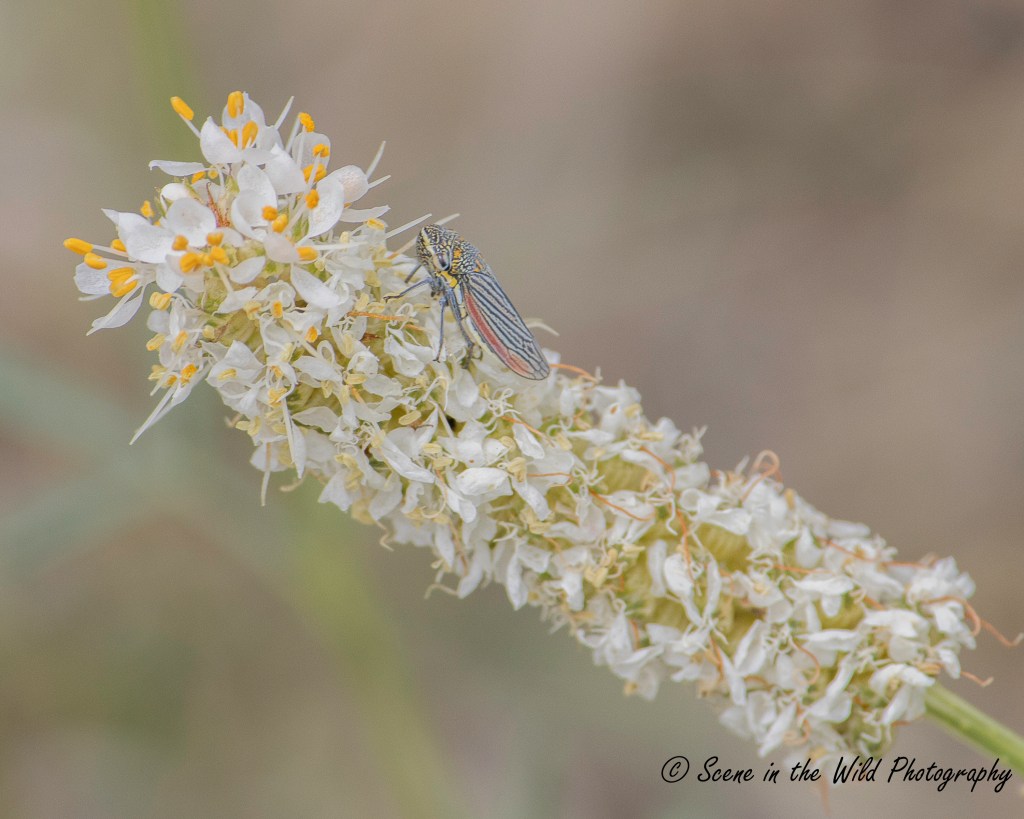
    Because of the spring rains, the flowers are gorgeous on the prairie! White prairie clover, with a visitor. Devil’s Canyon, June 23.

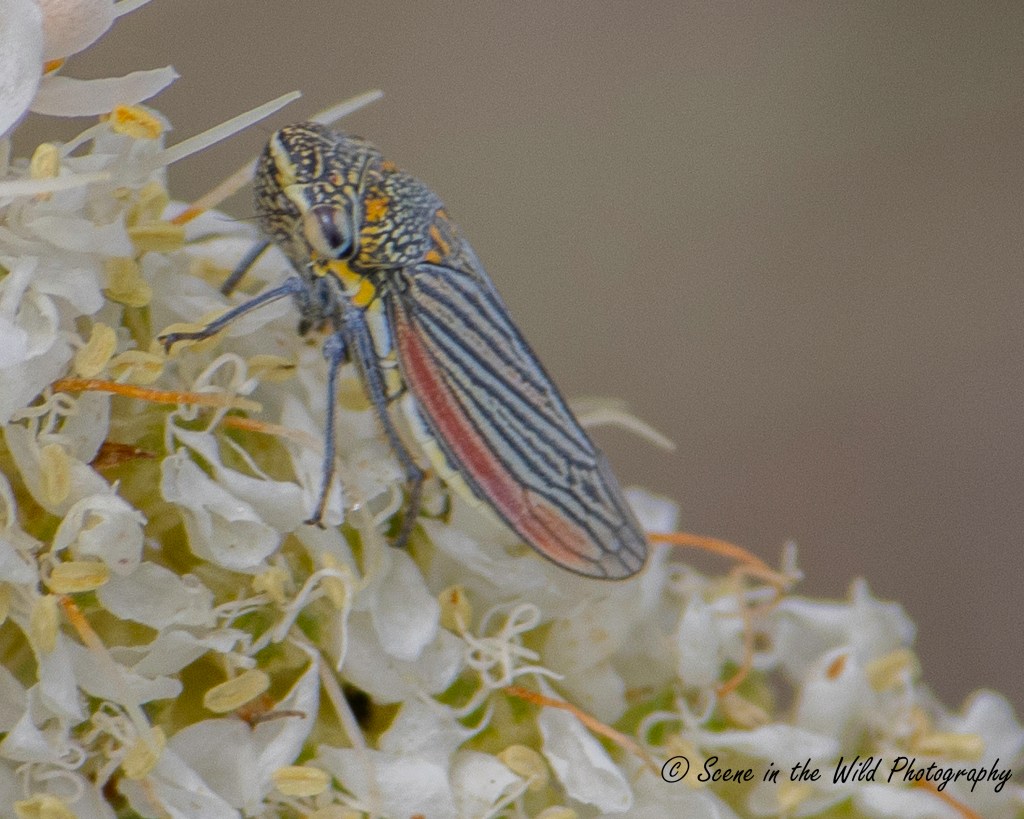
    Aren’t those colors amazing for such a small insect? It’s a Lateral-lined sharpshooter (Cuerna costalis), a type of leafhopper. I don’t think I’ve ever seen one before.

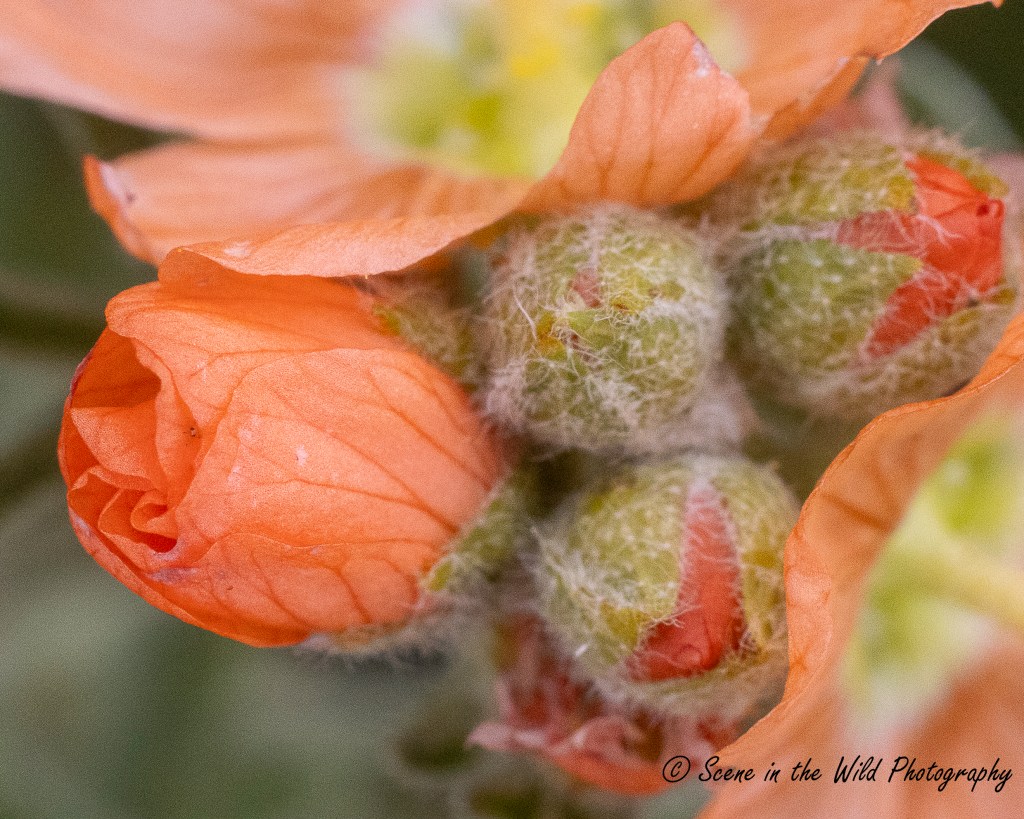
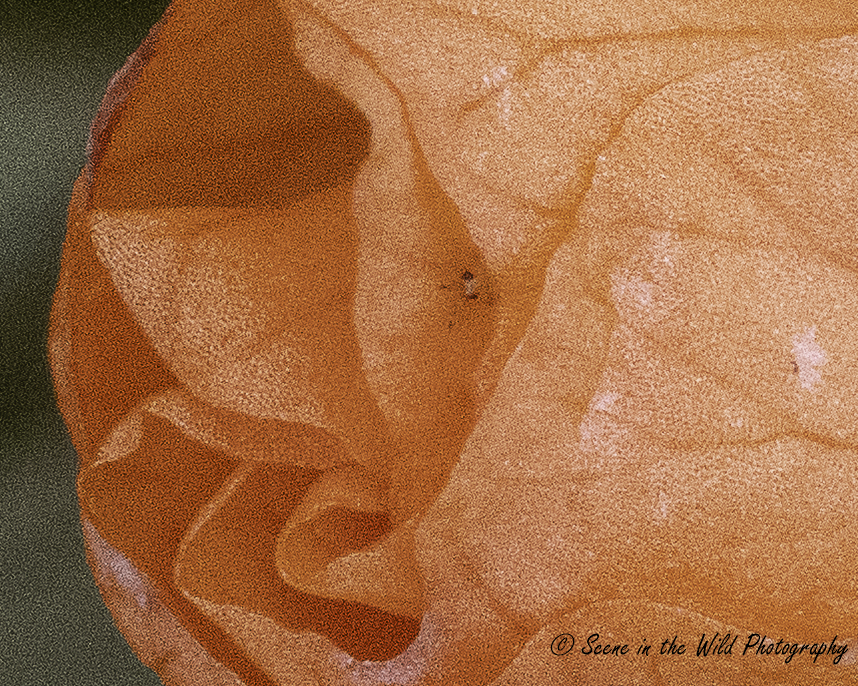
    I’m jumping all over the place with locations and dates this time! Back to June 4, our field. This is scarlet globemallow, also called Cowboy’s Delight–why, I’m not sure. Common names can be interesting! This was one of the cases when I didn’t realize something else was in the photo. It happens quite a bit; I’ll be taking a photo of one insect, and when I’m editing the photo, I’ll see another, or maybe several others. I find it fascinating; it reminds me of something in New Orleans called “lagniappe,” something extra, such as when you buy something and the clerk adds a small gift to your purchase, like an extra piece of candy. In this case, it’s Mother Nature doing the gifting.

    I had someone watching me when I took the photo! I have no idea what it is, but it’s quite tiny.

    I want to show more photos of Adobe Creek Reservoir, Devil’s Canyon, and our field in future blogs. Yes, there will be more insects. Also spiders. I apologize if you’re an arachnophobe. I used to be one, until I realized how many flies and the dreaded MOSQUITOS, not to mention grasshoppers, that spiders eat. Also, I started looking at how beautiful they are, and how amazing they are as web builders. And I just remembered I need to add two more photos. Yes, another spider.

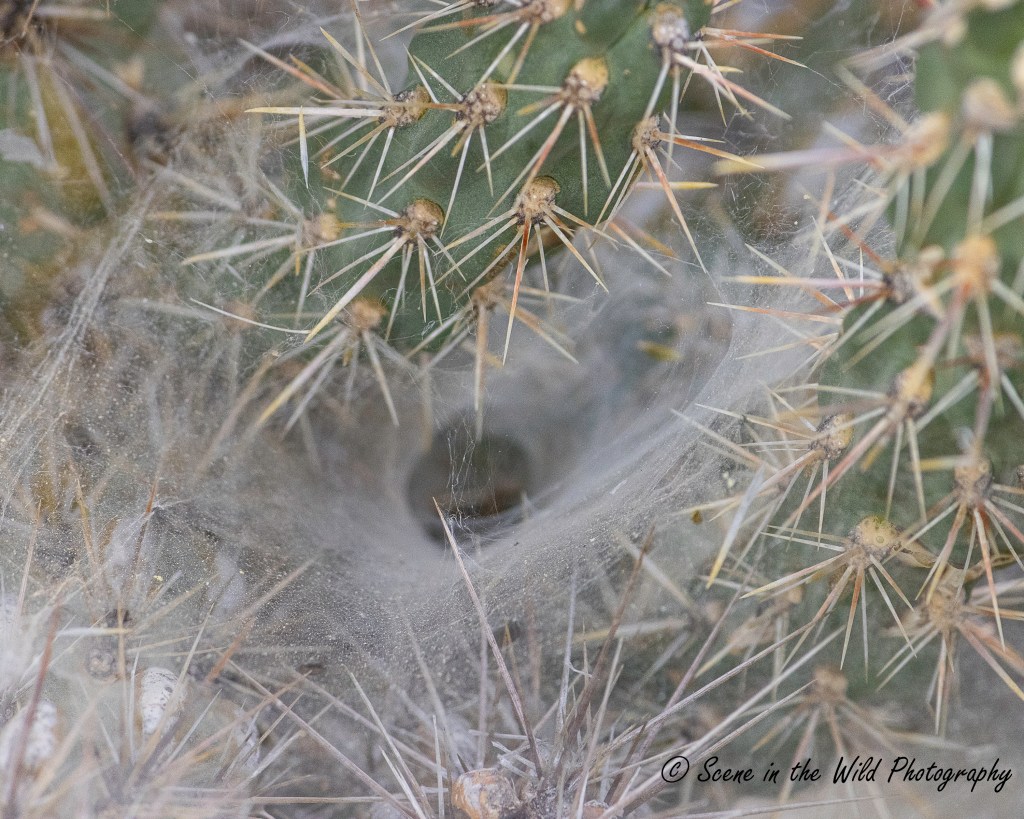
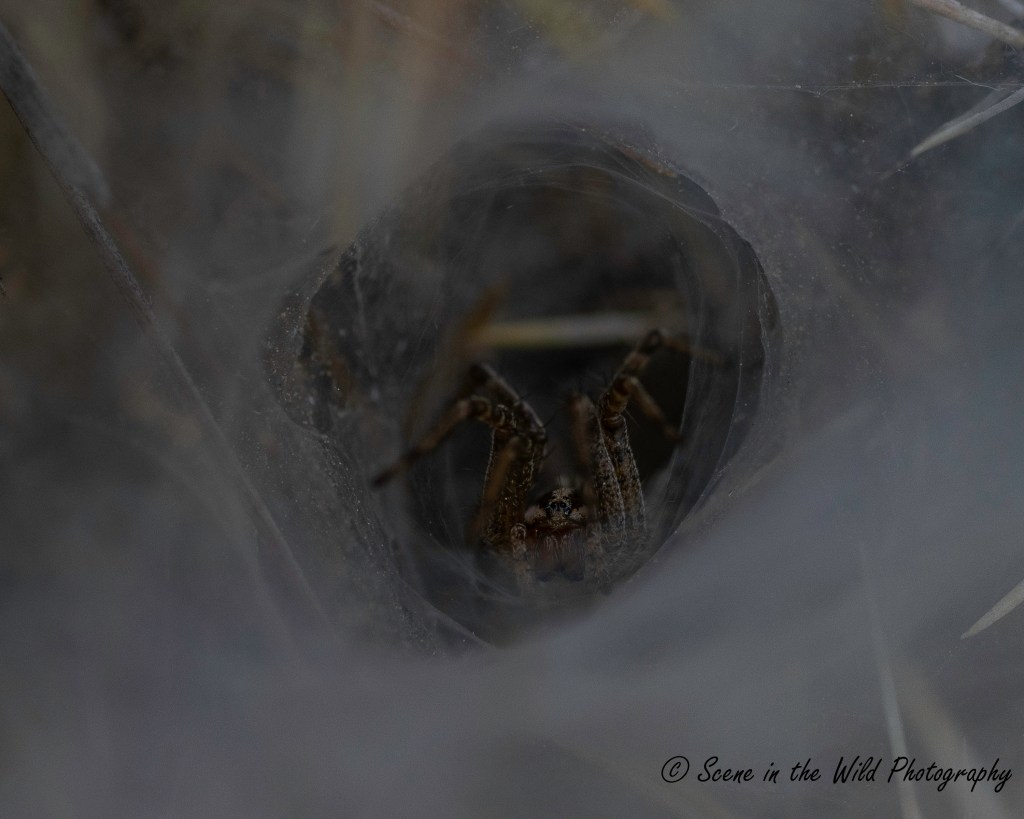
    We’re back at Devil’s Canyon again June 23. This is a large cholla plant. A funnel-web spider has set up an elaborate trap.

    I worked hard to get this image of the spider. I could barely see it with my eyes, so it was very difficult to get it focused. I used flash to bring out the details. She’s just lurking there, waiting for something to get wander into the tunnel. Apparently they’re quite fast runners and dart out as soon as something appears.

    That’s all folks. Have a safe but happy Independence Day. We’re spending it in my happy spot up in the the mountains near Westcliffe, CO. Expect photos!

  • Scene in the Wild Photography

    Welcome to my new blog!

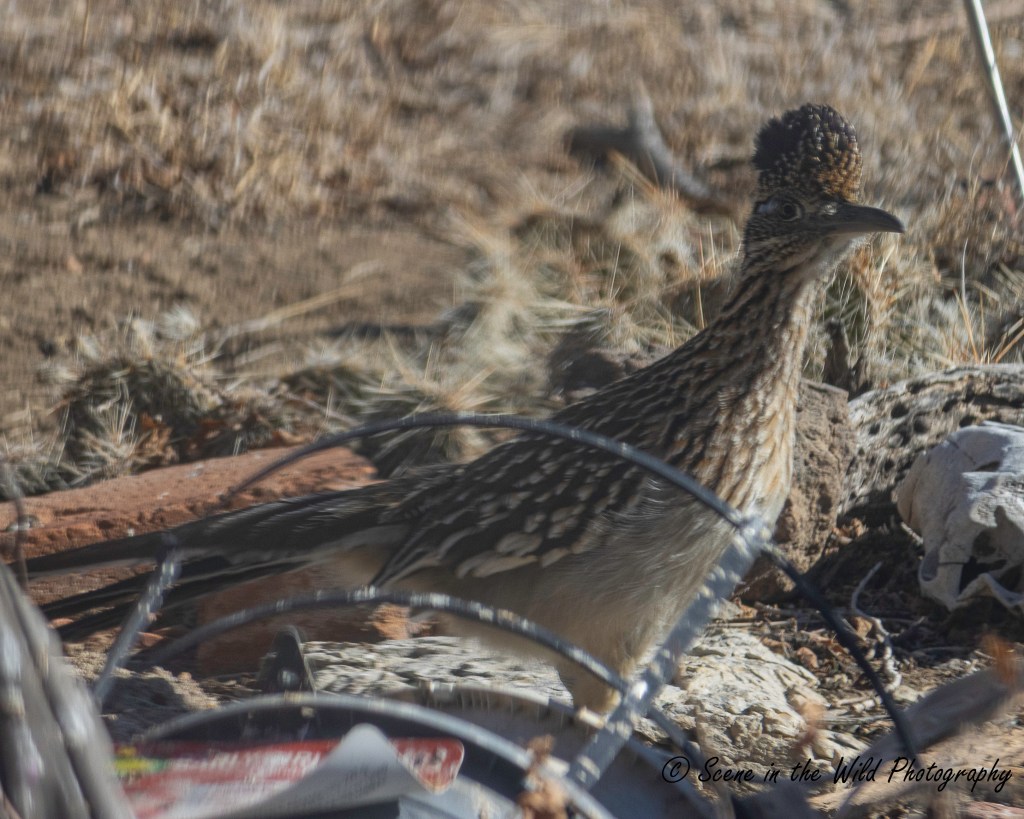
    We had an unexpected visitor at our house recently! One of my cats was going crazy looking out a window, and this was why. This roadrunner was just a few feet away from our kitchen window, near our well house. I’d never seen one here before. It ran around the yard for a while, but I lost sight of it, and never saw it again. Although they’re common in this part of Colorado, and I’ve seen them on Comanche National Grassland and near Lake Hasty at John Martin Reservoir State Park, this was a real surprise.

    A new venture for me!

    I decided that I wanted to try a different venue for my photography than Facebook. It was becoming too difficult to post more than a couple of photos at a time; I was limited to the amount of information; and I wanted to attract more people, including those who aren’t on Facebook.

    Two of my passions are nature and photography. I hope that by combining the two, I can stress how the importance of our outside world.

    I haven’t posted on my Scene in the Wild Facebook page for a while, so in this space, along with being fairly current with the photos I post, I’ll also try to attempt to catch up on some of the photos you have missed.

    I am still learning how to blog, and I am sure I will be changing the appearance of my blog as I find better ways of working with it.

    There’s no cost to you to view these blogs; you can subscribe to them and then receive them as they’re posted.

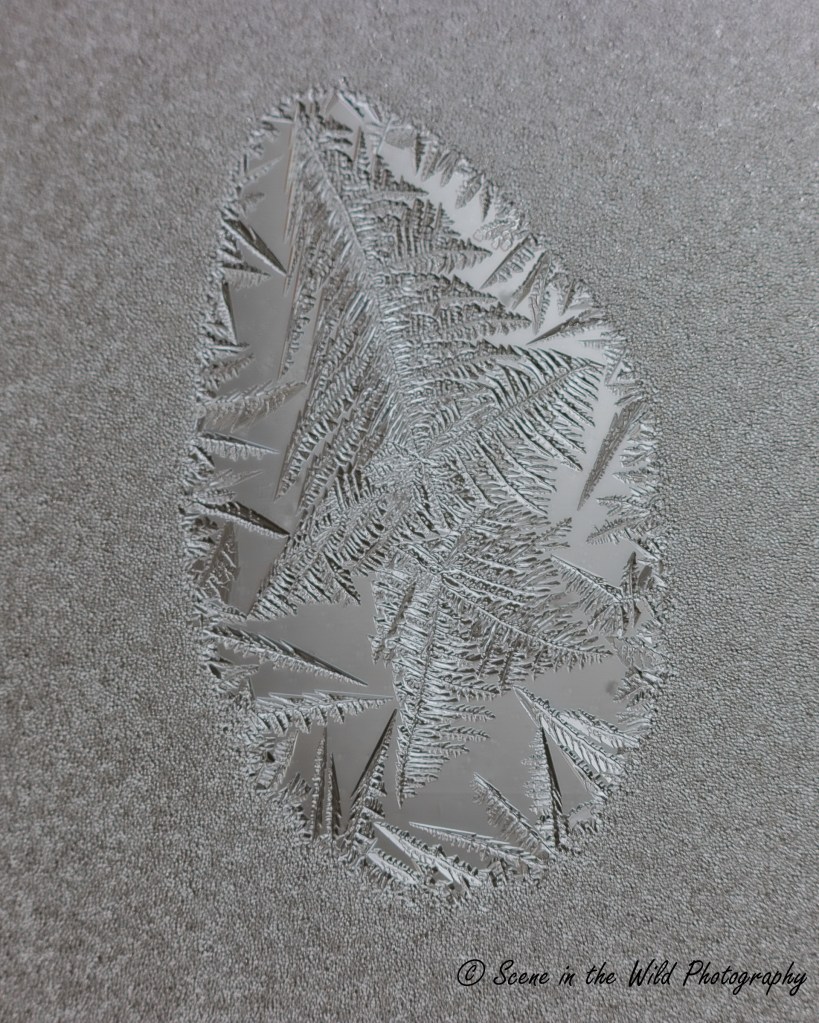
    Considering that the high temperature yesterday was 94 degrees, it seems hard to believe that this photo was taken not quite two months ago! I always enjoy looking at the patterns that frost makes on our windows; I’m not sure why this one was in a teardrop shape, but it certainly is beautiful.

    I had never seen white-winged doves until several years ago at the High Plains Snow Goose Festival in Lamar. I was on a hike through Willow Creek Park behind Lamar Community College, and our leader pointed out several. I was used to Mourning Doves and European Collared Doves (not well loved; they’re an invasive species!). A couple of years after that, I saw a couple of white-winged doves in our yard one winter day. But late last spring, several appeared here, and stayed all summer. We’re fairly certain they nested, as by fall, we had many more individuals! I particpate in Project Feeder Watch, which runs from November to April each year. Looking at my stats, I noted we had as many as 25, with 10 to 15 being fairly normal. The last few weeks, though, we’ve seen only a few–from one to five. I’m assuming most of them left to establish their own areas. My Sibley Birds West field guide (c. 2016) shows that their range is “rare” in Colorado, but this is nine years later, and they’re most definitely not, at least in our little part of the state!

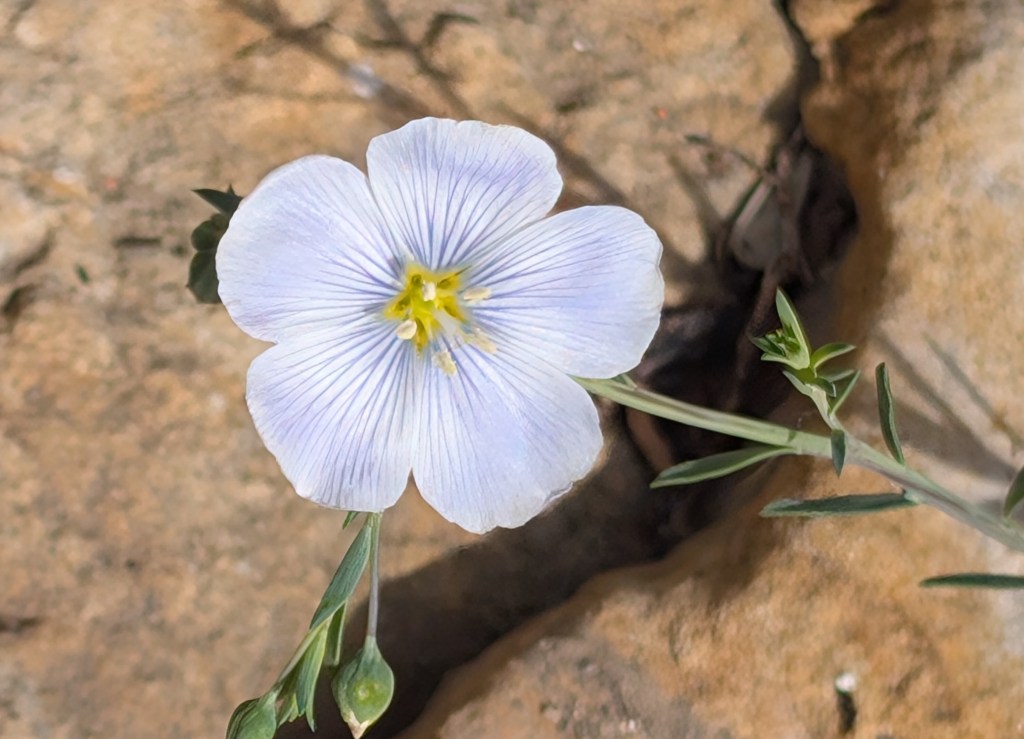
    Even though I took this photo with my phone, I’m excited to share it, because it is the first bloom from two blue flax plants that I planted last year. I’ve been tryng to establish more native plants, because native plants not only attract native insects and other wildlife, some native wildlife are dependent on native plants, and vice-versa. Some wildlife and plants are actually co-dependent–they need each other to survive. Also, native plants have adapted to the climate; most in this part of Colorado don’t need much water and can thrive in hot conditions. Water is a scarce resource in areas like ours, so it’s better to encourage plants that don’t need as much–even though our local nurseries stock mostly plants that, although pretty, aren’t from here, and usually take a lot more water.

    As I said above, this is a new venture for me. I’m going to try to post fairly regularly. I would love to get comments from all of you as to what you like and what you don’t–and what you might like to see. Just type in your email below, and my posts will automatically come to you when I publish them.