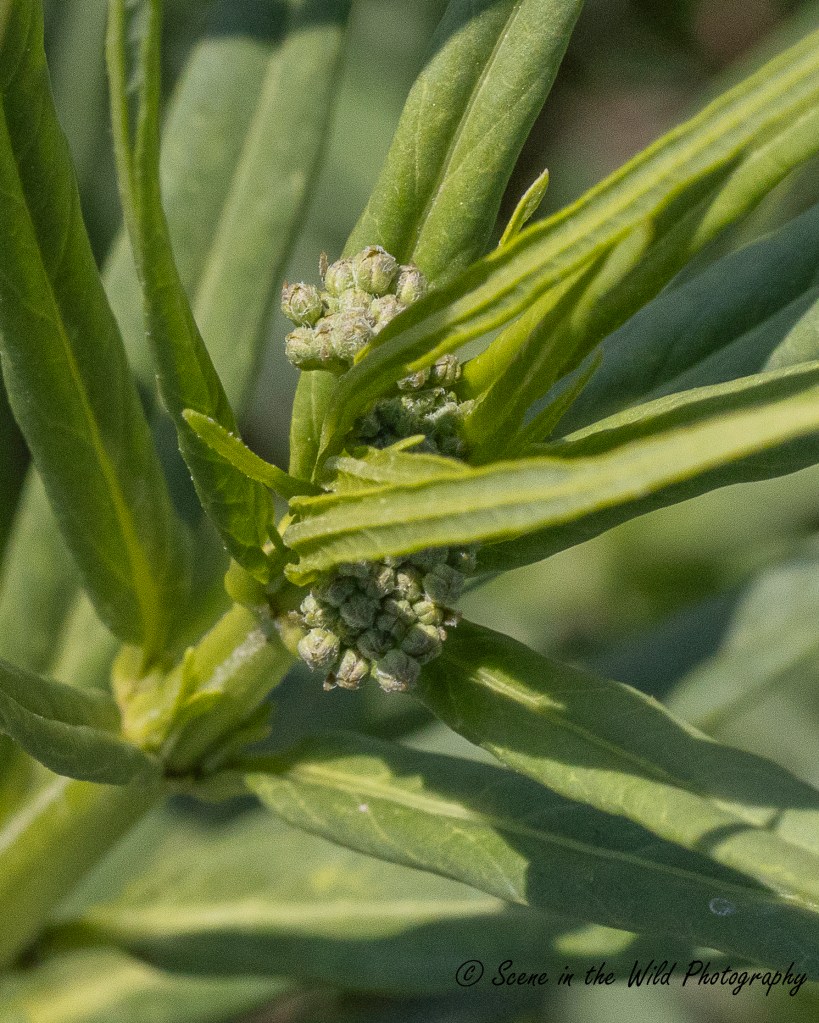
This is Asclepias subverticillata, which has a common name of Horsetail Milkweed. It’s not what most of us typically think of when we think of milkweed–the one with the pretty pink and white flowers and broad leaves, which is Asclepias speciosa, or Showy or Common Milkweed. This photo was taken June 8, when the plant was just starting to bud. We have an abundance of this type of milkweed in our field.
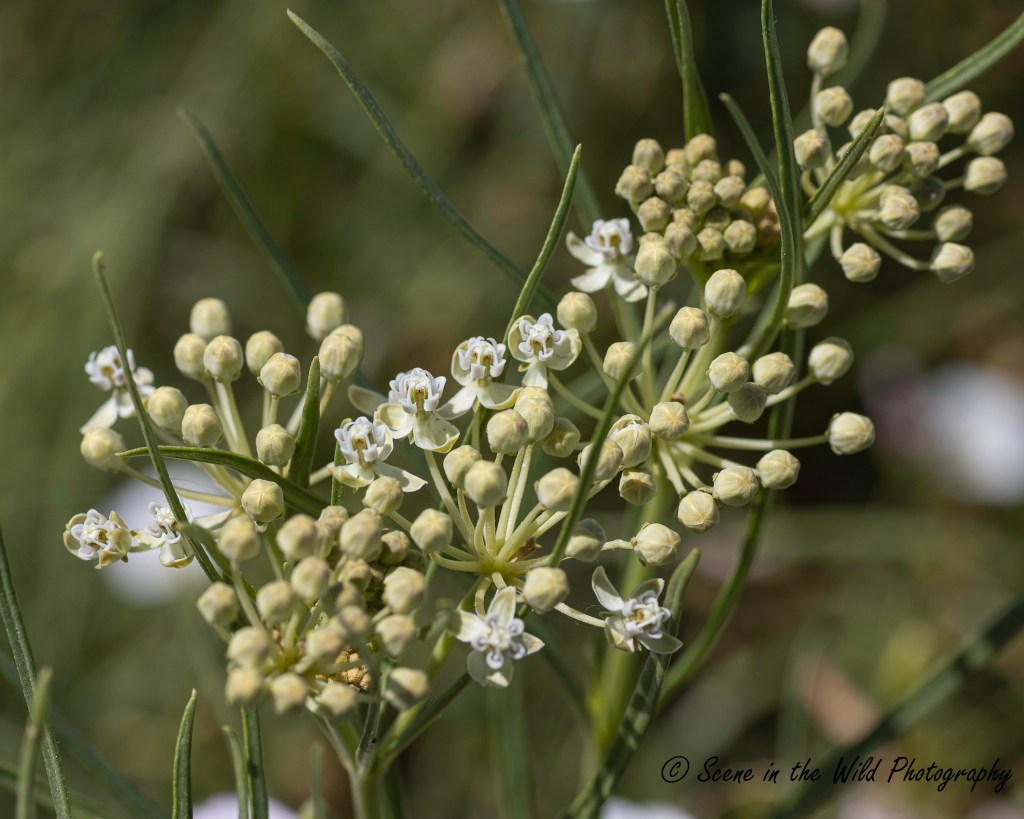
Here is one of the flowers just starting to bloom. (June 18) (As an aside, Ackerfield’s Flora of Colorado lists 19 different species of milkweed in the state!)
Although we have had this type of milkweed on our property for years, I became extremely interested in it about a year ago, because of a post I made on iNaturalist of a tiny longhorned milkweed beetle:
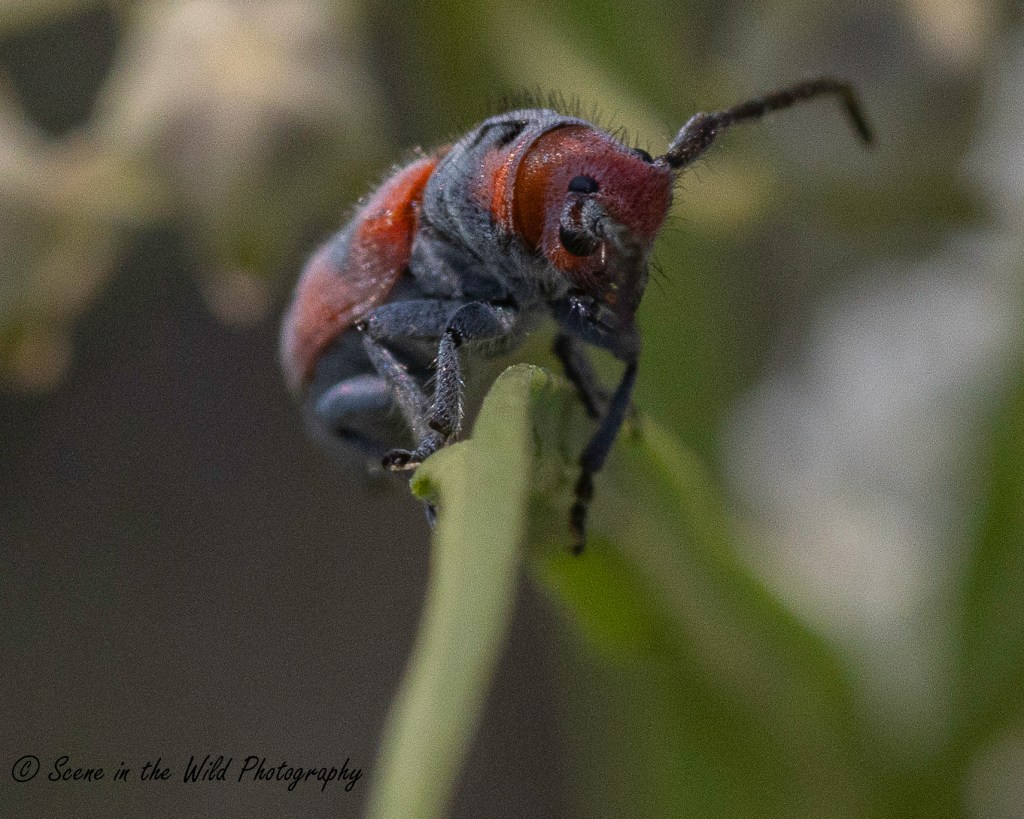
I wasn’t exactly sure what the beetle was. It was quite small, not much bigger than my pinky fingernail, and I thought it was very colorful. It was identified on iNat as Tetraopes discoideus. (July 26, 2024)
A few days after I posted the photo, I received an email from a professor of biology at the University of Memphis. He’d seen the post and was wondering if the beetles might be nearby (yes, they’re in my field!) He explained that he studies beetles, insect-plant interactions, genomes, and insect biodiversity conservation. He was seeking this particular beetle for a collaborative gene sequencing project; they were sequencing several other Tetraopes species and studying the genomic basis of their interactions with toxic milkweeds. To make a long story short(er), I had a very interesting phone conversation with him in which he further explained that the beetle and the milkweed have co-evolved. Like the other beetles in the tribe, the beetle has modified its genes to manage the plant’s toxicity and has an ability to use the plant’s polysaccharides more efficiently. He said it’s one of the earliest species in this lineage of beetles that can do this, and it’s the only one in its lineage that’s found in North America. (According to texasento.net, its range is from Colorado to e. Kansas; Arizona to Texas; Mexico to Honduras).
During the conversation, I agreed, excitedly, to find some of the beetles and send them to him. This involved going out in the early morning before it got unbearably hot for both woman and beast. I did find four; following his instructions, I sent them off, each in its own individual container with a bit of the milkweed (apparently the beetles like to nibble on each other), and some milkweed by itself. He suggested I add a freezer pack since it was so hot, and they’d be traveling across a few states. (I texted him that George, Paul, Ringo and John were on their way).
Unfortunately, one of the beetles was dead when it got there. However, they successfully extracted both RNA and DNA from the remaining beetles and are assembling them in to a genome. They also generated data from the milkweed and found out that it is a polyploid; actually, a hexaploid (it has six homologous sets of chromosomes; polyploids are apparently not known from milkweeds). He said it’s possible that not all of the populations of this milkweed are polyploid, and they are still studying them.
All of this to say that since this experience last summer, I have been posting many of my flora and fauna photos on iNaturalist, because I’ve realized that what I’m doing can benefit science. For those who don’t know, “iNaturalist is a nonprofit social network of naturalists, citizen scientists, and biologists built on the concept of mapping and sharing observations of biodiversity across the globe.” (Wikipedia).
To me, although I like entering photography shows and receiving ribbons, or (very) occasionally selling one of my photos, my contributions to iNaturalist are so much more important, especially in these days of funding cuts for scientific endeavors.
When I was thinking of what to write this blog on, I decided to talk about my beetle friend and where it led me. When I started going through my photos, I realized that I had quite a few photos of various insects and spiders on A. subverticillata, and I thought it might be interesting to showcase them as well. The diversity is quite impressive!
Here are some photos taken June 30:
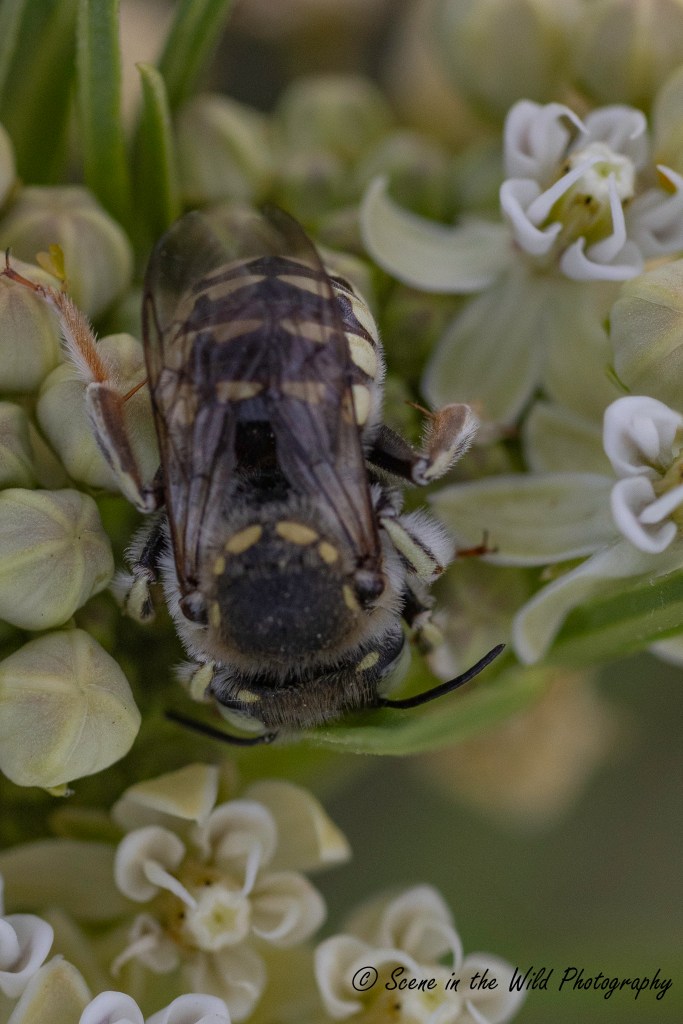
This bee, probably a wool-carder bee, was sleeping peacefully on one of the flowers.
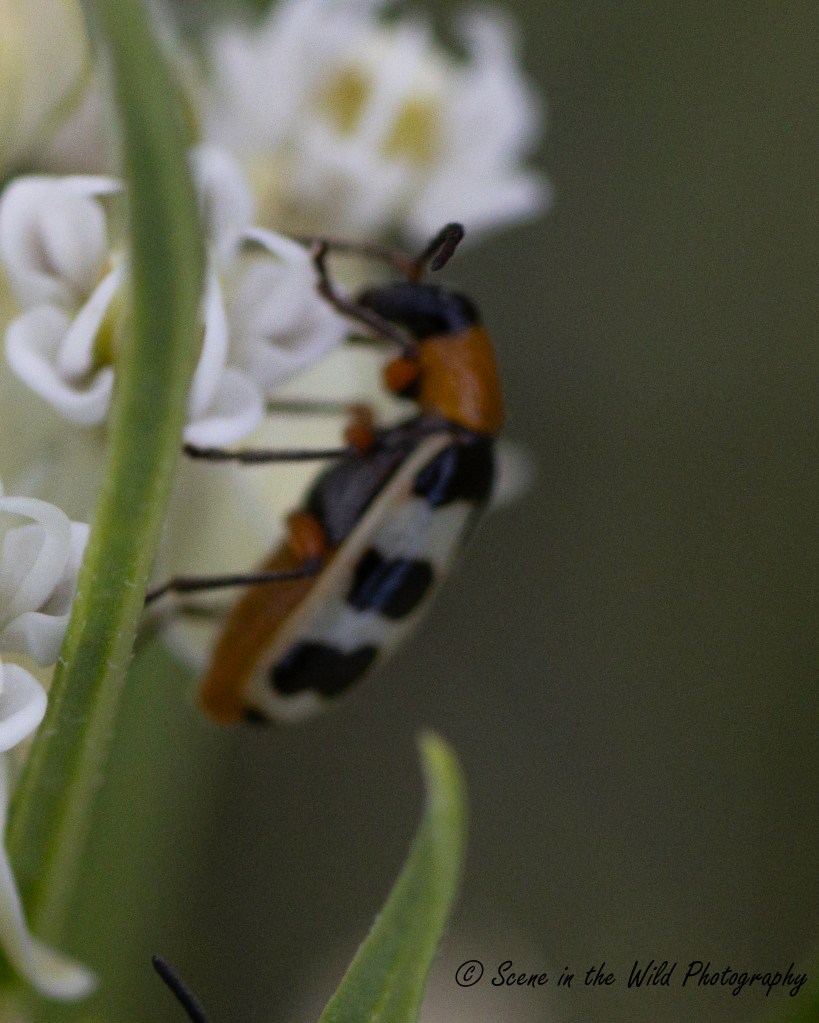
A checkered melon beetle.
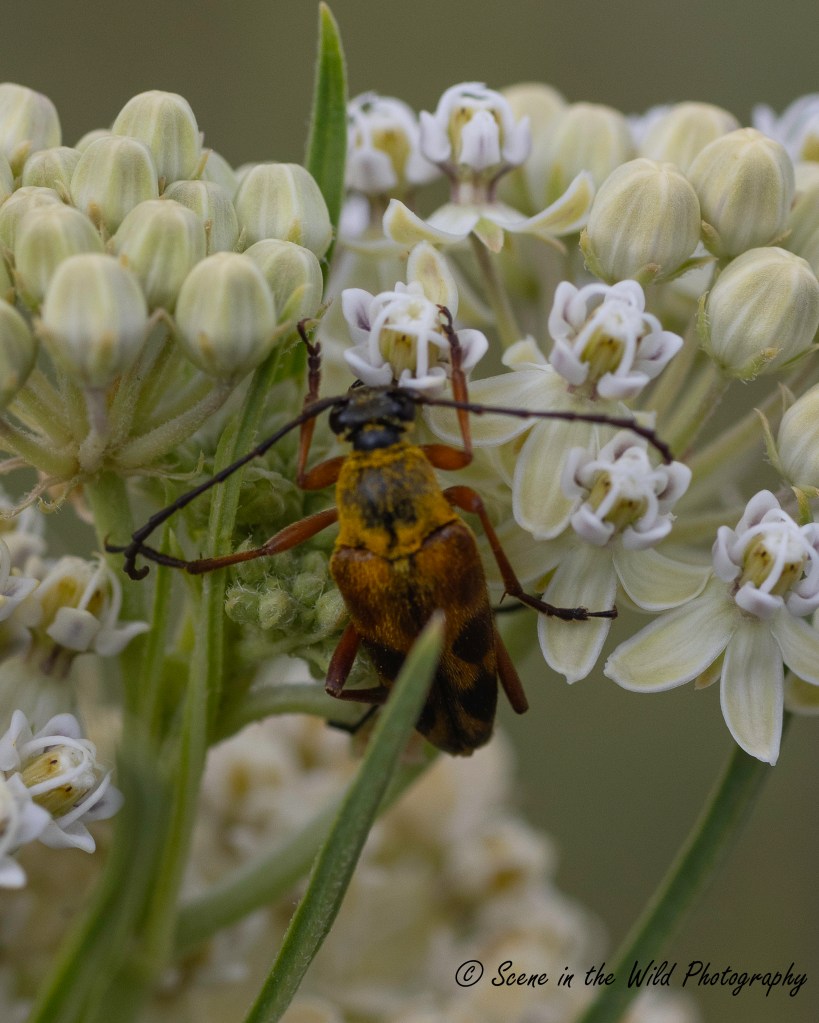
An eight-spotted flower longhorn beetle. Did you know that some beetles are pollinators?
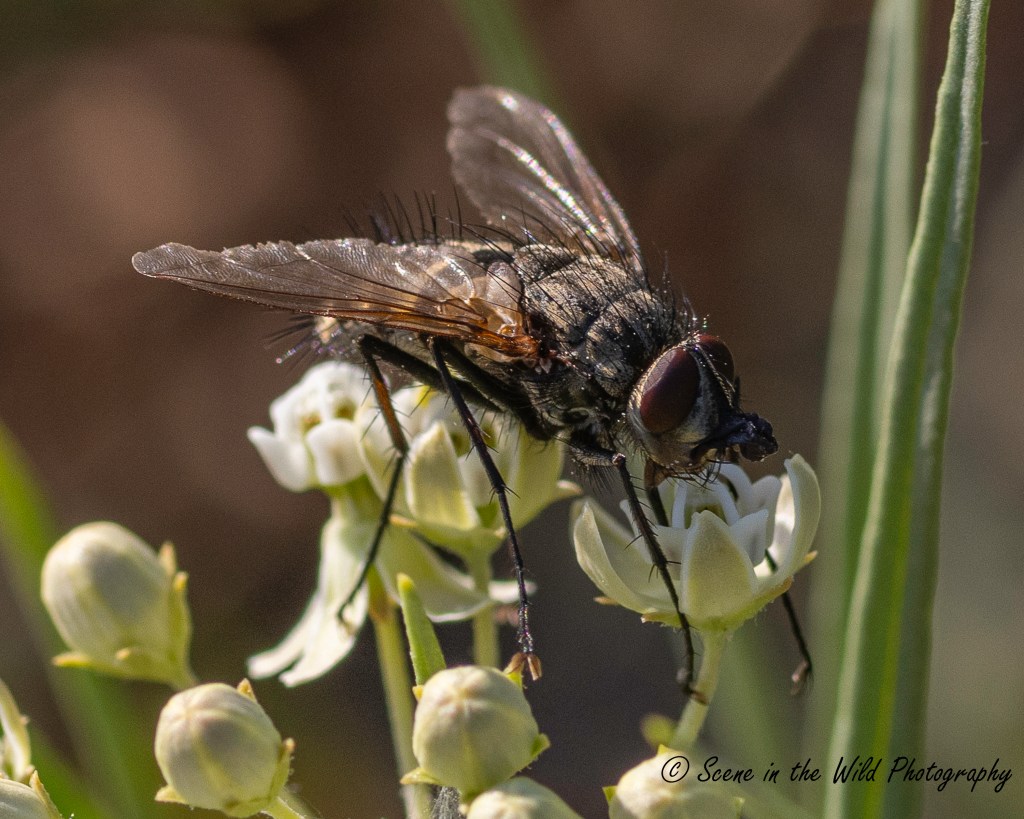
A tachnid fly, identified because of the bristles on its abdomen. (Flies have huge eyes a small antenna, which is one way to tell them apart from bees). This one looks as though it just draped itself over the flowers.
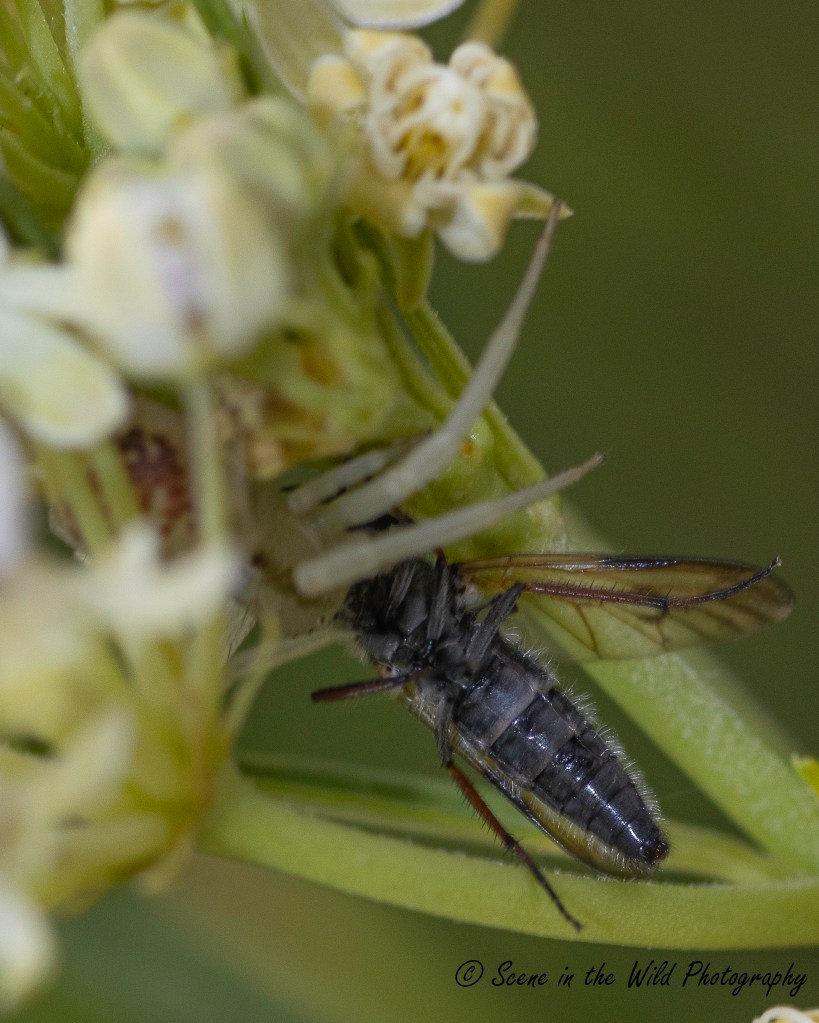
I think I shared this in a previous post: a crab spider that nabbed a robber fly for lunch.
The following photos were all taken July 20:
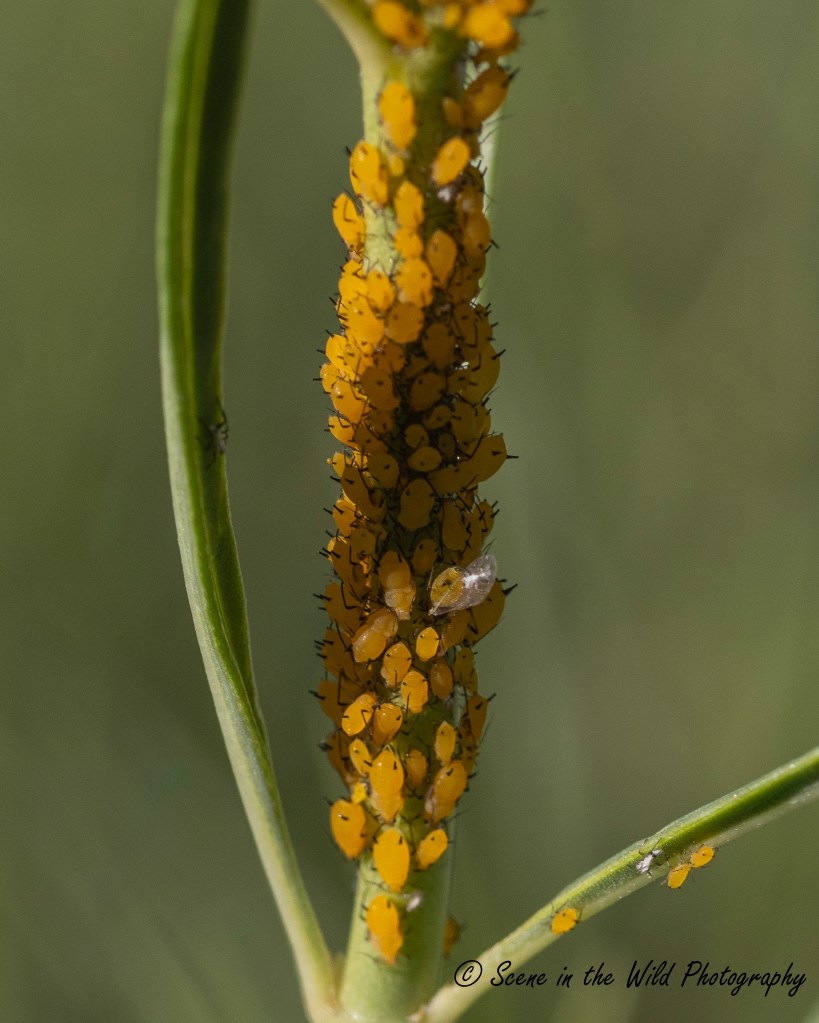
Aphids on a milkweed stem.
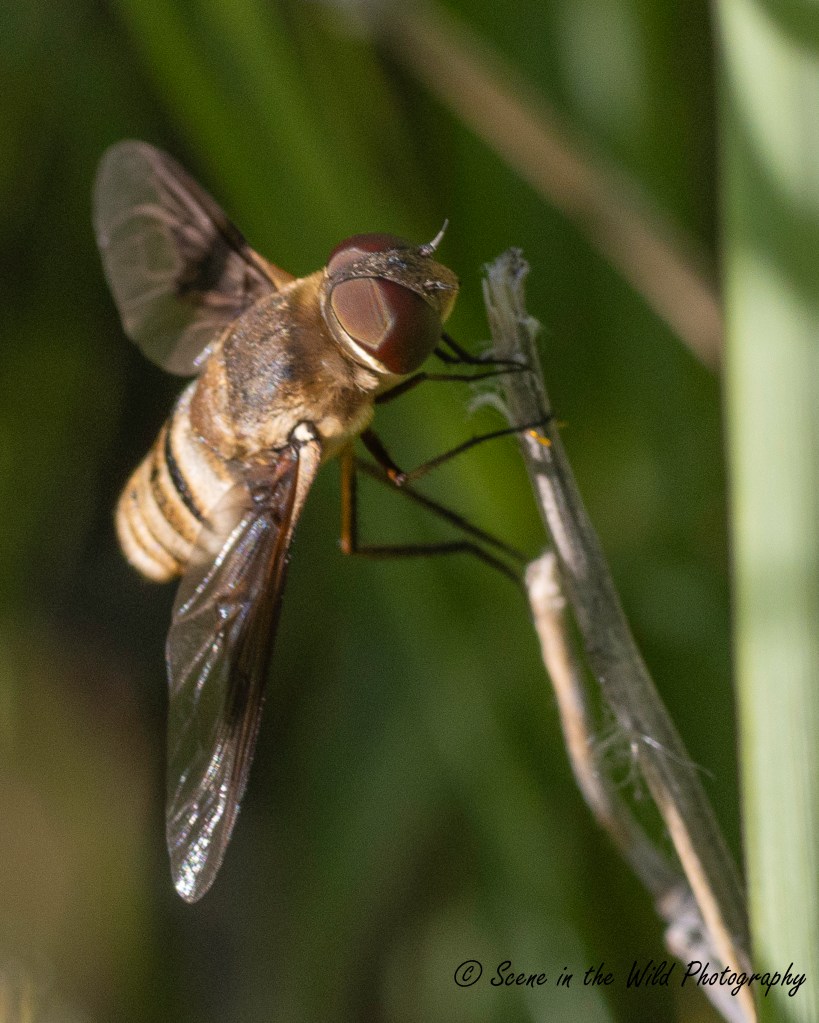
A bee fly on a dried piece of stem from last year.
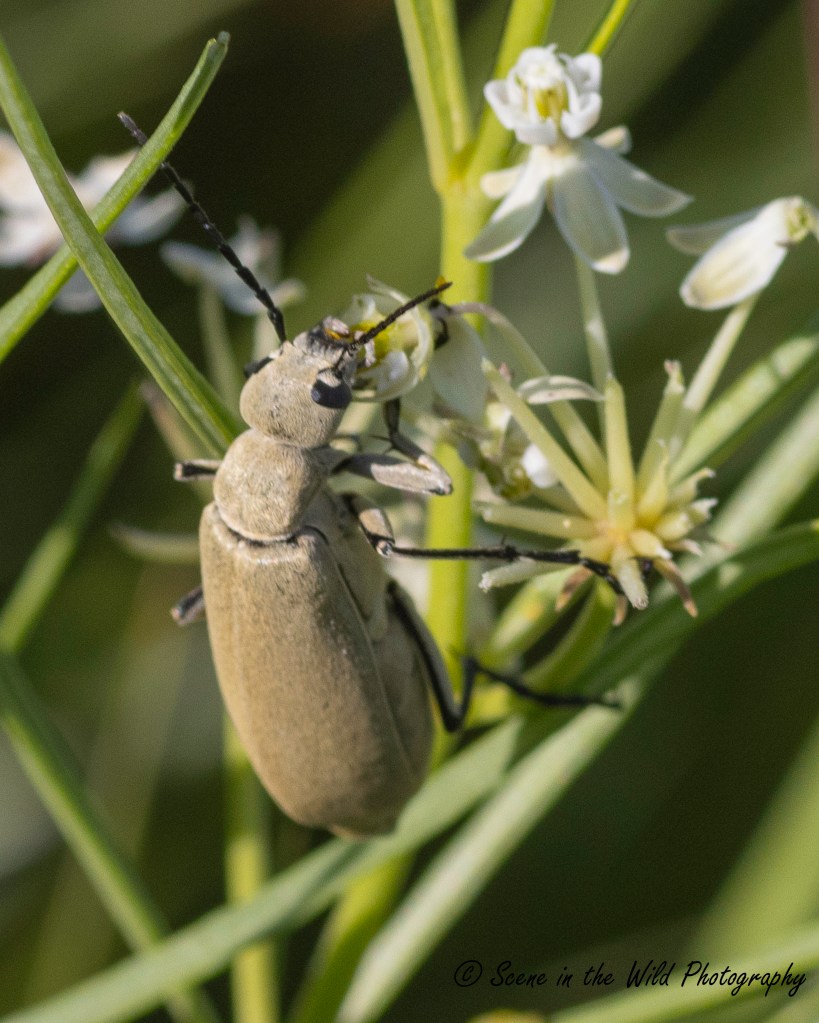
A blister beetle.
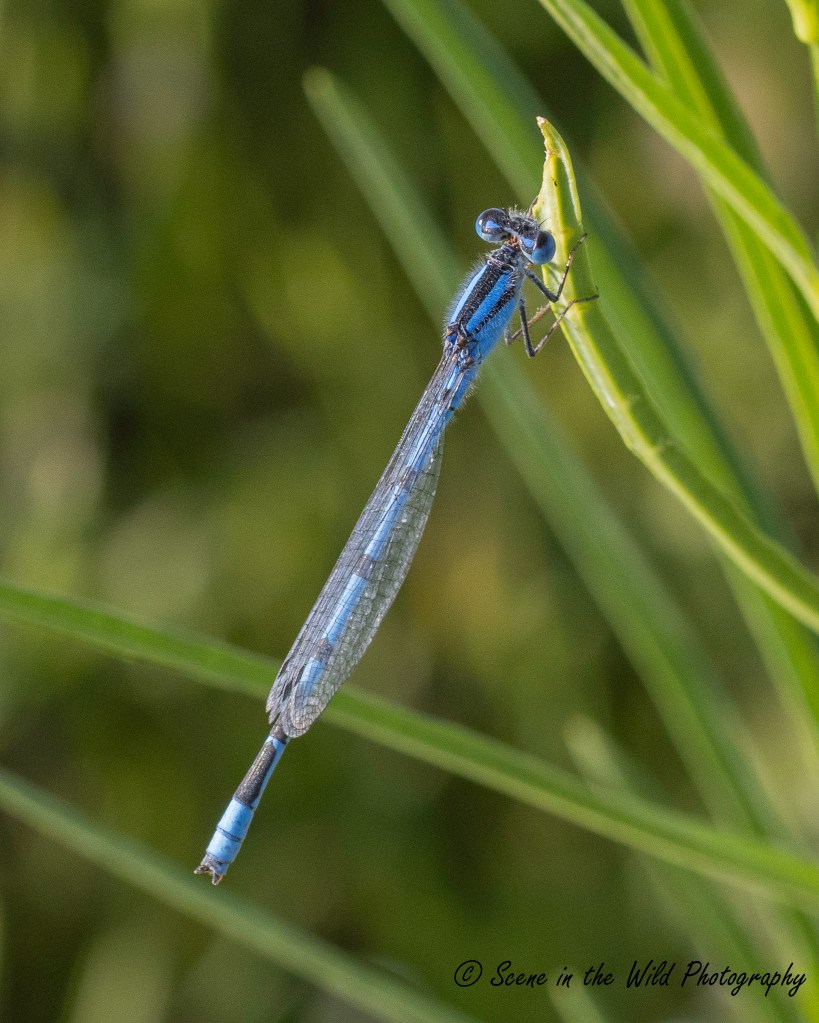
A familiar bluet (Damselfly).
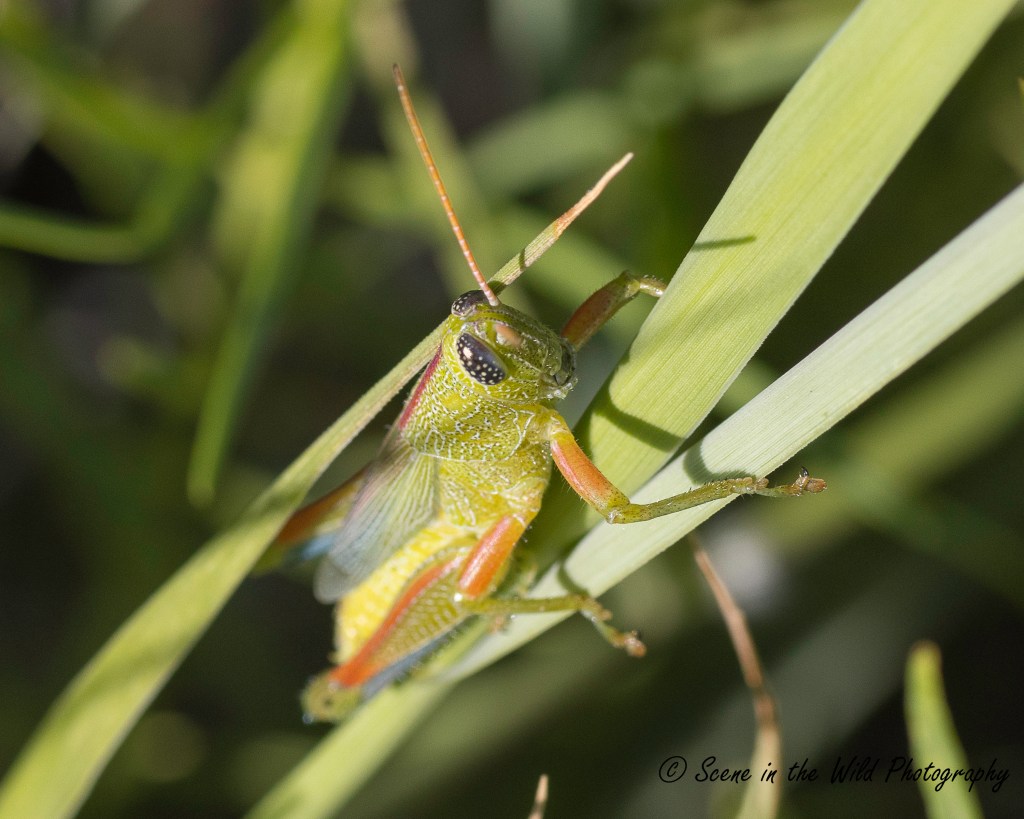
A young grasshopper.
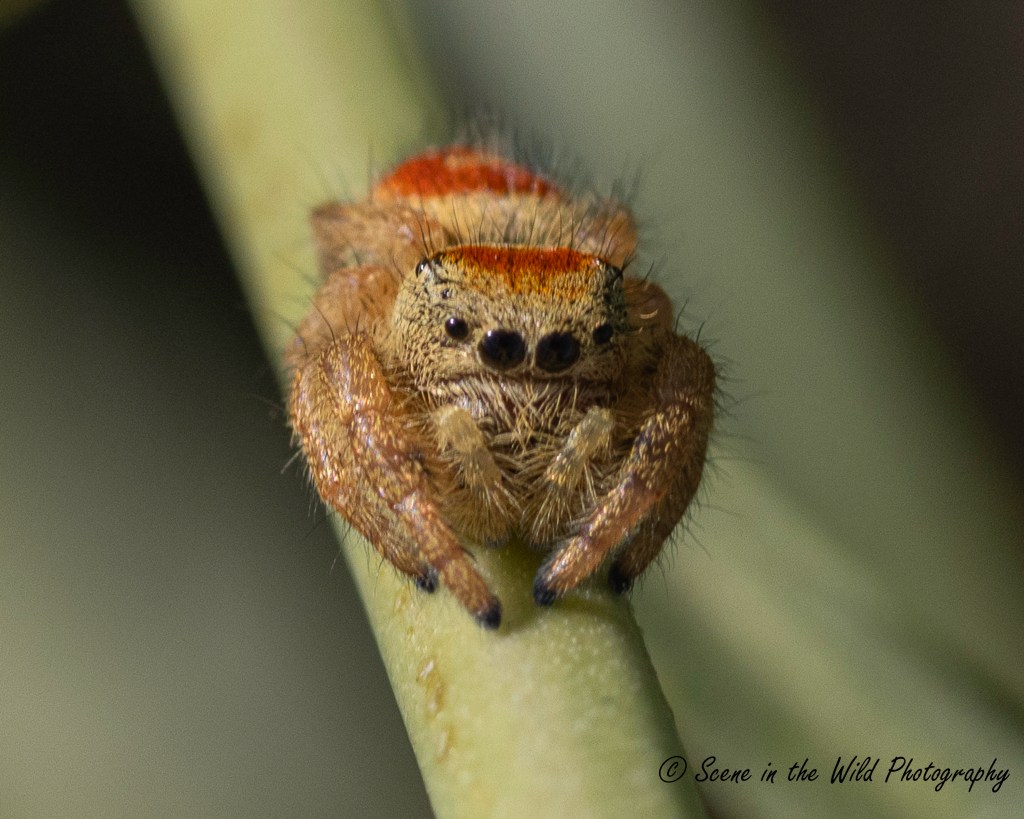
An Apache jumping spider (I might have shared this one previously, too, but it was posing so nicely for me, I thought I should share it again. I saw several of these spiders on milkweed that day).
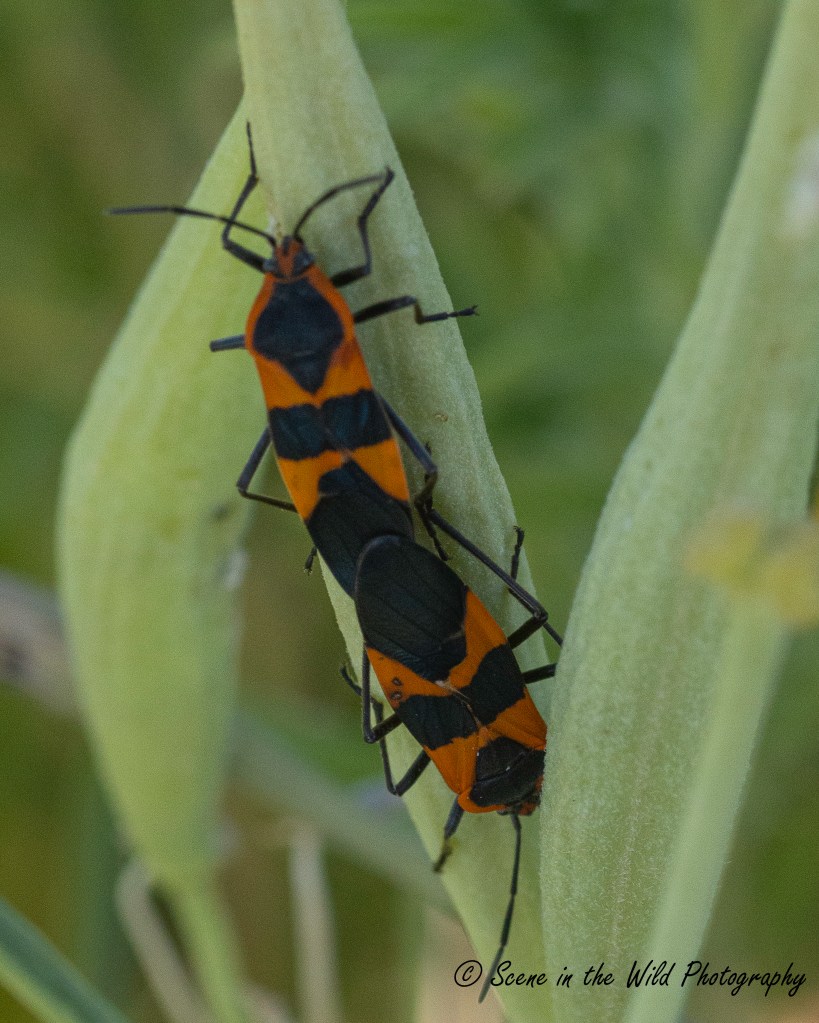
Large milkweed bugs, mating.
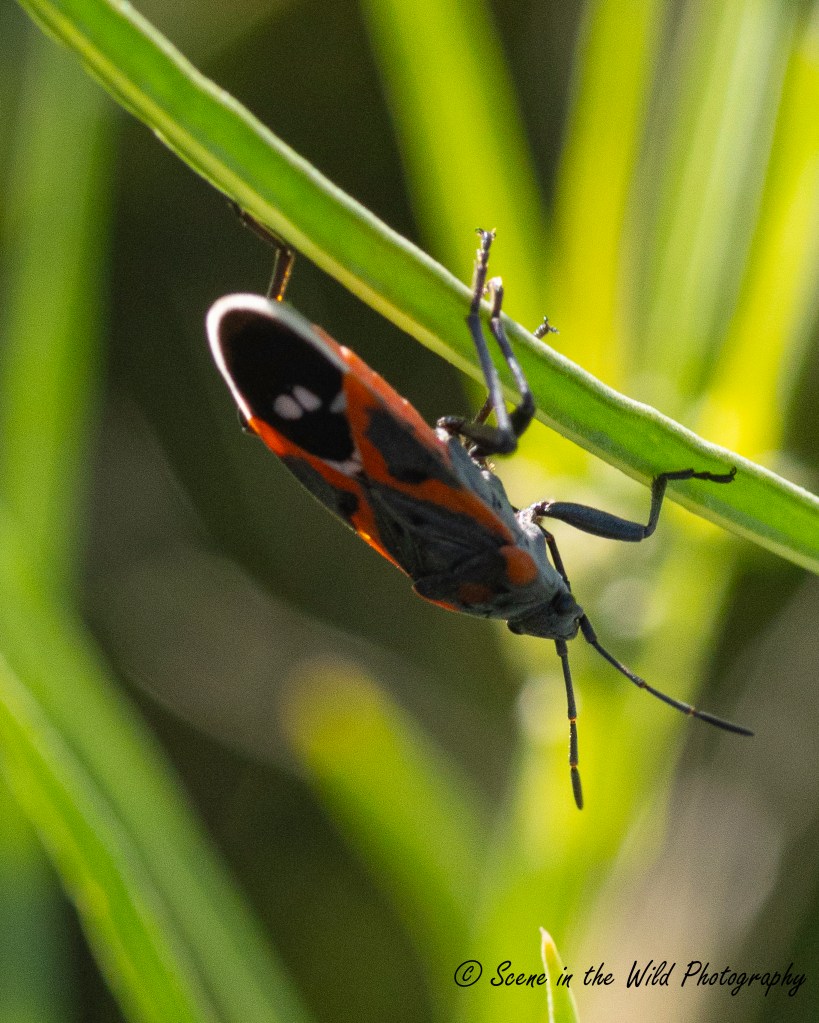
Small milkweed bug.
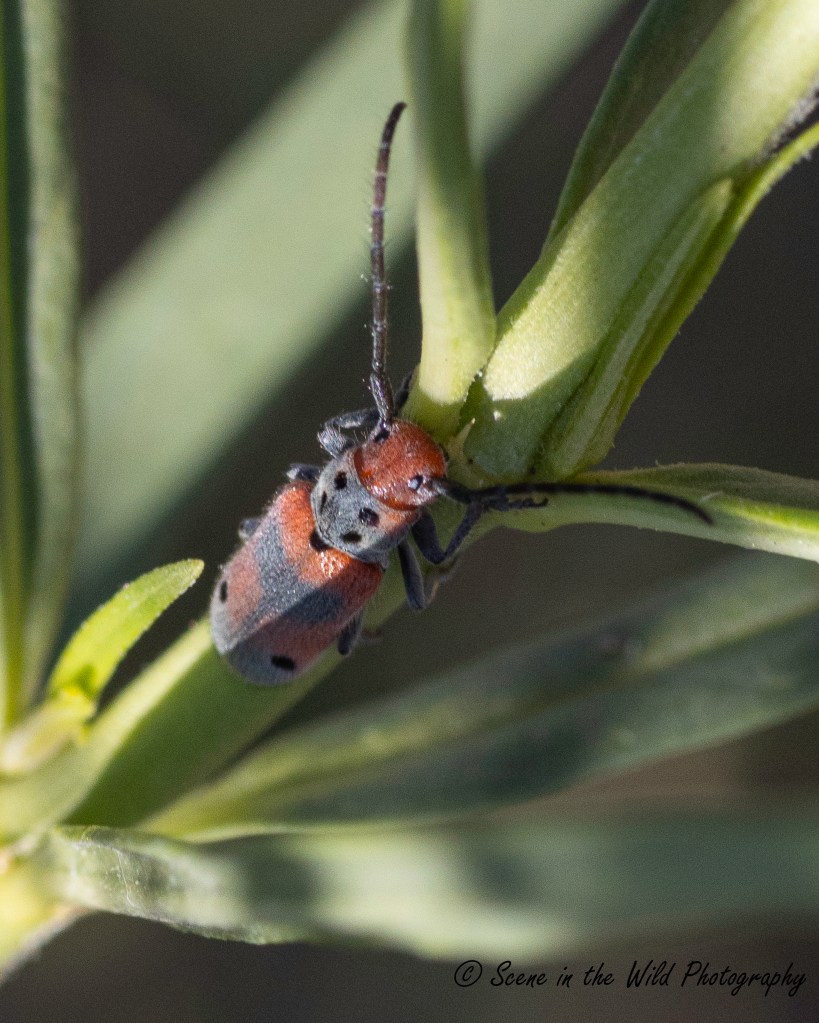
They’re back! My friend, Tetraopes discoideus. My professor friend said that the larvae are subterranean and presumably feed on milkweed rhizomes. They have a two-year life cycle, but are unpredictable. Apparently the beetles stay underground until the conditions are right, but it’s not clear what those conditions are.
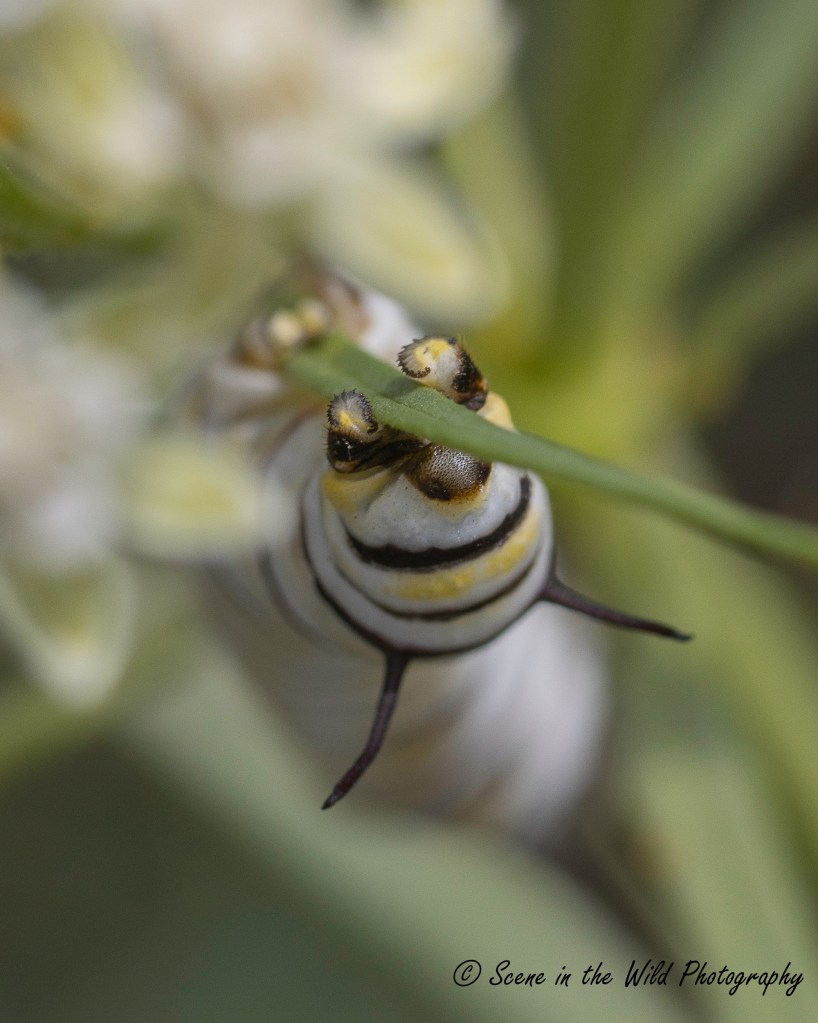
I was jumping up and down in our field July 30 when I spotted this Monarch caterpillar on some horsetail milkweed! (Yes! A 73-year-old woman getting excited about a caterpillar!) Monarchs are listed as threatened by the U.S. Fish and Wildlife Service, and I hadn’t seen any Monarch caterpillars for a couple of years. I had spotted some Monarch butterflies this year. I also saw two more Monarch caterpillars, in different spots, a couple of days later, also on horsetail milkweed. Since then, I’ve had three Monarch butterflies visiting my Dotted Gayfeather/Blazing Star (Liatrus punctata).
The next day (July 31), I found a few more insects:
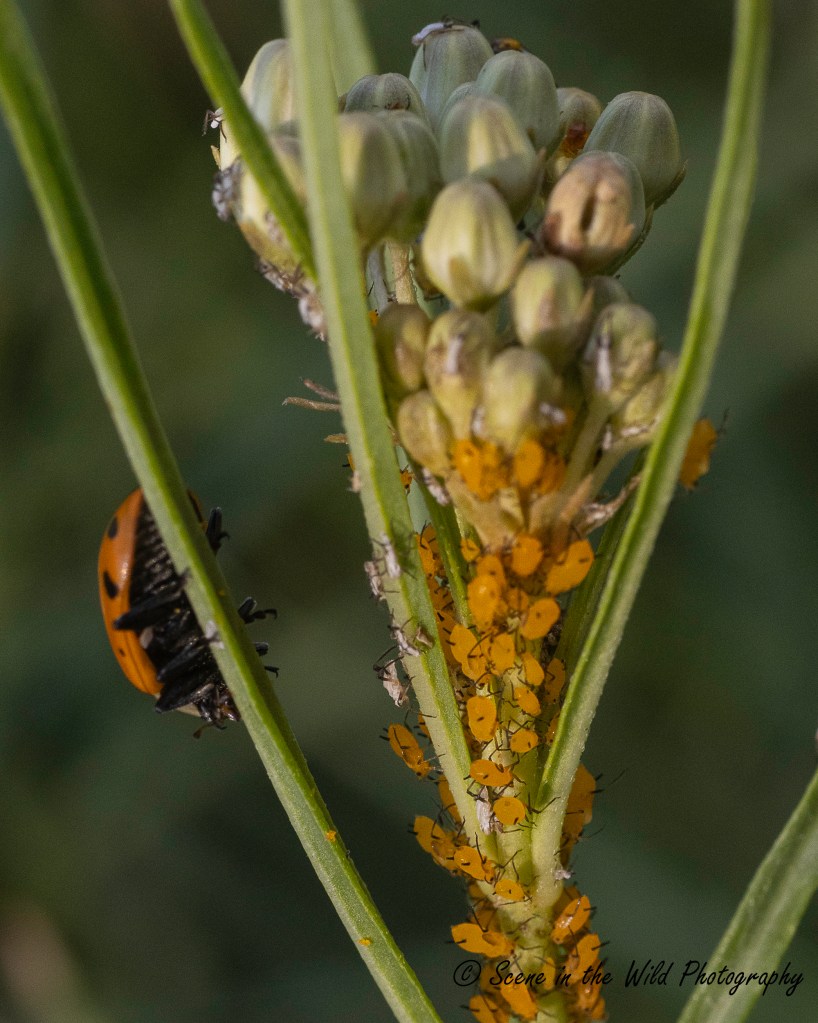
A lady beetle with her aphids, probably deciding how many she’s going to have for dinner. (Lady beetle larvae eat larger amounts of aphids than the adults do!)
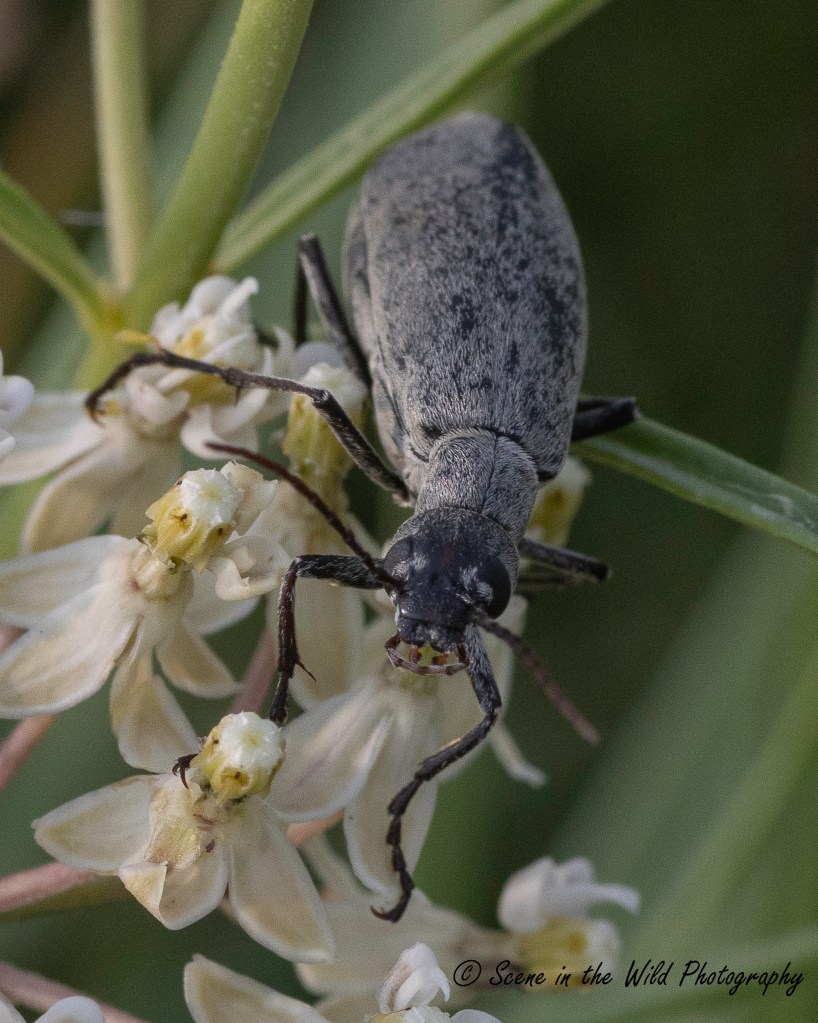
Another blister beetle. If you look back at the one from July 20, you can see that they’re different species.
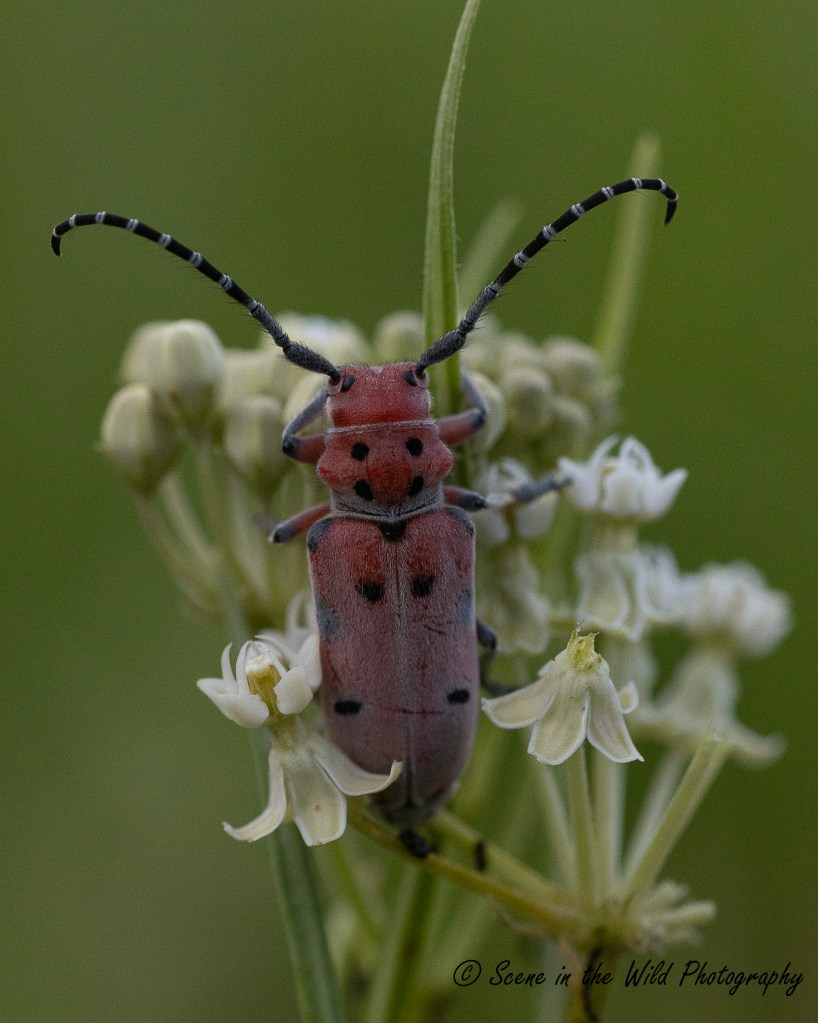
I was confused when I saw this beetle. It’s a lot bigger than the T. discoideus I’d seen earlier. I wondered if why. Well, it turns out it’s a different species, according to my professor friend. It’s probably T. femoratus, but could be T. annulatus. They’re both found here.
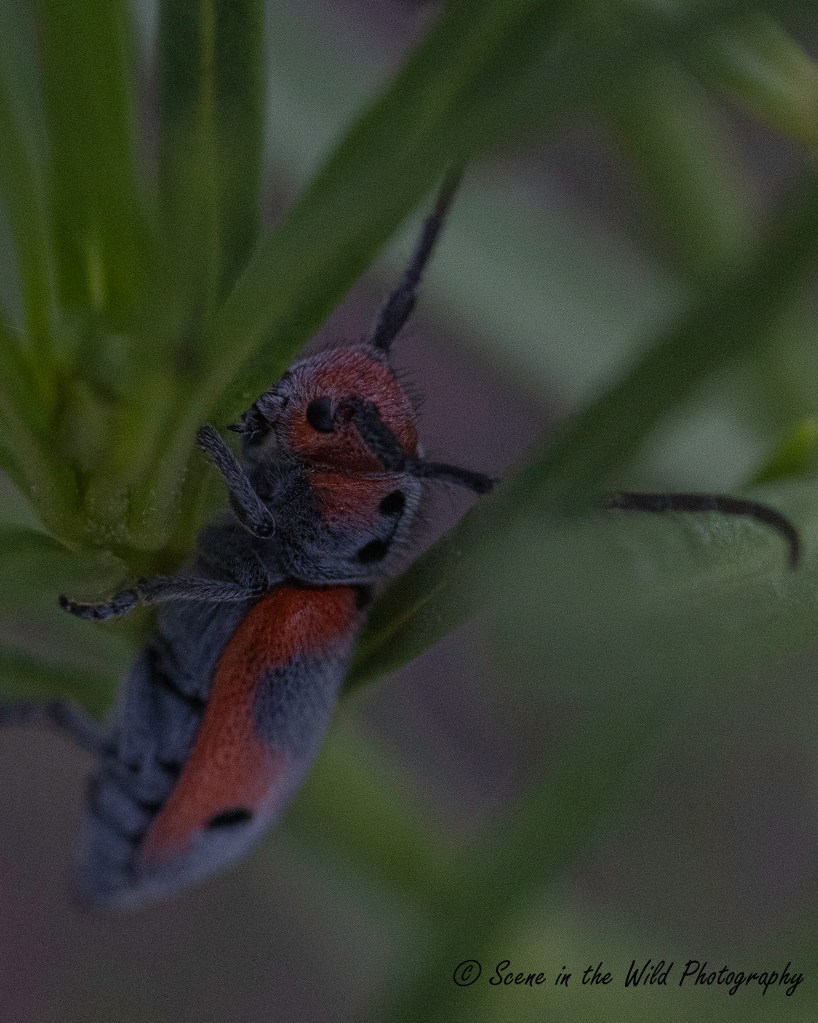
The smaller one again (which wasn’t far from the larger one). T. discoideus.
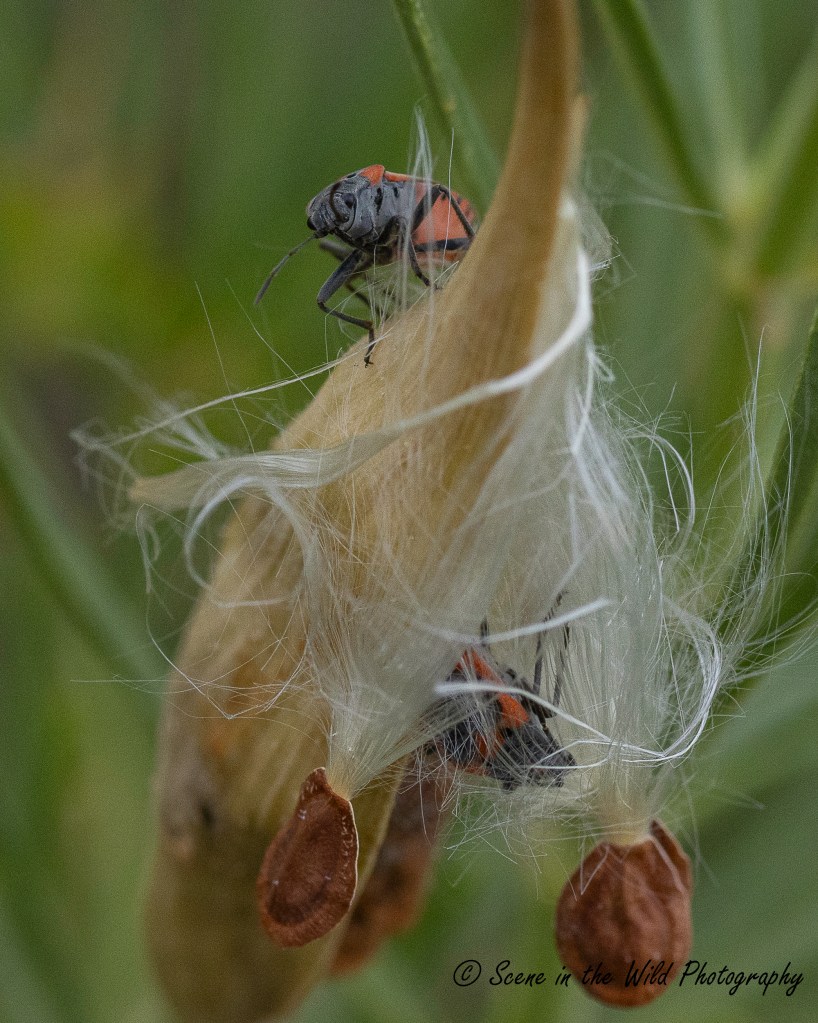
Small milkweed bugs on a horsetail milkweed seedpod. Yes, the seeds look very much like the milkweed seeds you’re used to seeing, but the pods are much smaller and don’t harden up as much as the others do.
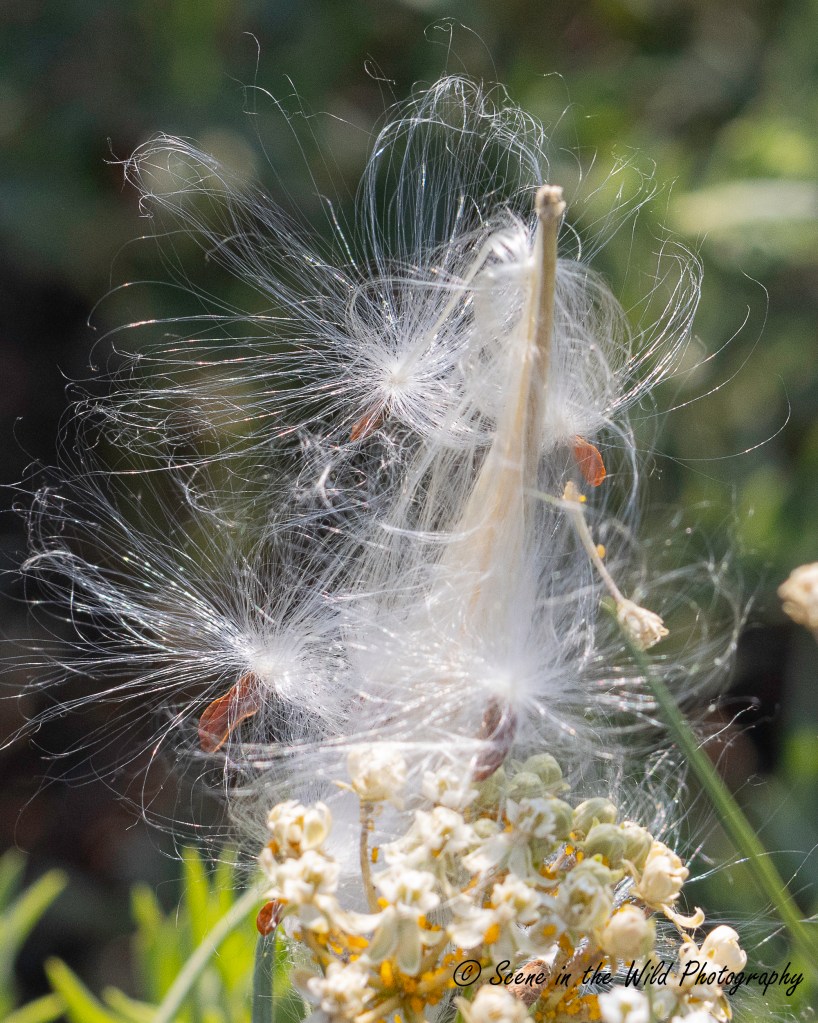
Milkweed fluff in sunlight.
I’d like to encourage all of you to consider posting photos to iNaturalist. You don’t have to have perfect photos, but they should be fairly clear so the specimen can be ID’d. Preferably, take photos from different angles. You can even use your cellphone. There’s an app you can download for both Androids and iphones, or you can post online at inaturalist.org. You don’t have to be an expert; you don’t have to get very specific; others will help with IDs. It’s even possible that you might find a new species! It happens! If nothing else, go to iNaturalist.org and check it out!


 Scene in the Wild Photography
Leave a reply to gracefullyface226bee7755 Cancel reply